
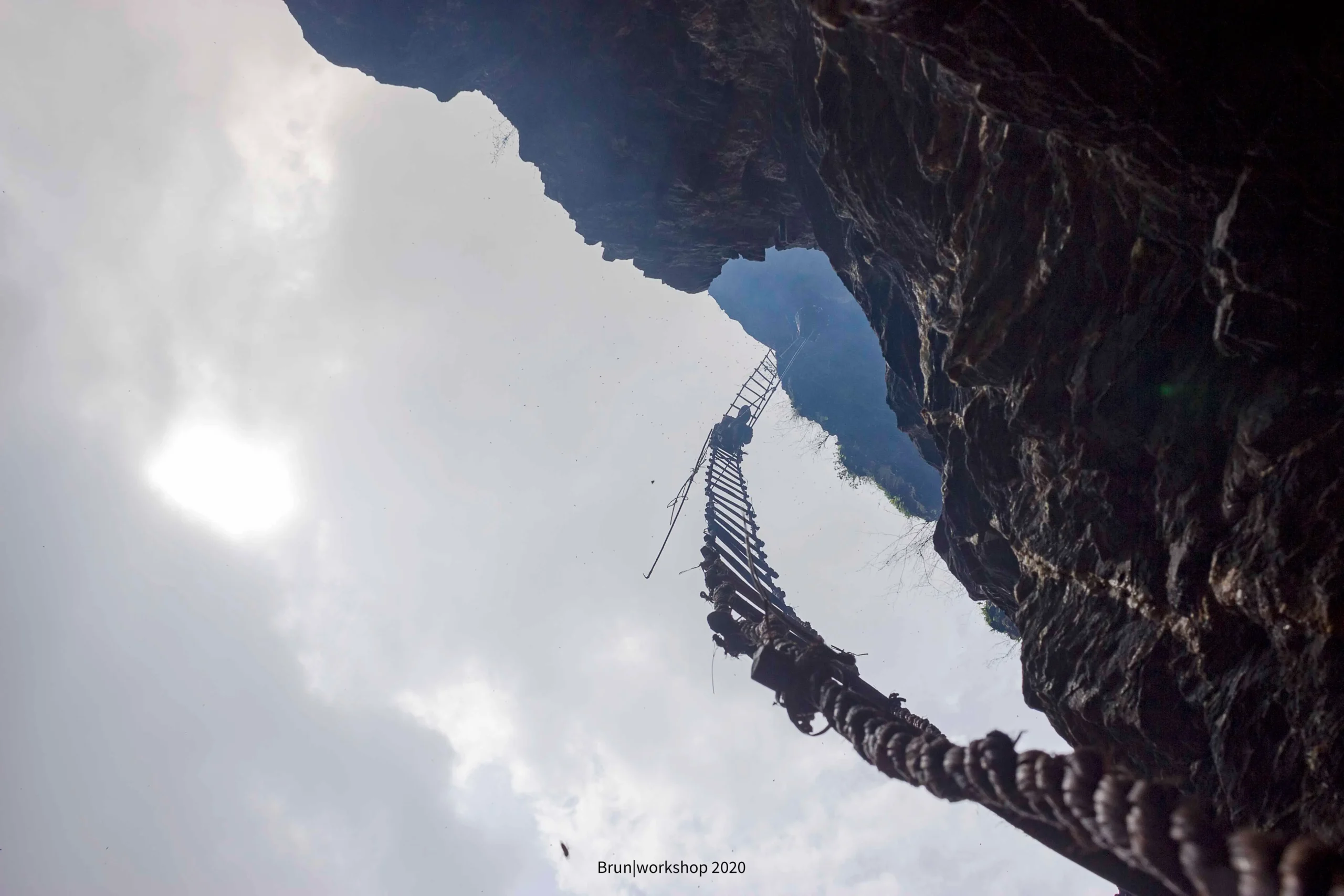
THIS IS MAD HONEY
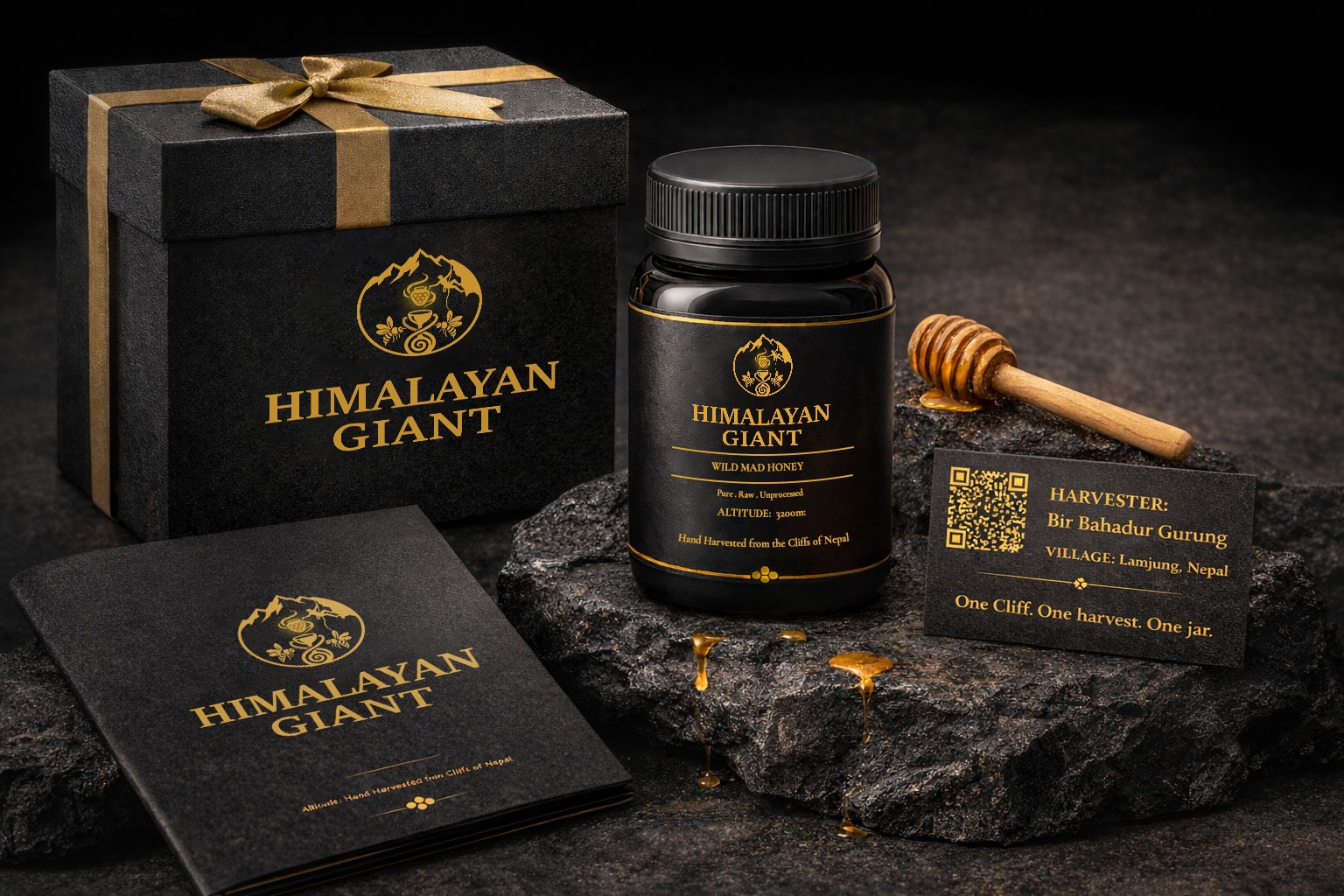
Limited Harvest
Rare by Nature Spring Harvest 2026 - Only 300 Kg available this season
Pre-orderHarvest Window: May – June 2026 · Elevation: 9,000–14,000 ft
Every Jar Has a Story. Yours Has Video Proof.
We don’t hand you a piece of paper and ask you to trust it. We hand you a QR code that opens the raw, uncut footage of the exact harvest your honey came from.
Watch the hunters climb. See the comb cut from the cliff. Follow your honey from mountain to jar.
The Gurung & Magar Honey Hunters
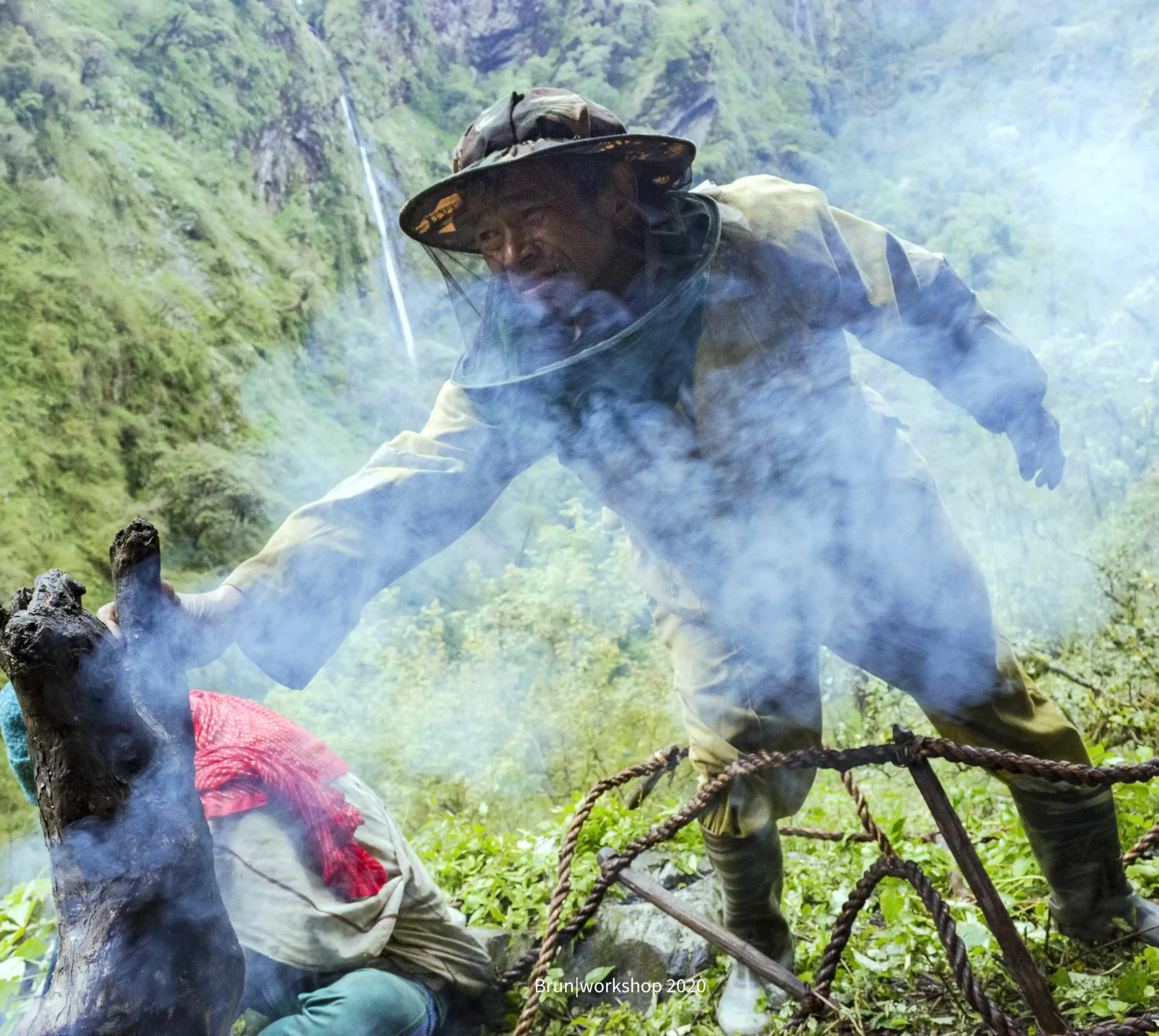
“We do not take from the mountain. We ask permission. The bees decide whether we are worthy.”
Generations of knowledge · Zero safety equipment
Hundreds of feet descended · One harvest per year
The Gurung & Magar people are the only community on Earth that harvests mad honey from Himalayan cliff faces. No harnesses. No machines. Just rope, smoke, and a tradition passed from father to son for generations.
Every jar from Himalayan Giant comes from these hands and these cliffs. Our hunters are our partners — paid directly and fairly for every harvest.
52
Years of Age
35
Years Climbing
"To consume carelessly is to waste what men risked their lives to gather."
PREPARE
Set the Scene
This is not honey you spread on toast. This is a once-a-year harvest from the edge of the world. Treat the experience accordingly.
- Choose a calm, comfortable space
- Set aside 2–3 unhurried hours
- Have water and light food nearby
- A trusted companion is recommended for first-time tasters
MEASURE
Begin With Respect
More is not better. The hunters risk their lives for every drop — honor that.
- First time: Start with ¼ teaspoon (2–3g)
- Wait 45–60 minutes before considering more
- Familiar users: ½ to 1 teaspoon maximum
- Never exceed 1 tablespoon (15g) in 24 hours
- Take on a light stomach for consistent experience
TASTE
Let It Speak
Place directly on tongue. Let it dissolve slowly. Do not mix or dilute on first experience.
- Sweet floral notes arrive first
- A distinct bitter undertone follows — this is the Rhododendron
- Slight tingling sensation on the tongue and throat
- The taste profile is unlike any honey you've encountered
OBSERVE
Listen to Your Body
Every individual’s experience is different. There is no “correct” response — only yours
- A gentle warmth is commonly reported
- Some describe a softening of tension
- Effects, if any, typically emerge within 30–60 minutes
- The experience naturally fades over 2–4 hours
- Stay hydrated throughout
Important Safety Information
Do not consume if you have heart conditions, low blood pressure, or are taking certain medications. Effects typically last 2-6 hours. Never exceed one tablespoon in 24 hours. Consult a healthcare provider before consumption.
Understanding Grayanotoxin & Mad Honey
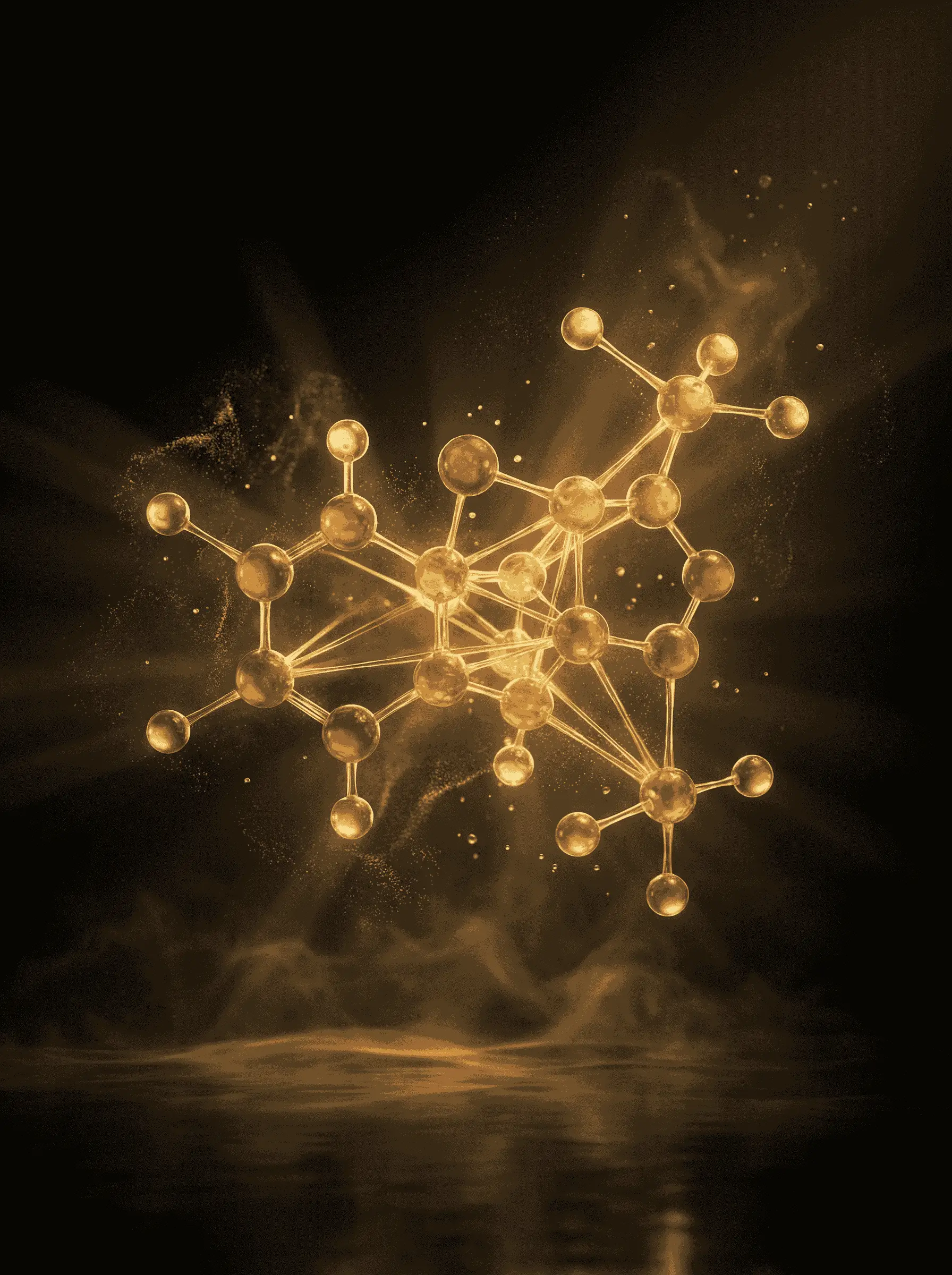
Grayanotoxin
Chemical Formula: C₂₂H₃₆O₇
Molecular Weight: 412.52 g/mol
Grayanotoxin
| Property | Detail |
|---|---|
| Chemical Formula | C₂₂H₃₆O₇ |
| Molecular Weight | 412.52 g/mol |
| Classification | Diterpene polyol |
| Found in | Nectar of specific Rhododendron species |
| Concentration | Varies by season, altitude, and bloom density |
Grayanotoxin is a naturally occurring compound found in the nectar of certain Rhododendron species. When honeybees collect this nectar, the compound transfers into the honey they produce.
How it works: Grayanotoxin binds to voltage-gated sodium channels in cell membranes, modifying their normal function. This is the same mechanism studied in modern neuroscience research — a natural compound interacting with the body’s electrical signaling system.
The effects are dose-dependent — which is why the Sacred Protocol exists.
This is why mad honey cannot be commercially produced. Every jar must be wild-harvested from these cliff nests — by hand.
Apis laboriosa — The Giant Himalayan Cliff Bee
| Attribute | Detail |
|---|---|
| Size | Up to 3.0 cm (1.2 inches) — world’s largest honeybee |
| Habitat | Open cliff faces, 6,000–10,000 ft |
| Foraging range | Up to 14,000 ft for Rhododendron nectar |
| Nesting | Single exposed comb on rock overhangs — never in enclosed spaces |
| Behavior | Highly defensive, migratory between seasons |
| Range | Nepal, Bhutan, Northeast India, Yunnan (China) |
Unlike commercial honeybees (Apis mellifera), the giant cliff bee cannot be domesticated, farmed, or relocated. Their colonies exist only in the wild, building massive single-comb nests on sheer cliff faces exposed to open air.
This is why mad honey cannot be commercially produced. Every jar must be wild-harvested from these cliff nests — by hand.
- Key species R. ponticum, R. luteum, R. arboreum
- Bloom altitude 8,000–14,000 ft
- Bloom season Spring (March–May) — varies by altitude
- Bloom duration 3–6 weeks per year
HISTORICAL DOCUMENTATION
Greek mercenaries retreating through Pontus consume wild honeycomb. Thousands collapse — vomiting, disoriented, unable to stand.
Source: Xenophon, Anabasis, Book IV
Forces in modern-day Turkey place mad honey along Roman supply routes. Three squadrons of Pompey’s soldiers incapacitated and killed.
Source: Strabo, Geographica, Book XII
Mad honey (deli bal) becomes a regulated trade commodity in the Black Sea region, exported across Europe.
Source: Historical trade records
Grayanotoxin’s mechanism of action on sodium channels is documented in modern pharmacology. Mad honey continues to be studied for its unique biochemical properties.
Source: Various peer-reviewed journals
See Where Your Honey Was Born.
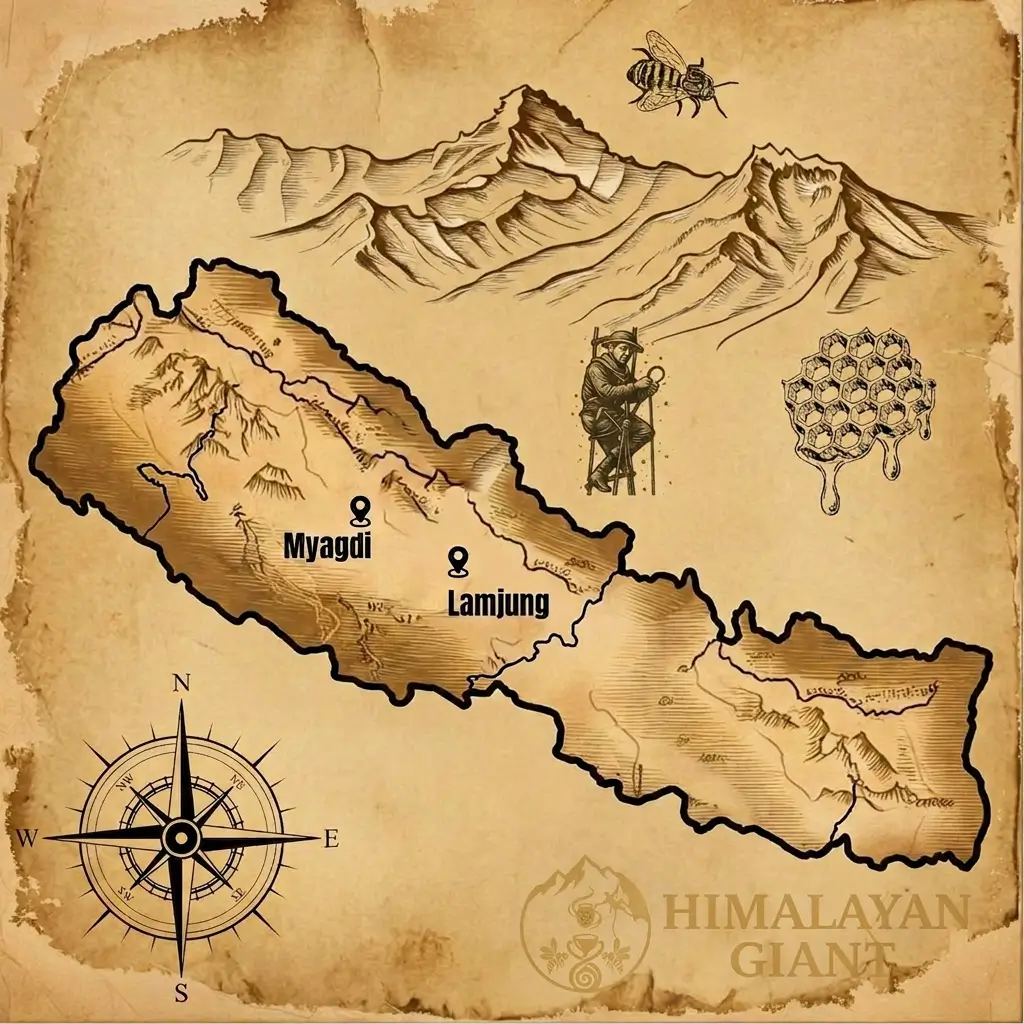
Every jar from Himalayan Giant carries a story that starts on a cliff face in Lamjung, Nepal. We capture the harvest on film — the climb, the smoke, the comb cut from the rock — so you can trace your honey back to the exact moment it left the mountain.
-
✓Harvest Video Access
Every jar ships with a QR code linking to the raw, uncut footage of the harvest your honey came from. Real cliffs. Real hunters. Your honey.
-
✓Handwritten Harvest Card
Each jar includes a hand-filled card with your batch number, harvest date, and harvest region in Lamjung — written by hand, not printed by a machine.
-
✓Unique Batch Code
Every jar carries a unique batch code (e.g. HG-2025-017) that ties it to a specific harvest, date, and region. Same code on your jar, your card, and our records.
What People Ask Us. Before Their First Jar
These are the questions we hear most. If yours is not here, check our complete FAQ page.
Mad honey is a rare type of honey made by wild Himalayan giant honeybees — a species called Apis laboriosa — that feed on the nectar of Rhododendron flowers growing at high altitudes in Nepal. The nectar contains a naturally occurring compound called grayanotoxin, which gets carried into the honey by the bees. This compound is what gives mad honey its unique properties — a distinctive bitter-sweet taste and subtle effects on the body that no other honey in the world produces.
It is not a manufactured product. It cannot be replicated in a lab. It is made entirely by wild bees that cannot be domesticated, from wild flowers that cannot be farmed, on mountain cliffs that most humans will never reach. Every jar is the result of nature, tradition, and extraordinary human effort.
Yes — when consumed responsibly and in appropriate doses. Mad honey has been eaten by humans for thousands of years. The key is dosage. A small amount produces subtle, gentle effects. Too much can cause discomfort — including dizziness, nausea, and drops in blood pressure. The difference between a pleasant experience and an unpleasant one is measured in teaspoons, which is why we provide a complete Safety Guide with specific dosage charts and clear guidelines.
Start with one quarter teaspoon. Never exceed one tablespoon in 24 hours. Do not consume if you have heart conditions, low blood pressure, are pregnant, nursing, under 18, or taking certain medications. Read the full Safety Guide before your first experience — it takes five minutes and it matters.
Himalayan Giant Mad Honey is generally classified as a natural honey product and is not a controlled substance in most countries. It can typically be purchased without a prescription or special license.
We ship directly from Nepal with proper export documentation, including customs declarations and certificates where required.
However, import regulations may vary by country, and customers are responsible for checking their local laws and customs requirements before ordering. While most shipments arrive successfully, delays or inspections may occasionally occur.
Individual responses vary — and we are honest about that. We do not promise a specific experience because every person’s body responds differently based on their metabolism, body weight, stomach contents, and personal sensitivity.
That said, commonly reported experiences at appropriate doses include a gentle warmth spreading through the body, a feeling of physical relaxation, a softening of tension, and a general sense of calm. Some people describe it as a quieting of mental noise — not dramatic, just noticeable. Some people feel very little on their first try, especially at the recommended starting dose. That is completely normal. This is not something that hits you over the head. It is something you notice when you pay attention.
We never make medical or therapeutic claims. Mad honey is a food product with interesting natural properties — not a medicine.
Start with one quarter teaspoon — that is roughly 2 to 3 grams. This applies to everyone on their first experience, regardless of body size or experience with other substances. Place it on your tongue, let it dissolve slowly, and wait at least 60 minutes before even thinking about taking more. Effects can be delayed.
If your first experience goes well and you want a slightly stronger experience next time, you can try half a teaspoon — but wait at least 48 hours between experiences. The maximum dose is one tablespoon — roughly 15 grams — in any 24-hour period. Never exceed this. Do not take it on consecutive days. Do not combine it with alcohol.
Our full Safety Guide has a complete dosage chart, a timeline of what to expect, and step-by-step guidelines. Read it before your first time.
Every jar of Himalayan Giant honey comes from the high-altitude regions of Nepal, where wild Himalayan giant honeybees build their colonies on sheer cliff faces above 2,500 meters. The honey is harvested by traditional honey hunters who climb these vertical cliffs using handmade rope ladders and bamboo tools — the same methods their fathers and grandfathers used.
We buy directly from the hunters. No middlemen. No brokers. No agents. One hundred percent direct trade. We pay at the time of harvest — not weeks or months later — and we pay significantly above the local market rate because the work demands it. This is one of the most dangerous food-harvesting practices on earth, and the people who do it deserve to be compensated fairly.
The honey is then brought to our facility in Kathmandu, where it is inspected, packed, and shipped directly to you. From cliff to jar to your door — that is the chain. Nothing added. Nothing removed. Nothing diluted.
Because there is no cheap way to do this honestly.
The honey comes from wild bees that cannot be farmed or domesticated. It is available only during brief seasonal blooming windows — once or twice a year. It is harvested entirely by hand from vertical cliff faces by hunters who risk their lives to reach it. No machines. No shortcuts. No industrial scale.
We pay our hunters significantly above market rate — because dangling off a cliff hundreds of meters high deserves more than commodity pricing. We operate with 100 percent direct trade — no middlemen taking a cut. We harvest only what the mountain gives and we never over-harvest. When a colony needs to be left alone, we leave it alone — even if that means less honey to sell.
We also ship every order free, worldwide, directly from Nepal. That costs us real money on every single order.
The price of our honey reflects the true cost of doing this responsibly — fair wages, limited supply, dangerous work, sustainable harvesting, and a product that nature produces on its own schedule, not ours. If mad honey were cheap, something in that chain would be broken. Ours is not.
NOT FOR EVERYONE
Most People Will Never Taste This Honey.
Not because we refuse — but because by the time they find it, the harvest is already claimed.
Join the Inner Circle: