
Take Only What the
Mountain Gives.
Mad honey is a gift from the wild — not a factory product. Every decision we make is rooted in one principle: respect what makes this possible.
Mad honey is a gift from the wild — not a factory product. Every decision we make is rooted in one principle: respect what makes this possible.
“There is no Himalayan Giant without the Himalayas. There is no mad honey without the wild bees. There is no harvest without the honey hunters who have climbed these cliffs for generations.
If any one of these disappears, everything disappears.”
Wild mad honey cannot be factory-farmed. It cannot be scaled infinitely. It cannot be rushed. The bees decide how much they make. The mountains decide when it can be harvested. The forests decide whether the Rhododendron blooms.
Our job is simple — respect all three. Take only what is given. Protect what makes this possible.
Our Three Commitments
Wild bee colonies are harvested responsibly — never stripped bare. The bees come first. Always.
Fair compensation and honest relationships with honey hunter communities. Respect for their tradition and their risk.
Rhododendron forests are the foundation of everything — without them, there is no mad honey.
Protecting the Bees
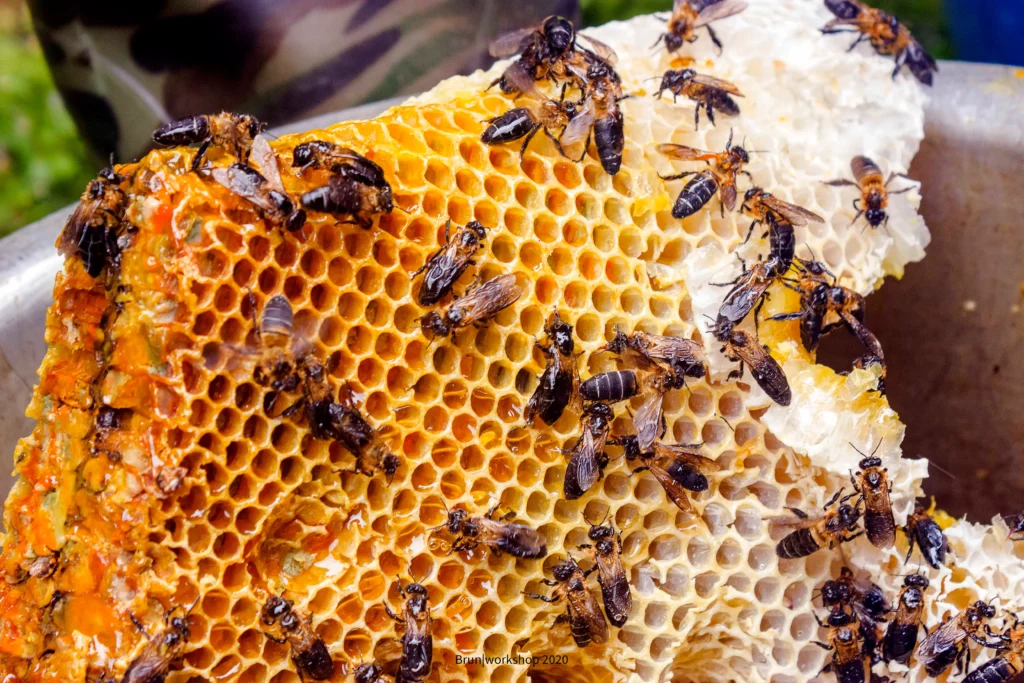
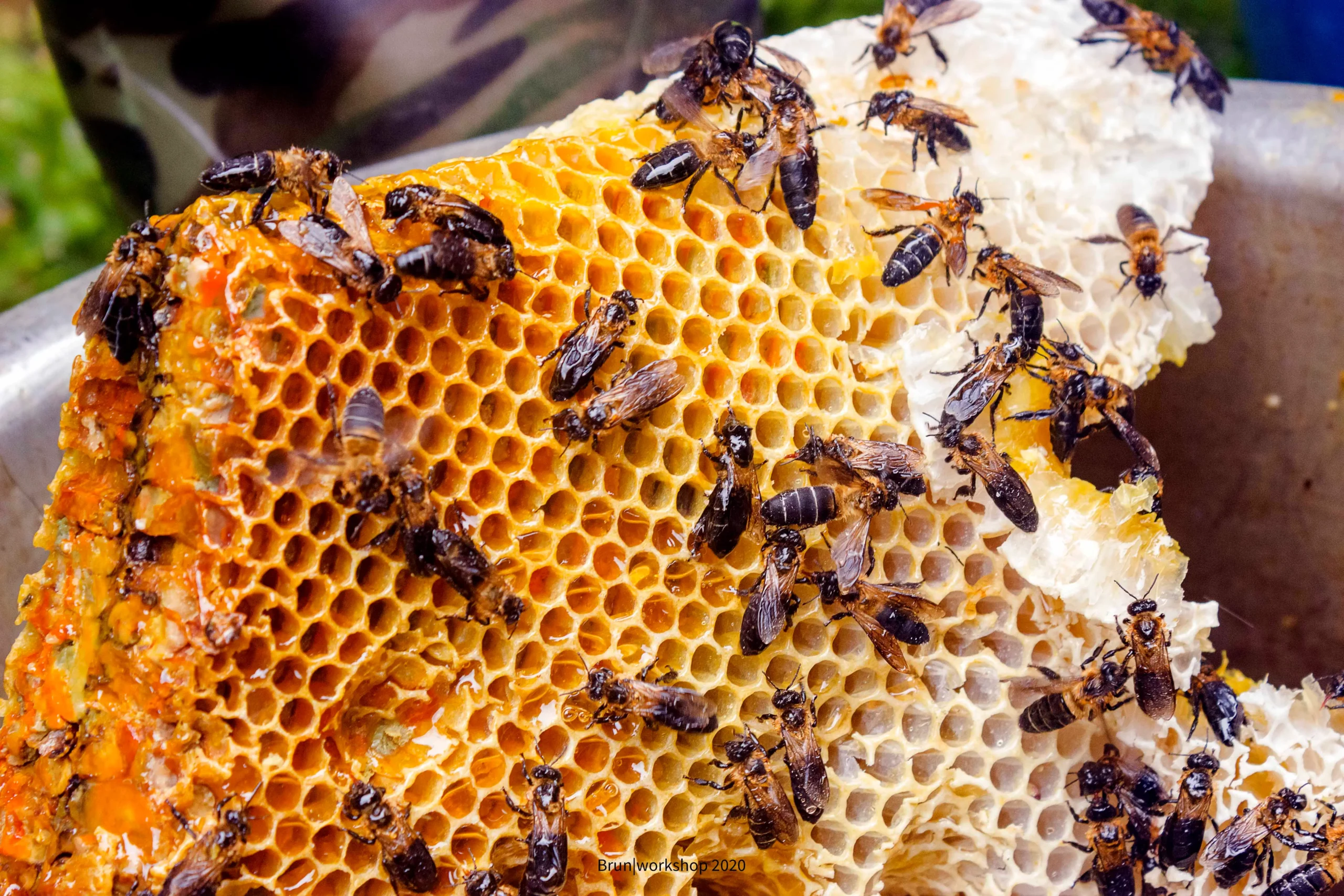
Apis laboriosa — the Himalayan giant honeybee — is the largest honeybee species on earth. These are not domesticated bees. They cannot be kept in boxes or moved to commercial farms. They are wild creatures that build massive open-air colonies on sheer cliff faces at altitudes above 2,500 meters.
They are also increasingly vulnerable.
Climate change is shifting flowering seasons in the Himalayas. Pesticide use in lower-altitude farmland is creeping upward. Habitat loss is reducing foraging range. And irresponsible over-harvesting by unregulated collectors threatens colony survival.
We never harvest from the same colony more than once per season. Each colony is allowed to rebuild its stores fully before any future harvest. A colony stripped of too much honey will not survive the winter. One harvest per colony per season — no exceptions.
Our hunters assess each colony before harvesting. If a colony appears weak, stressed, or too small — it is left completely untouched. There is no quota to meet. There is no pressure to take more than the colony can afford to give.
We take only a portion of each colony’s honey — never all of it. The bees need their own stores to survive between flowering seasons. Our hunters understand this instinctively. They have been reading these colonies for generations.
We do not relocate, disturb, or interfere with nesting sites. The bees choose where to build. We respect that completely.
“If protecting the bees means producing less honey, we produce less honey. The bees come first. Always.”
Sustainable Harvesting
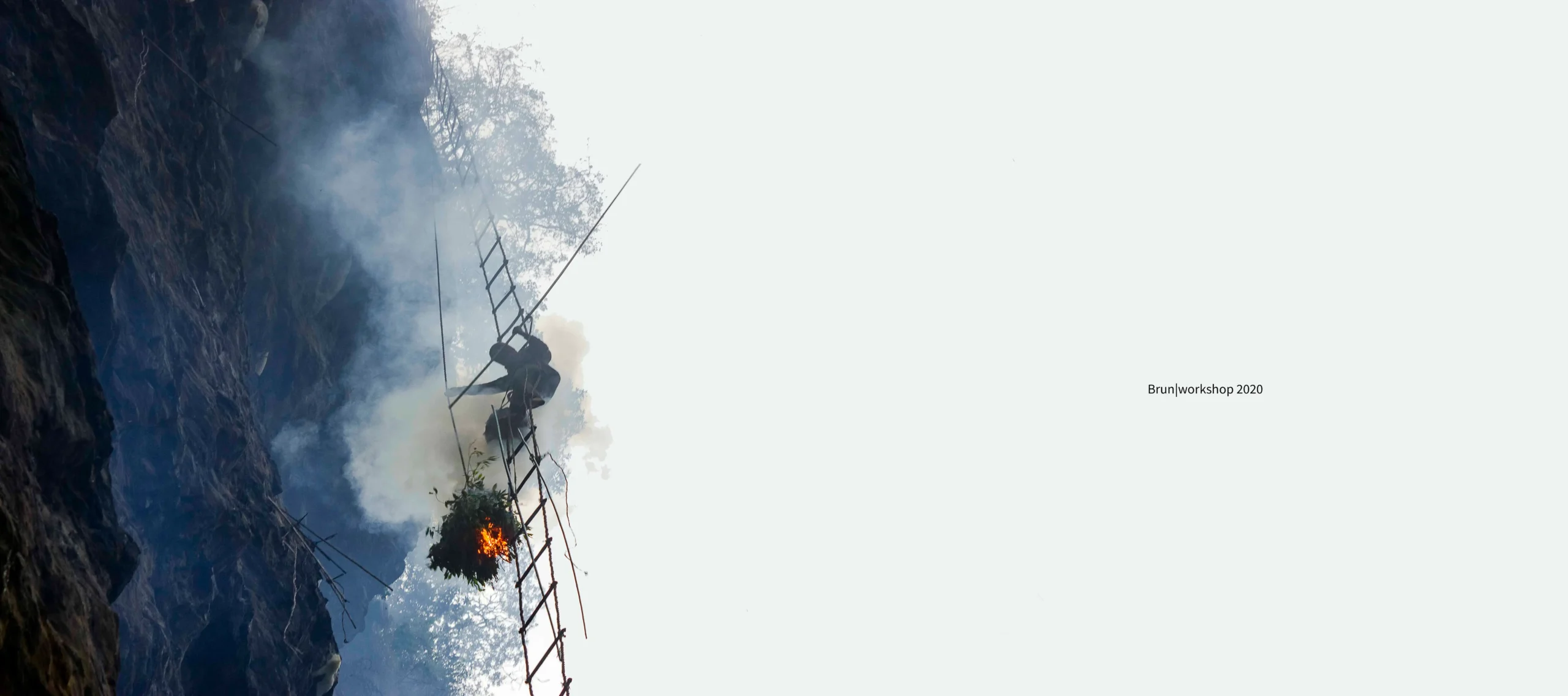
Mad honey is harvested once or twice per year — during the brief spring and autumn windows when Rhododendron flowers are in bloom and the bees have produced surplus honey. This is not a year-round operation. It cannot be accelerated. And we would never try.
Direct Trade
Middlemen in Our Supply Chain
Machines Used in Harvesting
Waste From Each Harvest
The People
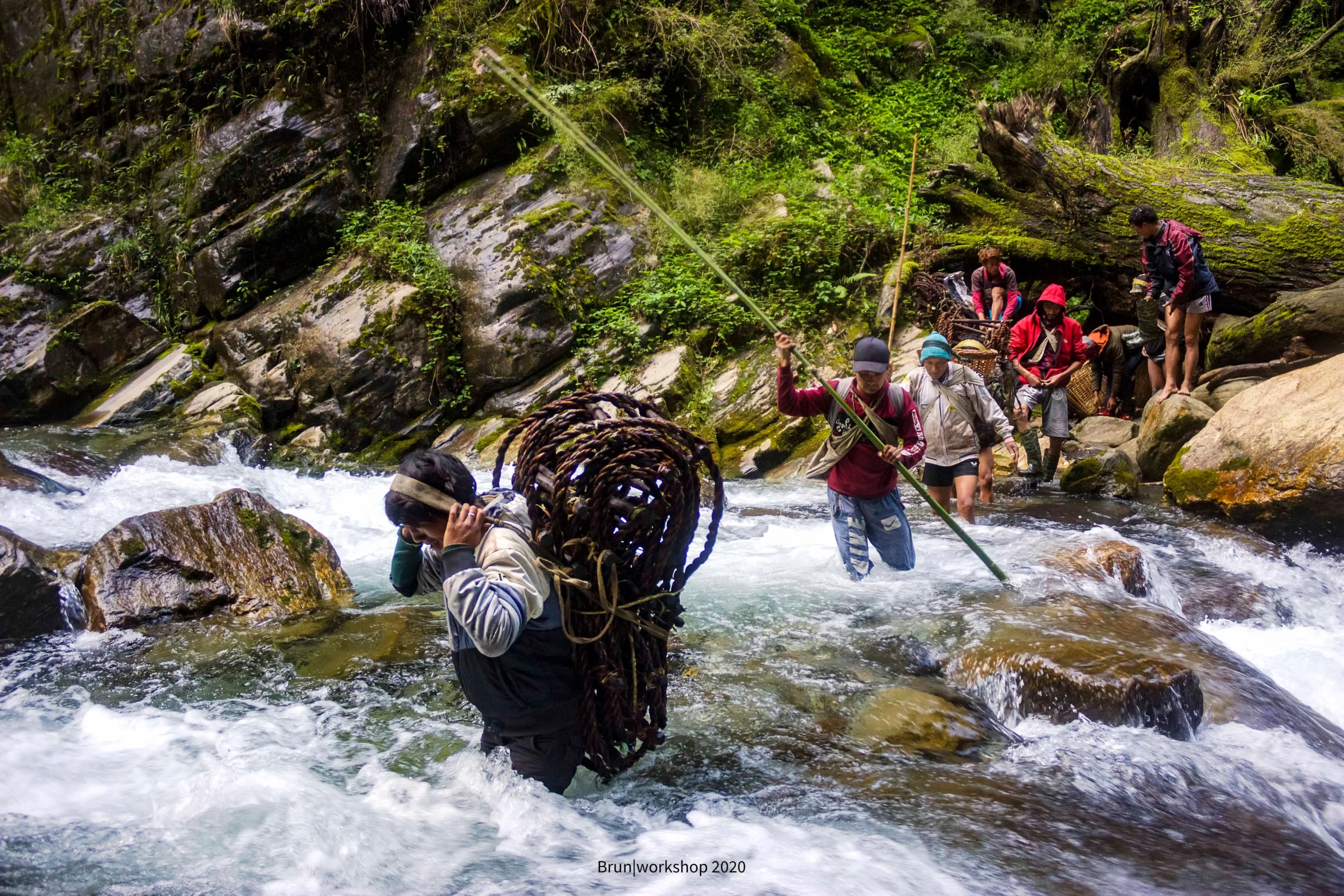
The honey hunters of Nepal are not employees of Himalayan Giant. They are independent, skilled practitioners of a tradition that stretches back thousands of years. Cliff honey hunting is a cultural and spiritual practice — not just a livelihood.
These communities face real challenges. Younger generations are migrating to cities. Traditional knowledge is being lost. The physical demands of cliff harvesting mean fewer people are willing or able to do this work. And historically, middlemen and traders have taken the largest share of profits while the hunters who did the actual work received the least.
The hunters use their own traditional equipment — handmade rope ladders, bamboo poles, smoke torches, and woven baskets. Their tools and techniques have been refined over centuries. They know these cliffs, these bees, and these mountains better than anyone alive.
We buy directly from the hunters. No middlemen. No brokers. No agents. No commodity traders. When you buy a jar of Himalayan Giant, the money flows as directly as possible from your hands to the hands of the person who climbed the cliff. This is 100 percent direct trade — and we will never change that.
We pay at the time of harvest — not weeks or months later after we have sold the product. When the honey is harvested, the hunters are compensated immediately. They are not carrying the financial risk of our business. Their work is done. They get paid. Period.
We pay significantly above the local market rate. Other buyers offer commodity prices that do not reflect the danger, the skill, or the effort involved. We pay more because the work is worth more. We do not negotiate down. We do not leverage our buying power to suppress prices. The hunters know what we pay, and they know it is fair.
We respect their expertise completely. They decide when and where to harvest. They decide when a colony should be left alone. They decide what is safe and what is not. We do not override their judgment for commercial reasons — ever.
Every hunter who works with us does so voluntarily. There are no contracts that lock communities into working exclusively with us. They choose to work with us because the relationship is fair — and they are free to walk away at any time.
No children participate in honey harvesting operations. Cliff harvesting is extremely dangerous work performed exclusively by experienced adult hunters. This is non-negotiable.
The Forests
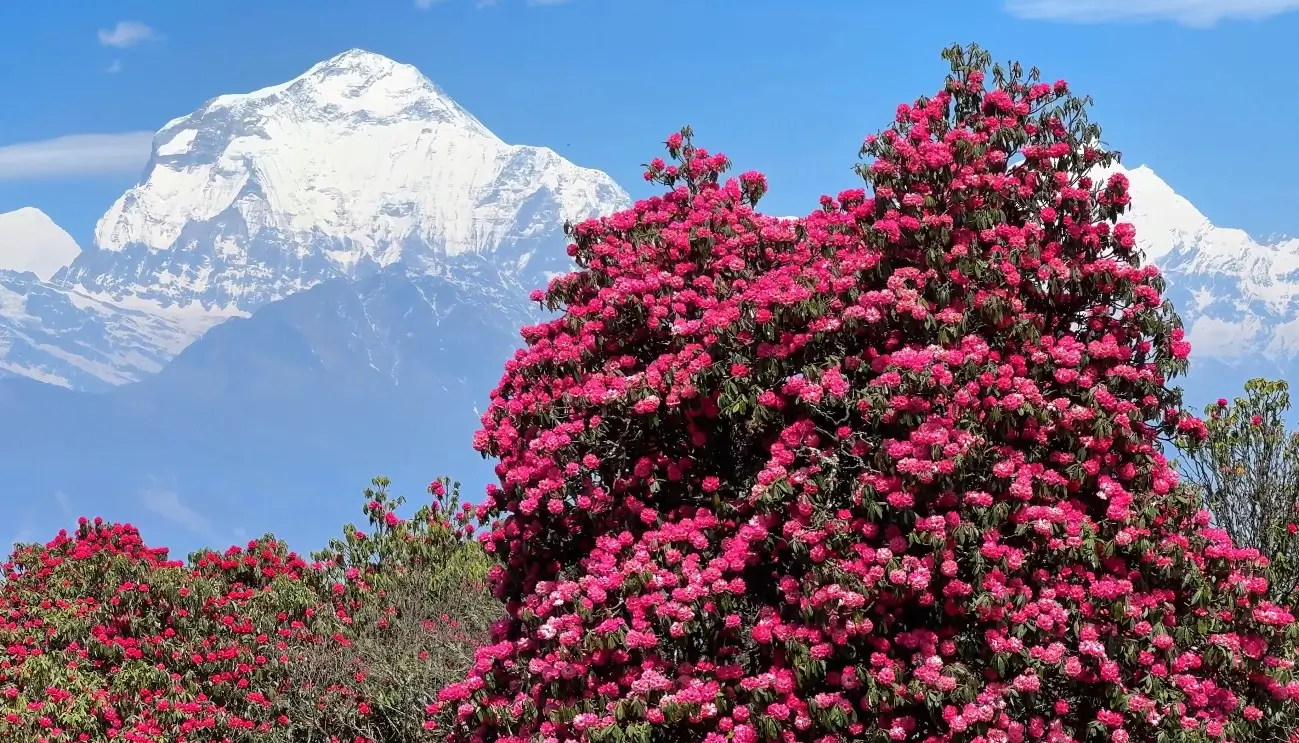
The grayanotoxin that makes mad honey unique comes exclusively from the nectar of specific wild Rhododendron species that grow in the high-altitude forests of Nepal.
These forests are under pressure. Deforestation for timber and farmland expansion is reducing Rhododendron coverage. Climate change is altering blooming patterns and pushing viable growing zones higher up the mountains. And as forests shrink, the bees have less forage, produce less honey, and colonies weaken.
The survival of our product is directly tied to the survival of these forests. This is not an abstract environmental concern for us — it is the foundation of everything we do.
When the forests are healthy, the bees thrive. When the bees thrive, the honey flows. When the honey flows, the hunters have work. When the hunters have work, their communities survive. It is one connected chain — and it starts with the trees.
We recognize that as a small company, we cannot single-handedly solve deforestation in the Himalayas. But we understand that our entire existence depends on these ecosystems remaining intact. Every jar we sell is proof that wild forests have economic value — and that is one of the most powerful arguments for keeping them standing.
“Every jar of mad honey is an argument for keeping the forests alive.”
If the people who risk their lives harvesting this honey are not treated fairly, nothing else matters. Here is exactly how we operate.
We buy directly from honey hunters. There are no middlemen, no brokers, no agents, no commodity traders anywhere in our supply chain. The money you pay goes as directly as possible to the people who harvested your honey. This is how we started and this is how we will always operate.
We pay our honey hunters significantly above the local market rate for raw mad honey. Other buyers offer commodity prices. We don’t. We pay more because the work demands more — more skill, more courage, more physical endurance than almost any other food harvesting practice on earth. We do not negotiate down. We do not leverage our buying power to suppress prices.
Hunters are paid at the time of harvest. Not after we process the honey. Not after we sell it to customers. Not 30 days later. At harvest. Their work is done and they are compensated immediately. They should never carry the financial risk of our business.
The honey is separated for us. The beeswax is kept by the local communities for candles, waterproofing, and traditional crafts. Nothing from the harvest is wasted. What the mountain gives is used completely — by us and by the communities who make this possible.
Children do not participate in honey harvesting operations. Cliff harvesting is extremely dangerous work performed exclusively by experienced adult hunters. Non-negotiable.
Every hunter who works with us does so by choice. No exclusive contracts. No dependency traps. No pressure. They work with us because the pay is fair, the relationship is honest, and they are treated with respect. They are free to walk away at any time.
Our hunters are the experts. They know the bees, the cliffs, the weather, the seasons, and the forests better than we ever will. We do not tell them how to do their job. We do not set quotas. We do not push for more when they say it is enough. Their judgment is final — always.
When you buy a jar of Himalayan Giant mad honey, you are not just buying honey. You are participating in a chain that connects your table to the highest cliffs on earth and the people who climb them.
→ A honey hunter receives fair payment — significantly above market rate — directly, at the time of harvest, for dangerous, skilled work that most people could never do. No middlemen take a cut.
→ A wild bee colony is harvested once and left alone — with enough honey remaining for the colony to survive, rebuild, and thrive until the next season.
→ Nothing from the harvest is wasted. Honey comes to you. Beeswax stays with the community. The mountain gives, and everything it gives is used with respect.
→ A Rhododendron forest matters — because there is real economic value in keeping it standing.
→ A traditional practice survives another generation — instead of being lost to modernization and migration.
→ A small, honest company stays in business — one that pays fairly, harvests responsibly, and refuses to cut corners.
→ Respect the dosage. More is not better. Using less means buying less often, which means less pressure on the bees to produce.
→ Read the Safety Guide before your first experience. An educated customer is a safe customer.
→ Be patient with availability. When we are sold out, we are sold out. That is not a failure — it is proof that we are harvesting responsibly.
→ Understand the price. Our honey is expensive because we pay above-market prices directly to hunters, harvest only once per colony per season, rotate sites to protect ecosystems, and refuse to cut any of these corners. The price reflects the true cost of doing this right.
The Himalayas have existed for 50 million years. The giant honeybees have been building their cliff colonies for longer than human civilization has existed. The Rhododendron forests have been blooming through ice ages and warming periods and everything in between.
We have been here for a few years.
The question is not whether the mountains need us. They do not. The question is whether we are worthy of what they give us.
We are trying to be. Every single day.
— Himalayan Giant