The Molecular Science of Himalayan Mad Honey: A Complete Biochemical Analysis for the Performance-Focused Mind
Content Disclosure: This article is educational and presents scientific information about grayanotoxin and Himalayan mad honey for informational purposes only. Nothing here constitutes medical advice, a diagnosis, a treatment recommendation, or a substitute for consultation with a qualified healthcare provider. Grayanotoxin is a pharmacologically active compound with documented dose-dependent effects. Individuals with cardiovascular conditions, those taking prescription medications, and pregnant or nursing individuals should not consume grayanotoxin-containing products without prior medical consultation. Legal status of mad honey varies by jurisdiction — verify local regulations before purchase or import.
In 401 BC, Xenophon’s soldiers in the Pontus region consumed wild honey and soon lost coordination, became disoriented, and then recovered within a day. What they experienced is now understood as exposure to grayanotoxin. In the Himalayas of Nepal, Gurung honey hunters still harvest this same type of honey — deliberately, at altitude, during a narrow seasonal window shaped by plant biology.
That continuity raises a precise question: what did these communities understand through observation that modern chemistry is only now able to describe at the molecular level?
Grayanotoxin is unusual among compounds that affect the nervous system. Most work by blocking ion channels. This one does the opposite — it holds voltage-gated sodium channels open, preventing them from resetting. Early kinetic research described this behavior in the 1990s, and it remains the key to understanding how the compound interacts with the body.
Himalayan mad honey contains this compound because bees forage on Rhododendron arboreum and related species above 3,000 meters, where environmental stress changes plant chemistry. Alongside grayanotoxin, the honey contains flavonoids, enzymes, and other secondary compounds shaped by altitude and season.
This article examines that system step by step — from high-altitude ecology to molecular structure, from sodium channel mechanics to dose-response patterns, and then to the broader bioactive profile. The goal is clear: to separate what is well established from what is still being studied, and to understand this compound on its own terms, without exaggeration or dismissal.
What Makes Himalayan Mad Honey Biologically Unique
Himalayan mad honey differs from regular honey because it is shaped by altitude, plant species, and bee behavior before it is ever harvested. It is produced by Apis laboriosa bees foraging on Rhododendron arboreum and Rhododendron campanulatum above 3,000 meters. Those conditions produce a chemical environment — including grayanotoxins and elevated flavonoids — that is not found in conventional lowland honey.
Unlike commercial honey, which often comes from mixed floral sources at low elevation, Himalayan mad honey is tied to a specific ecological system. The Nepal Himalayas — particularly regions like Lamjung and Myagdi — provide the altitude, climate, and plant diversity this compound profile requires. These conditions cannot be replicated in lowland agriculture.
The result is not just a different honey. It is a different chemical environment, shaped by altitude, season, and species interaction. The Gurung honey hunters, through generations of direct observation, have aligned their harvest practices with this ecology — encoding knowledge that modern plant chemistry is only now providing the molecular language to describe.
The Rhododendron Ecosystem at 3,000 Meters
At elevations between roughly 2,800 and 4,000 meters in the mid-Himalayan belt, Rhododendron arboreum and Rhododendron campanulatum dominate the spring landscape. These species produce nectar that contains grayanotoxins under high-altitude conditions. Cold temperatures, strong UV radiation, and low atmospheric pressure all shape this chemical output.
The bee responsible for collecting this nectar is Apis laboriosa — the Himalayan giant honey bee. It is the largest honey bee species in the world and builds exposed hives on cliff faces. During the spring bloom, it forages heavily on Rhododendron flowers, concentrating the compounds in the nectar into honey.
This tight link between plant, altitude, and bee behavior explains why mad honey is geographically rare. It depends on a specific ecological alignment that does not occur in most honey-producing regions of the world.
Species-Specific Compound Production
Not all Rhododendron species produce grayanotoxins at meaningful levels. Within the Himalayan context, Rhododendron arboreum is the primary contributor. Rhododendron campanulatum, found at higher elevations, is associated with variations in compound concentration between the two species.
Even within these species, production is not fixed. It varies based on altitude, soil conditions, and seasonal stress. This means two harvests from different locations — or even different years — can show different compound profiles. This is why batch-level testing matters more than category-level claims.
How Altitude Stress Triggers Secondary Metabolite Production
Plants at high altitude operate under constant environmental stress. Increased UV radiation, colder temperatures, thinner air, and limited nutrients all influence plant metabolism. In response, plants produce more secondary metabolites — compounds that are not required for basic survival but serve protective and adaptive functions.
In Rhododendron species, this includes terpenes and phenolic compounds such as flavonoids. Grayanotoxins fall within this broader category. They are produced in the plant tissue and transferred into the nectar, where bees later collect them.
Research on alpine plants supports this pattern. Stress conditions are consistently linked with higher concentrations of protective compounds. The honey produced from this nectar carries forward that same chemistry — reflecting the environmental conditions of the altitude where it originated.
Why Harvest Altitude Changes the Biochemical Profile
Altitude changes honey at the chemical level. When bees collect nectar above 3,000 meters, the plants they visit have already adapted to intense UV light, colder temperatures, and thinner air. These conditions shift how compounds are produced in the flower. That change carries through into the honey.
Studies on altitude and honey composition show that higher elevations are linked with measurable differences in phenols and flavonoids (Acacia honey from different altitudes: total phenols and flavonoids contents, laser-induced fluorescence spectra, and anticancer activity. 2020. PMID: 32776800). While that research is not specific to Rhododendron, it supports a clear pattern: when the environment changes, the chemistry changes with it.
In Himalayan mad honey, this means the final product reflects the stress conditions of the mountain ecosystem. It is not just where the honey is collected — it is how that location shapes every compound inside it.
UV Radiation and Flavonoid Concentration
UV radiation increases with altitude. Plants respond by producing more flavonoids — compounds that act as natural UV filters and protect plant tissue from damage.
In Rhododendron arboreum, this response leads to higher flavonoid levels in nectar at elevation. Bees collect that nectar and convert it into honey, carrying those compounds forward.
Research on honey composition confirms that altitude is a key variable in polyphenol content (PMID: 32776800). The pattern is consistent: more UV exposure is associated with higher flavonoid presence in the resulting honey.
Atmospheric Pressure and Nectar Concentration Mechanics
Altitude also changes the physics of honey production. At lower atmospheric pressure, water evaporates more easily. This affects how nectar is processed into honey inside the hive.
As moisture evaporates, dissolved compounds become more concentrated per unit of weight. This may contribute to higher apparent concentrations of bioactive compounds in high-altitude honey.
This mechanism is consistent with basic physical chemistry. Direct studies on honey production at altitude are limited, so it is best understood as a contributing factor — working alongside plant biology rather than replacing it.
The Gurung Spring Harvest Window — Biology, Not Tradition
The timing of mad honey harvest is not arbitrary. Gurung honey hunters collect honey during the spring bloom, when Rhododendron arboreum flowers produce nectar rich in grayanotoxins.
Outside this window, the same region produces very different honey. Autumn harvests come from other floral sources and contain little to no grayanotoxin. The difference is not subtle — it is a shift in the entire compound profile of the honey.
This timing reflects a precise understanding of plant cycles developed over generations. The Gurung community’s harvesting practices align closely with the biology of the ecosystem — a system refined through multigenerational observation and now supported by modern botanical analysis.
Why the Peak Bloom Window Determines Compound Potency
Grayanotoxin levels in nectar are not constant throughout the bloom period. They rise during peak nectar production and decline as the flower matures beyond its apex.
Himalayan Giant’s harvest protocol is built around this peak-bloom phase — the period when nectar output is highest and compound concentration is most pronounced. This aligns with the biology of flowering plants, where chemical output shifts over the course of bloom.
The exact timing of this peak can vary by altitude and seasonal conditions. What remains consistent is the principle: when the harvest happens matters as much as where it happens.
Grayanotoxin — The Compound at the Center of the Science
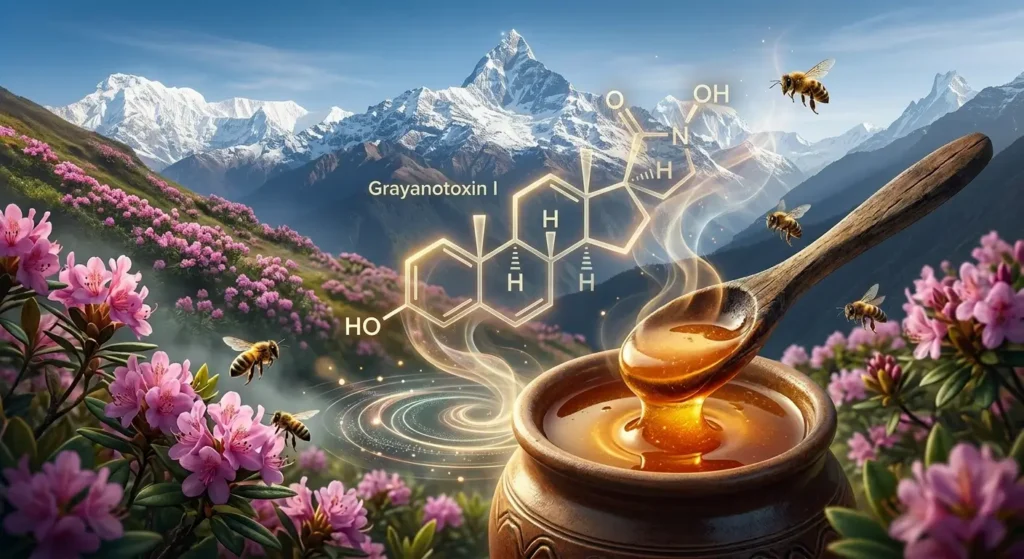
Grayanotoxin is a diterpene compound produced by plants in the Ericaceae family — especially Rhododendron arboreum — that modifies the function of voltage-gated sodium channels in nerve and muscle cells. It exists in multiple structural forms and is the defining compound that separates Himalayan mad honey from conventional honey at a molecular level.
This compound has been studied across several decades. A 1997 study (Kinetics of grayanotoxin evoked modification of sodium channels in squid giant axons. PMID: 9082327) described how it alters sodium channel behavior. Later work (Distinct sites regulating grayanotoxin binding and unbinding to voltage-dependent sodium channels. 2003. PMID: 12524436) identified specific binding interactions. A 2025 review (Grayanotoxins in Mad Honey: Mechanisms of Toxicity, Clinical Management, and Research Gaps. PMID: 40635392 — brings these findings together and outlines what is known — and what remains uncertain.
Molecular Structure and Classification
From a chemistry perspective, grayanotoxin belongs to the diterpene family — built from four isoprene units forming a 20-carbon framework. More specifically, it falls within the andromedane (ericane) subgroup, which has a complex ring structure with multiple hydroxyl groups attached.
In plant tissue, grayanotoxin exists bound to a sugar molecule called a glucoside. It becomes biologically active only after this bond is broken during digestion, releasing what is called the aglycone form. This is why its effects are not immediate at the moment of consumption.
Diterpene Chemistry — Why This Class of Compound Is Significant
Diterpenes are a well-studied class of natural compounds. They include molecules like taxol and ginkgolides — both known for interacting with cell-level systems.
Grayanotoxin fits into this broader pattern. Compounds in this class often interact with membrane proteins, including ion channels. Its behavior follows known chemical principles that help explain how it interacts with nerve cells.
Grayanotoxin Variants — GTX I, II, III, and Their Different Profiles
Grayanotoxin is not a single molecule. It is a group of related variants. The most studied are GTX I, GTX II, and GTX III.
- GTX I: The most extensively studied variant, commonly referenced in sodium channel research
- GTX II: Structurally similar to GTX I, but less frequently isolated in detailed studies
- GTX III: Also interacts with sodium channels and appears in certain Rhododendron species
Different Rhododendron species produce these variants in different ratios. Two honey batches with similar total grayanotoxin levels may still behave differently depending on their specific variant composition. This is why batch-level variant analysis — identifying which variants are present and at what concentration — is more meaningful than a single combined total.
The Sodium Ion Channel Mechanism — Explained Without a Chemistry Degree
The core of grayanotoxin’s activity comes down to how it interacts with sodium channels in cells.
In normal physiology, sodium channels open briefly when a nerve signal passes. Sodium ions enter the cell, creating an electrical impulse. Then the channel quickly closes and resets. This cycle — open, close, reset — happens in milliseconds. It controls how signals move through the body.
Grayanotoxin interrupts this cycle.
Instead of letting the channel close, it binds to the channel and keeps it open. A 1997 kinetics study (PMID: 9082327) showed that this effect targets the inactivation step — the closing phase. A 2003 study (PMID: 12524436) further identified specific binding sites that support this mechanism.
The result is prolonged sodium entry into the cell. In plain terms: it acts like a doorstop that prevents the channel from shutting.
This extended signal changes how nerve and muscle cells behave — especially in systems that rely on tight electrical timing.
How Voltage-Gated Sodium Channels Function in Normal Physiology
Voltage-gated sodium channels are proteins embedded in the cell membrane. They open when the electrical charge across the membrane changes.
When they open, sodium ions rush into the cell. This creates an action potential — the basic signal used by nerves and muscles. Immediately after opening, the channel inactivates and resets before it can open again. This rapid cycle allows precise timing in nerve communication.
What Grayanotoxin Does at the Channel Level — Step by Step
- Grayanotoxin binds to a specific site on the sodium channel
- The channel opens as part of normal signaling
- The inactivation (closing) step is blocked by the bound compound
- Sodium continues to enter the cell longer than normal
- The electrical signal is extended beyond its intended duration
This is different from toxins that block the channel completely. Rather than stopping the signal, grayanotoxin extends it.
Why This Mechanism Is Relevant to Autonomic Nervous System Function
The autonomic nervous system controls functions like heart rate and blood pressure. It relies on the same sodium channels found in other nerve cells.
Clinical research on mad honey poisoning (Clinical review of grayanotoxin/mad honey poisoning past and present. 2008. PMID: 18568799) shows that high levels of grayanotoxin can lead to bradycardia (slow heart rate) and hypotension (low blood pressure). These effects are linked to parasympathetic pathways — especially the vagus nerve.
This connection is important because it shows the compound’s effects are not random. They follow directly from how grayanotoxin interacts with sodium channels in autonomic nerve fibers.
The Dose-Response Relationship — Where Science and Safety Intersect
⚠️ The content below describes the documented dose-response profile of grayanotoxin based on published clinical literature. It does not constitute medical advice or a dosage recommendation. If you are considering intentional consumption of any product containing grayanotoxin, consultation with a physician familiar with your full health profile is essential before proceeding.
Grayanotoxin does not behave the same at all levels. Its effects change sharply depending on concentration. At low exposure, no visible effects are reported in published case data. As concentration increases, measurable physiological changes begin to appear. At higher levels, a well-documented clinical syndrome occurs.
This pattern is consistent across the literature. Clinical reviews (PMID: 18568799; PMID: 40635392) show the difference between no effect and toxicity is steep. Understanding the dose-response relationship is essential for interpreting both traditional use records and clinical risk data.
Subthreshold Doses — What the Research Documents
Below the level where effects can be observed, grayanotoxin exposure produces no documented symptoms in human case reports. This is referred to as the sub-threshold range.
This range has not been clearly defined in controlled human studies. A 2025 review (PMID: 40635392) identifies this as one of the most significant gaps in current research. Most available information comes from observational case data, not controlled trials.
“No observable effect” does not mean fully understood. It means effects have not been detected under current study conditions — a distinction that matters when evaluating the evidence.
The Threshold Zone — Where Effects Become Observable
At higher concentrations — within ranges described in some traditional use contexts — case reports document mild and temporary effects. These include sensations of warmth, light dizziness, and changes in perceived heart rate.
These effects are typically short-lived and resolve without medical intervention in documented cases (PMID: 18568799). However, the exact boundary between no effect and noticeable effect is not clearly defined in the research literature.
Individual response varies. Body weight, baseline cardiovascular health, concurrent medications, and individual sensitivity all influence how the same concentration affects different people.
Above-Threshold Doses — Mad Honey Poisoning Literature Review
⚠️ Important: High-dose grayanotoxin exposure causes a documented medical condition. Anyone experiencing cardiovascular symptoms after consuming mad honey should seek immediate medical attention.
High-dose grayanotoxin exposure causes a condition known as mad honey poisoning — also documented in the clinical literature as grayanotoxin poisoning syndrome. Symptoms include bradycardia (slow heart rate), hypotension (low blood pressure), nausea, vomiting, dizziness, and in more severe cases, altered consciousness and cardiac rhythm disturbances.
These findings are consistently reported in clinical case series, with the largest body of evidence coming from Turkey (PMID: 18568799; PMID: 40635392). Most patients recover with supportive care. Medical management is required in severe cases.
What Peer-Reviewed Research Shows
The scientific understanding of grayanotoxin comes from multiple research areas studied over nearly three decades.
Early mechanistic work established the core interaction. A 1997 study (PMID: 9082327) demonstrated that grayanotoxin alters channel behavior by preventing normal inactivation — not by blocking activation. This was the foundational finding.
A 2003 study (PMID: 12524436) added structural detail by identifying specific binding sites on the sodium channel. This showed the interaction is precise and site-specific, not generalized.
Clinical research followed. A 2008 review (PMID: 18568799) analyzed poisoning cases and documented the full symptom pattern alongside treatment approaches. This connected the molecular mechanism to real-world outcomes.
Botanical and food science studies then expanded the context. Research on Rhododendron bioactive compounds (Utilisation of Rhododendron luteum Sweet bioactive compounds as valuable source of enzymes inhibitors, antioxidant, and anticancer agents. 2020. PMID: 31837349) and altitude-related honey composition (PMID: 32776800) helped explain how these compounds enter the honey in the first place.
A 2025 review (PMID: 40635392) has brought these threads together — summarizing current knowledge and clearly identifying major gaps, especially the absence of controlled human studies at sub-toxic exposure levels.
The research is strong on mechanism and toxicity. It is still developing when it comes to controlled human outcomes at lower exposure levels. That gap is real, significant, and worth naming directly.
The Neurological Dimension — Why Performance-Focused Researchers Are Paying Attention
Interest in Himalayan mad honey is not random. It comes from a clearly defined biological mechanism. Grayanotoxin interacts with the autonomic nervous system — the system that controls heart rate, stress response, and recovery. This makes it relevant to people who track performance metrics like heart rate variability (HRV).
At the same time, the evidence must be read carefully. The mechanism is well understood. Human research at low, non-toxic levels is limited. Most clinical data comes from poisoning cases, not controlled studies in healthy individuals. That gap matters and should not be minimized.
The current interest is based on mechanistic plausibility — not confirmed outcomes.
Autonomic Nervous System Modulation — The Mechanism That Matters
The autonomic nervous system has two branches: sympathetic (activation) and parasympathetic (recovery). Both rely on voltage-gated sodium channels to send signals through nerve fibers.
Grayanotoxin interacts with these channels in autonomic nerve fibers. Clinical evidence shows that at high doses, the effect is strongly parasympathetic — seen as slowed heart rate in poisoning cases (PMID: 18568799).
This does not mean the same effect occurs at lower levels. It means the pathway exists. Whether sub-toxic exposure produces meaningful autonomic modulation in healthy individuals remains an open research question — one that no published controlled trial has yet answered.
Sympathetic vs Parasympathetic — The Balance That Defines Performance
Performance science often focuses on the balance between stress and recovery systems. One practical way to measure this balance is heart rate variability — the variation in time between consecutive heartbeats.
Higher HRV is generally associated with better recovery capacity and autonomic adaptability. Because grayanotoxin interacts with parasympathetic pathways, there is a logical hypothesis about possible effects on this balance.
That hypothesis is biologically coherent. It is not yet confirmed in controlled human studies.
How Sodium Channel Interaction Affects Autonomic Tone
Autonomic nerves depend on sodium channels to transmit signals. When grayanotoxin alters these channels, it changes how those signals behave.
At toxic levels, this produces clear outcomes — slower heart rate and reduced blood pressure. These are well documented (PMID: 18568799).
At lower concentrations, the same mechanism is present. The degree and direction of its effect in healthy individuals, at non-toxic doses, is not yet characterized in peer-reviewed human research.
The Vagus Nerve Connection — What the Research Suggests
The vagus nerve is the main pathway of the parasympathetic system. It connects the brain to the heart, lungs, and digestive organs and is one of the primary regulators of autonomic balance.
The bradycardia seen in grayanotoxin poisoning is consistent with vagal activation. This suggests the vagus nerve is one of the key pathways affected by the compound — a conclusion supported by the clinical literature (PMID: 18568799).
Separately, there is growing medical research on vagus nerve stimulation as a therapeutic approach. This does not validate grayanotoxin as a tool for that purpose. It does help explain why researchers interested in autonomic modulation are paying attention to compounds that interact with this pathway.
HRV as a Measurable Proxy — What Biohackers Should Track
For people monitoring autonomic function, HRV is the most practical available metric. Devices such as WHOOP, Oura Ring, and Garmin wearables provide continuous HRV data alongside sleep staging and composite readiness scores.
Because HRV reflects parasympathetic activity, it aligns with the pathway grayanotoxin is documented to affect. This makes it a logical tool for self-observation — not because an effect is established, but because it measures the system where the mechanism operates.
These are observational tools, not clinical instruments. Any patterns observed should be interpreted carefully and discussed with a qualified healthcare professional before drawing conclusions.
Cognitive Performance and Neuroactive Compounds — Separating Signal From Noise
Grayanotoxin is sometimes grouped with cognitive performance compounds. This is where precision matters most.
Its mechanism — sodium channel modulation — is fundamentally different from the pathways involved in classic cognitive enhancement. Acetylcholine signaling, BDNF expression, and neuroplasticity pathways are distinct systems. As of current research (PMID: 40635392), there are no controlled human studies examining cognitive performance effects at sub-toxic dose levels.
The interest comes from mechanism. Not from proven outcomes. These are not the same thing.
What “Metabolic Flexibility” Means in This Context
Metabolic flexibility refers to how efficiently the body switches between fuel sources in response to changing energy demands. It is associated with autonomic regulation in the broader literature.
There is no direct research connecting grayanotoxin to metabolic flexibility. Any connection is conceptual — based on shared regulatory pathways, not on direct evidence.
At this stage, it is a hypothesis, not a finding. It should be treated accordingly.
Where the Evidence Is Solid and Where It Is Still Emerging
What the research clearly supports:
- Sodium channel mechanism is well established (PMID: 9082327; PMID: 12524436)
- Cardiovascular effects at high doses are documented in clinical case series (PMID: 18568799)
- Clinical management of poisoning is well described (PMID: 40635392)
- Grayanotoxins are confirmed present in Rhododendron nectar and transferred to honey
What remains uncertain:
- Effects at sub-toxic levels in healthy human subjects
- The precise degree of autonomic modulation below the poisoning threshold
- Cognitive or broader performance-related outcomes
- Long-term safety profile at any repeated exposure level
This is the current state of the science. The mechanism is clear. The boundaries of its real-world application are still being mapped. That is not a weakness in the compound — it is the honest condition of an emerging research area.
The Full Bioactive Profile — Beyond Grayanotoxin
Himalayan mad honey is not defined by grayanotoxin alone. It is a complex biological mixture shaped by plant chemistry, altitude, and processing conditions. Alongside grayanotoxin, the honey contains flavonoids, polyphenols, enzymes, and trace minerals — each contributing to its overall chemical profile.
Focusing on a single compound gives an incomplete picture. The full bioactive matrix reflects both the Rhododendron source and the high-altitude environment where the nectar is produced. Some of these components are well documented in published research. Others require confirmation through batch-specific laboratory testing.
Flavonoids and Polyphenols — The Supporting Cast
Rhododendron-based honey contains a range of flavonoids, including quercetin and kaempferol — commonly identified in botanical analysis of this genus. These compounds originate in the plant and pass into the nectar, then into the honey.
Altitude plays a key role. Studies on high-altitude honey show higher total polyphenol content compared to lowland varieties (PMID: 32776800). Research on Rhododendron species (PMID: 31837349) supports the presence of similar compounds in plant tissue, which explains their appearance in the final honey product.
These are measurable chemical components. They describe what is present in the honey — not what it does in the human body.
Specific Flavonoids Found in High-Altitude Rhododendron Honey
Flavonoids commonly associated with Rhododendron-derived materials include:
- Quercetin — widely studied in plant chemistry and found across many flowering species in the Ericaceae family
- Kaempferol — structurally related to quercetin and often present alongside it in Rhododendron analysis
- Myricetin — another flavonoid identified in botanical studies of Ericaceae species
Their presence in honey is consistent with the known chemistry of Rhododendron plants. Confirming exact levels in any specific product requires a batch-specific Certificate of Analysis.
Antioxidant Activity at Altitude — What the Measurements Show
Laboratory tests used to measure antioxidant capacity — including DPPH and FRAP assays — often produce higher values in high-altitude honey samples.
A 2020 study (PMID: 32776800) found measurable differences in phenol and flavonoid content in honey collected at different elevations. These results were supported by validated analytical methods that detect compound variation across samples.
These measurements are in vitro — they describe chemical behavior in a laboratory setting, not outcomes in the human body. The distinction between chemical measurement and physiological effect matters and should not be collapsed.
Enzyme Activity in Raw, Unprocessed Honey
Raw honey contains active enzymes produced by bees and plants. The primary ones are diastase, invertase, and glucose oxidase.
These enzymes are sensitive to heat. When honey is processed at high temperatures, enzyme activity drops significantly. Cold extraction avoids this problem and helps preserve enzyme levels through to the final product.
Diastase activity is the standard measurement for this. It is expressed as a number on the Schade scale and is used in food science to assess processing conditions and freshness.
What Cold Extraction Preserves That Pasteurization Destroys
Cold extraction keeps heat-sensitive components intact. This includes enzymes, certain volatile compounds, and some polyphenol fractions.
Two key laboratory measurements reflect the effect of processing on the honey:
- Diastase activity — higher values indicate less heat exposure during processing
- HMF (hydroxymethylfurfural) — low levels indicate minimal heat processing; elevated HMF is a known marker of overheating or prolonged storage at high temperature
These are objective markers. They show how the honey was handled, not how it is marketed. International standards — including the Codex Alimentarius honey benchmark — use HMF as a primary quality indicator, with a maximum of 40 mg/kg for most honey categories.
Diastase Activity as a Freshness and Potency Marker
Diastase activity is one of the main quality indicators used in professional honey testing. The Codex Alimentarius sets a minimum value of 8 on the Schade scale for processed honey.
Raw, cold-extracted honey often exceeds this level. Over time or with heat exposure, this number decreases — making diastase a reliable, objective marker of both freshness and processing integrity.
Mineral Profile and Trace Element Density
The mineral content of honey reflects the soil where the source plants grow. In the Himalayas, soils are shaped by glacial activity and low agricultural input — producing a distinct mineral environment with limited contamination from industrial agriculture.
Plants absorb these minerals through their roots. The minerals move through the plant’s internal system, reach the flowers, enter the nectar, and are partially retained in the honey that bees produce.
The exact mineral profile varies by location and batch. It is measurable and is typically included in a comprehensive Certificate of Analysis.
How High-Altitude Soil Composition Reaches the Final Honey Product
The pathway is direct. Soil minerals enter plant roots, move through the plant’s vascular system, and reach the flower. From there, they become part of the nectar collected by bees.
When bees convert nectar into honey, some of these dissolved minerals remain in the final product.
This is why honey carries a geographic signature. Its composition reflects where it was produced — not just how it tastes or how it was processed.
How Himalayan Giant’s Spring Harvest Protocol Affects the Final Bioactive Profile
The scientific patterns described above — altitude ecology, plant chemistry, and harvest timing — only matter if they are preserved during sourcing and processing. In practice, this comes down to a series of decisions. Where the honey is collected, when it is harvested, how it is handled, and how it is tested all shape the final compound profile.
Himalayan Giant’s spring harvest protocol reflects these variables directly. The approach is built on altitude-specific sourcing above 3,000 meters, peak bloom timing, cold extraction, and batch-level third-party verification. Each of these decisions has a direct biochemical implication — and each is measurable in the laboratory.
Single-Origin Sourcing — Why Geographic Specificity Matters Biologically
Single-origin sourcing controls variability at the source. The compound profile of mad honey depends on local plant species, altitude, soil composition, and bloom timing. When honey is blended from multiple geographic regions, these variables mix and become difficult to interpret or verify.
Sourcing from defined locations within the Lamjung and Myagdi regions allows the chemical profile to remain tied to a specific ecosystem. This makes lab testing meaningful — the results reflect a single, traceable environment rather than an averaged mixture of different sources.
The Peak Bloom Harvest Window — What It Preserves at the Compound Level
The timing of harvest directly affects compound concentration. In Rhododendron arboreum, nectar production — and the presence of grayanotoxins — peaks during a specific phase of active bloom. After the peak, nectar chemistry changes and compound concentration declines.
Himalayan Giant’s protocol focuses collection on this peak-bloom window. This is consistent with plant biology: nectar chemistry shifts as flowers mature, and compound levels are highest at the apex of secretion, not before or after.
The exact timing varies by season and altitude. The principle does not vary: harvesting during peak bloom captures the highest available concentration for that cycle.
Cold Extraction — The Process Decision That Protects Bioactivity
Once harvested, how the honey is processed determines what remains intact. Honey enzymes — particularly diastase and glucose oxidase — are sensitive to heat. At temperatures above roughly 40°C, enzyme activity begins to decline measurably.
Standard commercial processing often exceeds this temperature range. Cold extraction avoids heat application entirely, preserving enzyme activity and maintaining the original chemical structure of the honey through to the finished product.
This is a verifiable claim. Diastase activity levels and HMF concentrations in the laboratory report reflect the thermal history of the honey — objectively, not as a marketing assertion.
Third-Party Lab Verification — What the HG-RSH-001 Report Measures
A batch-specific Certificate of Analysis (COA) provides the clearest picture of what is actually present in the honey. For Batch HG-RSH-001, testing is conducted by an independent third-party laboratory using validated analytical methods.
A complete COA for this product type includes:
- Grayanotoxin variants (GTX I and GTX III) measured by HPLC or LC-MS, with specific concentrations per gram
- Moisture content — target below 20% for microbiological stability
- HMF levels — aligned with Codex Alimentarius guidelines (maximum 40 mg/kg)
- Diastase activity on the Schade scale — reflecting enzyme preservation
- Microbiological screening for safety indicators
This data does not make claims. It provides measurements.
What a Certificate of Analysis Should Show for This Product Type
A credible COA should quantify, not just detect. It should state how much grayanotoxin is present per gram, and which variants were identified — not simply note that grayanotoxin was found.
It should also align with international quality benchmarks. Moisture below 20%, HMF within Codex Alimentarius parameters, and a diastase Schade number above 8 are the minimum quality indicators for a properly processed honey.
If any of these parameters are missing from a COA, the document is incomplete. Absence of data is not confirmation of quality — it is an information gap.
Chain of Custody — From Cliff Face to Cold Storage to Testing
Chain of custody documentation ensures that what is tested is the same product that was harvested. For Himalayan mad honey, this chain includes:
- Harvest location and date recorded at point of collection
- Transport conditions from mountain to processing
- Extraction method — cold, no heat applied
- Storage environment prior to testing — temperature and light controlled
- Laboratory submission records linking the sample to the specific batch
Each step in this chain is a potential variable that affects the final compound profile. Documenting it allows the results to be traced from origin to analysis — and gives the COA its traceability value.
How Performance-Focused Individuals Are Approaching This Compound
⚠️ Important: The following section describes traditional use records and published observations regarding sub-threshold grayanotoxin consumption. It does not constitute medical advice or a recommendation to consume this or any neuroactive compound. Individuals considering any dietary change involving pharmacologically active compounds should consult a qualified healthcare provider before proceeding.
Interest in grayanotoxin at sub-toxic levels comes from its clearly defined mechanism. It interacts with sodium channels and has documented effects on the autonomic nervous system at high doses. This creates a biologically plausible basis for investigating what happens at lower levels — but plausibility is not the same as confirmed effect.
The evidence base for low-dose intentional use is limited. Most clinical research addresses poisoning cases. What exists outside that comes from traditional use records and modern self-observation — not controlled trials.
The Micro-Dose Framework — What Informed Self-Experimenters Document
Traditional use records from Nepal and Turkey describe intentional, low-quantity consumption of mad honey within specific cultural contexts. The Gurung community has long-standing practices tied to seasonal harvest and controlled use — practices developed through multigenerational observation, not clinical experimentation.
Modern self-experimenters reference these records alongside the known pharmacology. Self-reported observations exist within biohacking communities. They are not standardized, clinically validated, or peer-reviewed.
No published guideline defines a safe or effective low-dose range for healthy individuals. The dose-response relationship is steep. Small changes in quantity — especially without knowing the exact grayanotoxin concentration of a specific batch — may produce very different outcomes between individuals.
Prior to any intentional consumption of grayanotoxin-containing products, consultation with a qualified healthcare provider is essential.
Protocol Integration Contexts — What Traditional Use Records Show
Ethnobotanical records show that mad honey has been used in specific contexts rather than as a daily food item. In Nepal, Gurung honey hunters have historically used it in relation to seasonal cycles and physical demands of their work. In the Black Sea region of Turkey, historical accounts describe similar patterns of controlled, context-specific use.
These practices were developed through observation over many generations. They are not the result of controlled experimentation, and they vary significantly by region and cultural context.
This distinction matters. Traditional use reflects accumulated empirical experience — not clinical validation. Both forms of evidence have value. They answer different questions and should not be conflated.
What to Observe and Track — The N=1 Measurement Framework
Self-experimenters often apply an N=1 framework — tracking individual responses over time using baseline data as a comparison reference. One variable is introduced at a time. Specific metrics are pre-selected. Records are maintained over a defined period.
For compounds with documented autonomic relevance, common metrics include HRV, resting heart rate, and sleep staging data — all measurable with consumer wearable devices.
The goal of this framework is systematic observation, not clinical conclusion. Patterns at the individual level are not generalizable outcomes.
⚠️ The content in this section and the sections above describes traditional use contexts and observational self-experimentation frameworks. This does not constitute medical advice, a dosage recommendation, or an endorsement of self-experimentation with neuroactive compounds. The absence of a peer-reviewed clinical trial for sub-threshold use in healthy subjects is a genuine evidence gap — not an implicit endorsement of safety. If you are considering intentional consumption of any product containing grayanotoxin, consultation with a physician familiar with your full health profile is essential before proceeding.
Wearable Data Correlation — HRV, Sleep Staging, Readiness Scores
Devices such as Oura Ring, WHOOP, and Garmin provide continuous data on HRV, sleep stages, and composite readiness scores. These metrics reflect autonomic nervous system activity in real time.
Because grayanotoxin interacts with autonomic pathways, these tools are commonly used by self-experimenters to observe personal response patterns over time. They provide structured observational data.
They are measurement tools, not clinical diagnostic instruments. Any interpretation should be cautious and discussed with a healthcare professional before acting on it.
Frequently Asked Questions
What is grayanotoxin and where does it come from?
Grayanotoxin is a diterpene compound produced by plants in the Ericaceae family — especially Rhododendron species such as Rhododendron arboreum. It is found in nectar, pollen, and leaves, and enters honey when bees collect nectar from these plants.
It is not created by bees. It transfers directly from plant to nectar to honey. The highest documented concentrations occur in regions where Rhododendron species dominate the landscape — including the Nepal Himalayas and the Black Sea coast of Turkey.
Grayanotoxin exists in multiple structural variants — GTX I, GTX II, and GTX III — which differ in structure and biological activity. The specific variant composition depends on which Rhododendron species are present in the foraging area.
Is Himalayan mad honey safe to consume?
Himalayan mad honey contains grayanotoxin, a compound with a well-documented dose-dependent effect profile. At high intake levels, it causes a clinical condition known as mad honey poisoning — characterized by bradycardia, hypotension, nausea, and dizziness.
At quantities described in traditional use contexts, adverse effects are not typically documented in healthy adults in the published literature. However, this does not establish a universal safety level. Individual response varies based on body weight, cardiovascular baseline health, concurrent medications, and individual sensitivity to the compound.
There are no controlled clinical trials establishing safety at sub-threshold levels in healthy individuals. Interactions with medications affecting heart rate or blood pressure are specifically documented in the clinical literature (PMID: 18568799).
Safety is not a fixed category for any pharmacologically active compound. It is dose-dependent, context-dependent, and individual-dependent.
Consultation with a qualified healthcare provider is recommended before any intentional consumption.
What is the difference between mad honey and regular honey?
Mad honey and regular honey differ primarily in their floral source and compound profile.
Regular commercial honey:
- Produced from mixed floral sources at various elevations
- Contains no grayanotoxin
- Varies widely in composition depending on geographic origin and processing
Himalayan mad honey:
- Produced from Rhododendron nectar by bees foraging at high altitude
- Contains grayanotoxin in concentrations that vary by harvest and batch
- Associated with elevated flavonoid and polyphenol levels due to altitude-related plant stress
Himalayan mad honey also differs from Turkish mad honey — both are grayanotoxin-containing products, but they originate from different Rhododendron species compositions, different altitude profiles, and different ecological conditions. These differences may produce distinct compound profiles, though direct comparative research between the two regional sources is limited.
Standard commercial honey is not routinely tested for grayanotoxin. In regions where Rhododendron species are present, absence of a label does not always confirm absence of the compound.
How does grayanotoxin affect the nervous system?
Grayanotoxin affects the nervous system by acting on voltage-gated sodium channels — proteins in nerve and muscle cell membranes that control electrical signaling.
In normal function, these channels open briefly, allow sodium to enter the cell, generate an electrical signal, then close and reset. Grayanotoxin binds to the channel and prevents the closing step. Sodium continues to enter the cell longer than normal. The electrical signal is extended beyond its intended duration.
The autonomic nervous system — which regulates heart rate, blood pressure, and digestion — is particularly sensitive to this mechanism. At high doses, the documented effects include slowed heart rate and lowered blood pressure (PMID: 18568799).
These effects are dose-dependent. At lower concentrations, the same mechanism is active, but observable effects in healthy individuals have not been formally characterized in peer-reviewed human studies.
What makes spring harvest Himalayan honey different from autumn harvest?
Spring harvest honey is collected during the active bloom of Rhododendron arboreum and Rhododendron campanulatum — the period when nectar contains grayanotoxin at its seasonal peak concentration.
Autumn harvest honey comes from a different floral palette. By autumn, Rhododendron flowering has ended. The bees forage on whatever is in bloom at that time. The resulting honey typically contains little or no grayanotoxin and has a fundamentally different bioactive profile.
This difference is driven entirely by plant biology and seasonal nectar availability — not by processing or handling. The Gurung harvesting tradition aligns with the spring bloom cycle precisely because the compound profile of the honey depends on it.
See also: The Gurung Spring Harvest Window
Is mad honey legal in the United States?
Mad honey is not classified as a controlled substance in the United States. It is regulated as a food product under FDA jurisdiction.
There are currently no federal restrictions on the purchase, possession, or consumption of mad honey by adults in the US. Imports are subject to standard FDA food import inspection procedures at the port of entry.
Individual state regulations may vary. Regulatory frameworks can change. Consumers are advised to verify current requirements with relevant local authorities before purchase or import.
See also: Legal Status section
Note: This information reflects the current regulatory status as understood at the time of publication. It does not constitute legal advice.
How much mad honey is considered a micro-dose versus a high dose?
There is no clinically defined micro-dose for mad honey in peer-reviewed human research. This term does not appear in the formal scientific literature for this compound.
Clinical literature documents adverse effects at intake levels reported in poisoning cases — but these cases vary widely in quantity, honey concentration, and individual factors (PMID: 18568799). The variation makes it impossible to extract a universal threshold from case data.
Traditional use records describe intentional consumption in small quantities, but these are not standardized across sources or validated in controlled research.
Without knowing the exact grayanotoxin concentration of a specific batch — which varies significantly between products — quantity alone is not a reliable reference point. The same volume of honey from two different sources can represent very different compound exposures.
Any intentional consumption should be discussed with a qualified healthcare provider before proceeding.
What does a third-party lab report verify in mad honey?
A Certificate of Analysis (COA) verifies what is chemically present in a specific batch of honey and confirms that it meets defined quality standards.
A credible COA for Himalayan mad honey includes:
- Grayanotoxin variant identification and quantification — GTX I and GTX III measured by HPLC or LC-MS, with specific concentrations per gram (not just presence or absence)
- Moisture content — below 20% for microbiological stability
- HMF concentration — within Codex Alimentarius guidelines (maximum 40 mg/kg), indicating appropriate heat management
- Diastase activity — Schade scale measurement, confirming enzyme preservation
- Microbiological screening — confirming safety parameters
A COA that reports only “grayanotoxin present” without quantification, variant identification, or batch-specific traceability provides insufficient information for meaningful product evaluation.
Can mad honey interact with medications or supplements?
Yes. Grayanotoxin affects heart rate and blood pressure through its action on voltage-gated sodium channels in autonomic nerve and cardiac tissue. This creates a documented risk of pharmacodynamic interaction with medications that act on the same physiological systems.
Medications of particular concern include:
- Antihypertensive agents (blood pressure medications)
- Beta-blockers
- Calcium channel blockers
- Cardiac glycosides (such as digoxin)
A pharmacodynamic interaction means two compounds with overlapping physiological effects act together — the combined effect may be stronger than either alone.
This interaction risk is documented in the clinical literature on grayanotoxin poisoning (PMID: 18568799). It applies at any dose level in individuals taking these medication classes.
Anyone taking cardiovascular, neurological, or autonomic-modulating medications must consult a physician before consuming any grayanotoxin-containing product.
This is not a comprehensive drug interaction profile. Only a qualified pharmacist or physician can assess interactions with a specific individual’s medication list.
How is Himalayan Giant’s honey different from other mad honey brands?
The primary differences are measurable and documented:
- Single-origin sourcing — Lamjung and Myagdi regions, Nepal, above 3,000 meters
- Spring harvest timing — collected during peak Rhododendron bloom, not blended across seasons
- Cold extraction — no heat applied, preserving enzyme activity and polyphenol integrity
- Batch-specific third-party testing — COA for Batch HG-RSH-001 with grayanotoxin variant quantification, not category-level testing
- Chain of custody documentation — traceable from harvest location through cold storage to laboratory analysis
The key differentiator is the Certificate of Analysis. A batch-specific COA with quantified grayanotoxin variants — not just a general “lab tested” claim — is the only document that allows meaningful evaluation of what is actually in the product.
Regardless of brand, requesting a batch-specific COA that quantifies grayanotoxin variants before purchase is the most informed approach to evaluating any mad honey product.
What research exists on grayanotoxin in humans?
Most published human research on grayanotoxin focuses on clinical toxicology — case reports and case series documenting the poisoning syndrome following accidental or excessive consumption.
The key areas of research include:
- Mechanistic studies — sodium channel binding kinetics and site identification (PMID: 9082327; PMID: 12524436)
- Clinical poisoning documentation — symptom profile, dose context, and treatment (PMID: 18568799)
- Synthesis and review — summary of current evidence and identified research gaps (PMID: 40635392)
There are no published controlled trials examining effects at sub-threshold doses in healthy human subjects. This is the most significant gap in the current literature — explicitly identified in the 2025 review.
The science is strong on mechanism and on the toxicity profile. It is limited on controlled human outcomes at lower exposure levels. Both facts are important and neither should be minimized.
How should Himalayan mad honey be stored to preserve its bioactive compounds?
Store at room temperature in a sealed container, away from direct heat sources and prolonged UV light exposure.
- Avoid temperatures above ~40°C — this threshold is where enzyme activity begins to decline measurably. Do not microwave.
- Avoid direct sunlight — extended UV exposure may degrade certain polyphenol fractions over time.
- Refrigeration is not required — and may cause crystallization, which is a physical state change, not a quality defect.
- Crystallization is reversible — gentle warming in a water bath below 40°C restores the liquid state without degrading enzyme fractions.
Grayanotoxin itself is relatively heat-stable compared to the enzyme and polyphenol components. Storage concerns are primarily relevant to preserving diastase activity and the flavonoid profile.
Does grayanotoxin have any documented cardiovascular effects in humans?
Yes. Clinical literature clearly documents that grayanotoxin produces cardiovascular effects at high doses.
The compound’s action on voltage-gated sodium channels in cardiac muscle and autonomic nerve fibers produces dose-dependent effects including bradycardia (slowed heart rate) and hypotension (lowered blood pressure). These are the defining cardiovascular features of mad honey poisoning as described in the clinical literature (PMID: 18568799; PMID: 40635392).
These effects are typically reversible upon cessation of exposure and resolve with supportive care in most documented cases.
At sub-toxic dose levels, the same mechanism is active. However, measurable cardiovascular effects in healthy individuals at low doses have not been formally characterized in controlled peer-reviewed studies. The mechanism exists; the sub-threshold cardiovascular effect profile in healthy adults remains an open research question.
How does grayanotoxin compare to other neuroactive compounds found in honey?
Grayanotoxin is unique among honey-associated bioactive compounds because it directly modifies voltage-gated sodium channel function. No other compound typically found in honey shares this mechanism.
Standard honey bioactives — quercetin, kaempferol, caffeic acid phenethyl ester, and hydrogen peroxide-generating enzyme systems — act through antioxidant, antimicrobial, or receptor-modulating pathways. These are fundamentally different mechanisms.
Manuka honey’s notable bioactivity is driven by methylglyoxal — a compound with antimicrobial properties through a completely different chemical pathway. There is no mechanistic overlap with grayanotoxin’s sodium channel interaction.
Grayanotoxin’s specific molecular target is what makes mad honey pharmacologically distinct within the broader honey category. A defined molecular target also means a more defined dose-response profile — which is why dose precision matters more here than with general-antioxidant honey products.
See also: Grayanotoxin — The Compound at the Center of the Science
What is “mad honey disease” and how is it different from intentional use?
“Mad honey disease” — the clinical term for grayanotoxin poisoning — refers to the toxidrome that results from consuming honey with high grayanotoxin concentrations, typically in amounts substantially above what traditional use contexts describe.
Documented symptoms include dizziness, nausea, bradycardia, hypotension, sweating, and in more severe cases, altered consciousness. Most cases in the clinical literature resolve within 24 hours with supportive care (PMID: 18568799).
The majority of documented poisoning cases involve accidental consumption — honey consumed without knowledge of its grayanotoxin content, or in quantities far exceeding traditional use amounts.
Intentional use in traditional Himalayan and Black Sea contexts involves much smaller quantities, consumed in deliberate cultural settings with multigenerational accumulated knowledge of dosing context. These are fundamentally different exposure scenarios.
The poisoning syndrome is well documented and real. Low-dose effects in healthy individuals remain less clearly defined in the formal research literature. Both facts coexist.
Conclusion
Grayanotoxin is not a simple compound. Its behavior depends on structure, source, concentration, and the biological context in which it acts. The altitude where the nectar forms, the Rhododendron species involved, the timing of the harvest, and how the honey is processed all shape the final chemistry.
That complexity is not a problem to resolve. It is the reason the compound continues to attract attention from researchers, clinicians, and informed individuals who want to understand — not estimate — what they are working with.
The science is clear in certain areas. The sodium channel mechanism is well established (PMID: 9082327; PMID: 12524436). The toxicity profile is well documented (PMID: 18568799). The research gaps are also clear: controlled human studies at sub-toxic levels do not yet exist. Acknowledging this honestly is not a limitation of this analysis — it is the condition of responsible engagement with an emerging research area.
What the Gurung community developed over centuries of direct observation was an empirical knowledge system. They did not have mass spectrometry. They had something harder to replicate: multigenerational, real-world feedback from a consistent ecological source. Modern analytical chemistry has not replaced that knowledge. It has provided the molecular language to describe it.
What matters now, for anyone approaching this compound seriously, is verification at the batch level. Which grayanotoxin variants are present. At what concentration. Under what processing conditions. These are answerable questions — and a batch-specific Certificate of Analysis is the document that answers them.
What would you like to do next?
Reserve your allocation
The 2026 Spring Reserve represents a single harvest from a single geographic source. Spring harvest yields are finite by biological definition — determined by bloom duration, hive output, and altitude access windows, not production schedules.
→ Access the 2026 Spring Reserve
Content Disclosure: This article presents scientific information about grayanotoxin and Himalayan mad honey for educational purposes only. Nothing in this article constitutes medical advice, a diagnosis, a treatment recommendation, or a substitute for consultation with a qualified healthcare provider. Grayanotoxin is a pharmacologically active compound with documented dose-dependent effects. Individuals with cardiovascular conditions, those taking prescription medications, and pregnant or nursing individuals should not consume grayanotoxin-containing products without prior medical consultation. Legal status of mad honey varies by jurisdiction — verify local regulations before purchase or import.