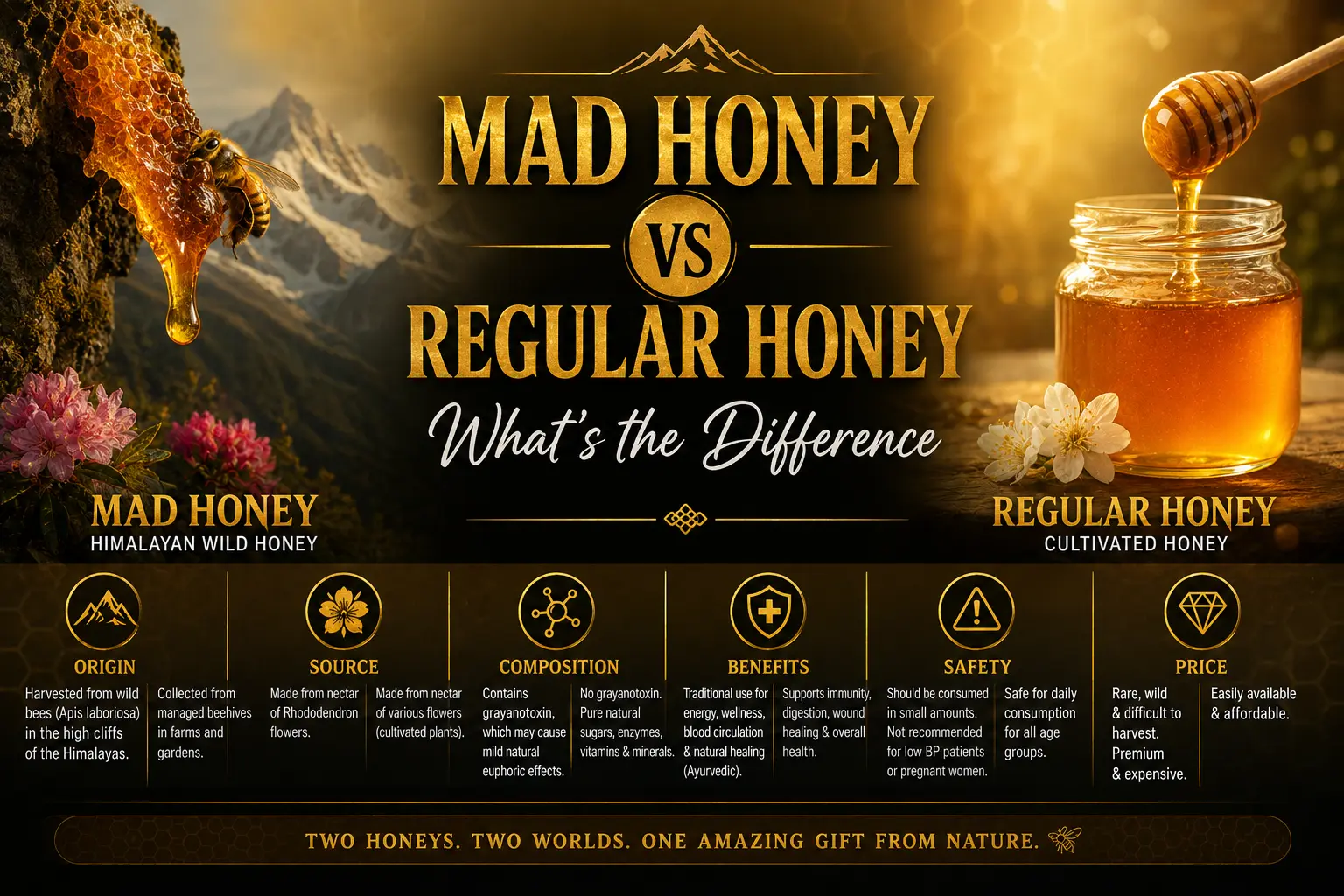
The Science of Liquid Gold: Health Benefits, Types, and the Power of Raw Honey

Is Honey Actually Good for You?

Here is something most people never stop to think about: humans have been eating honey for at least 8,000 years. Cave paintings in Valencia, Spain, show our ancestors climbing rock faces to collect it — risking everything for a jar of something golden. And yet, standing in a modern grocery store aisle, you might reasonably wonder whether the squeezable bear-shaped bottle in front of you has anything in common with what those early humans risked their lives to reach.

The short answer? Probably not much.

Honey is one of nature’s most complex functional foods, containing over 180 bioactive compounds — including antioxidants, live enzymes, amino acids, and natural antimicrobial agents — that refined table sugar completely lacks. The health benefits of honey depend almost entirely on the type you choose and how it was processed before it reached your kitchen.

Not all honey is created equal. Some varieties offer targeted therapeutic properties backed by decades of clinical research. Others — by the time they reach the supermarket shelf — have been heated, filtered, and diluted to the point where they are little more than flavored syrup.

This guide is for anyone who wants to understand the real story. Whether you are trying to make a smarter daily swap for refined sugar, support your immune system with whole foods, or explore why certain rare honeys command serious attention from both scientists and traditional healers — you will find clear, research-backed answers here.

We will cover everything from the basic biochemistry of what honey actually is, to a complete breakdown of the most important varieties, to the specific health benefits the evidence actually supports. And by the end, we will arrive at one particular honey — harvested once a year, from cliff-face hives in the Himalayan mountains of Nepal — that represents something genuinely unlike anything else in the natural food world.

⚠️ Medical Notice — Please Read Before Continuing

This article is for educational and informational purposes only. It is not a substitute for professional medical advice, diagnosis, or treatment.

Infants under 12 months: Never give honey of any kind to babies under one year old. Raw and processed honey alike carry a risk of infant botulism, a rare but serious illness caused by Clostridium botulinum spores. This is firm medical consensus — not a precaution to weigh against other factors.

Diabetes and blood sugar conditions: Honey raises blood sugar. If you manage blood sugar through diet or medication, consult your healthcare provider before making honey a regular part of your routine.

Mad Honey specifically: Contains grayanotoxins — naturally occurring compounds with real physiological effects. If you have heart conditions, low blood pressure, or take cardiovascular or neurological medications, speak with your physician before consuming Mad Honey.

Pregnant or breastfeeding women: Consult your healthcare provider before adding specialty honeys to your diet.

Every health claim in this article is referenced by source tier. Where evidence is limited, we say so clearly.

What Is Honey, Really? The Biochemistry Behind the Sweetness

Most of us grow up thinking of honey as a natural sweetener — something you drizzle on toast or stir into tea when you want to feel slightly virtuous about not reaching for the sugar bowl. That framing is not wrong, exactly. But it is embarrassingly incomplete.

Honey is a supersaturated solution of natural sugars produced by bees from flower nectar — but its biochemical complexity extends far beyond sweetness. Raw honey contains over 180 identified substances, including flavonoids, phenolic acids, live enzymes, amino acids, and trace minerals, that collectively contribute to its documented therapeutic properties. No other natural sweetener comes close to this profile. Not maple syrup. Not agave. Not coconut sugar. Honey is, by a significant margin, the most chemically complex sweet substance humans regularly consume.

Here is what is actually inside that jar.

The 180+ Compound Profile — What Is Actually Inside Honey

At its core, honey is roughly 70–80% natural sugars — primarily fructose and glucose, with small amounts of sucrose, maltose, and other carbohydrates. That part is straightforward. What makes honey scientifically interesting is everything else packed into the remaining 20%.

Flavonoids — plant-derived antioxidant compounds including quercetin, kaempferol, and luteolin — are among the most studied components in honey. These are the same family of compounds that make blueberries and green tea worth consuming. In honey, they contribute to its antioxidant and anti-inflammatory activity. The darker the honey, generally speaking, the higher its flavonoid content.

Phenolic acids — including caffeic acid, ferulic acid, and ellagic acid — work alongside flavonoids as part of honey’s broader antioxidant system. Research consistently identifies these compounds as contributors to honey’s potential cardiovascular and cellular protective effects.

Enzymes are where things get particularly interesting — and where the difference between raw and processed honey starts to matter enormously. Three enzymes deserve your attention:

  • Glucose oxidase — perhaps the most important enzyme in honey. It converts glucose into hydrogen peroxide (H₂O₂), giving honey its natural antimicrobial properties. This is the primary reason honey inhibits bacterial growth.
  • Diastase — breaks down starch into simpler sugars. Its presence and activity level is used internationally as a quality marker for honey freshness. Low diastase activity signals heavily processed or old honey.
  • Invertase — converts sucrose into fructose and glucose, contributing to honey’s characteristic texture and sweetness profile.

All three enzymes are heat-sensitive. Pasteurization destroys them. We return to this point in detail shortly.

Amino acids are present in small but meaningful quantities, with proline being the most abundant. Amino acids are the building blocks of proteins — the body’s raw construction materials. Honey’s amino acid profile adds nutritional depth beyond pure caloric energy.

Trace minerals — including potassium, calcium, magnesium, phosphorus, and iron — vary by floral source and geography. High-altitude honeys, including those from Himalayan regions, tend to carry a richer mineral profile than lowland varieties, reflecting the soil and plant diversity of mountain ecosystems.

Honey by the Numbers

Per 1 tablespoon (21g / 0.74 oz) of raw honey

Measurement Value
Calories ~64 kcal
Total Carbohydrates ~17g
Natural Sugars ~16g (fructose + glucose)
Protein ~0.06g
Glycemic Index ~58 (vs. table sugar: ~65)
Average pH 3.9 (range: 3.2–4.5)
Water Content 17–20%
Identified Compounds 180+

Source: USDA FoodData Central; Journal of Agricultural and Food Chemistry

Is Honey Just Sugar in Disguise?

No. Not even close.

Refined white sugar is sucrose: one glucose molecule bonded to one fructose molecule. Strip away the sugarcane or sugar beet it came from, refine it, bleach it, and crystallize it — and what you have left is pure caloric energy with zero bioavailable nutrients. No antioxidants. No enzymes. No minerals. No antimicrobial activity. Nothing your body can use beyond fuel.

Raw honey contains the same sugars — but surrounded by an entire ecosystem of bioactive compounds that change how your body processes and responds to them. Its antioxidant profile reduces oxidative stress at a cellular level. Its enzymatic activity supports digestion and creates natural antimicrobial properties. Its bioavailable nutrients — however modest in absolute terms — are actually present, which is more than can be said for table sugar.

The glycemic index comparison is also worth understanding properly. Honey’s GI of approximately 58 is lower than table sugar’s 65 — but this number varies significantly by honey type. Acacia honey sits closer to 35. Buckwheat honey is higher. The GI of honey is not a fixed number — it is a range that reflects the diversity of what “honey” actually means.

Why pH Matters — Honey’s Built-In Defense System

Here is a fact that surprises most people: honey is acidic. At an average pH of 3.9, it sits closer to orange juice than to anything you might think of as a neutral food. This acidity — combined with low water content and the hydrogen peroxide produced by glucose oxidase — creates what scientists describe as a triply hostile environment for bacteria.

Think of it as a natural fortress with three separate walls:

  1. The acid wall — pH 3.9 disrupts bacterial cell function
  2. The drought wall — 17–20% water content starves microbes of the moisture they need to survive
  3. The chemical wall — hydrogen peroxide from glucose oxidase directly damages bacterial cell membranes

This is not a modern food science discovery. Archaeologists excavating Egyptian tombs have found honey estimated to be over 3,000 years old — still intact, still chemically recognizable, and by all accounts still edible. The ancient Egyptians used honey in wound dressings, embalming rituals, and medicine. They may not have understood the biochemistry, but they recognized what it did.

Raw honey, left sealed and dry, does not expire. It may crystallize — a sign of quality, not spoilage, which we address shortly — but it does not rot, mold, or become unsafe. That is not marketing language. It is simple chemistry.

To understand the full molecular science behind honey’s preservation and antimicrobial properties, the research goes considerably deeper than most guides explore.

The Anatomy of Honey — Understanding Different Types, Varieties, and Kinds

Walk into any specialty food store and you will find shelves lined with jars of honey wearing all kinds of labels — wildflower, clover, raw, organic, Manuka, forest, acacia, and more. Most people pick based on price or familiarity. Almost nobody picks based on what actually differentiates one jar from another at a biochemical level.

That is about to change for you.

There are thousands of honey varieties worldwide, each defined by its floral source, geographic origin, and level of processing. The most significant factors determining a honey’s health profile are the plant the bees foraged from, where that plant grew, and whether the honey was kept raw or subjected to heat and filtration after harvest.

What Actually Makes Different Honeys Different?

Every jar of honey begins the same way: a bee finds a flower, collects nectar, returns to the hive, and through enzymatic conversion and water evaporation, transforms that nectar into honey. Simple enough. But the variables inside that process create extraordinary diversity.

Three factors determine everything:

1. Floral Source
The plants bees forage from directly determine a honey’s compound profile — its antioxidants, enzymes, specific therapeutic properties, color, flavor, and crystallization behavior. Honey made predominantly from one flower type is called monofloral — think Manuka from New Zealand’s tea tree, or Acacia from black locust blossoms. Honey drawn from many flower sources is polyfloral (also called wildflower) — its profile is broader and more variable, but often richer in general antioxidant diversity.

Think of it like this: monofloral honey is a specialist. Polyfloral honey is a generalist. Neither is universally better — it depends entirely on what you need it to do.

2. Geographic Origin and Altitude
The same flower species grown in different soils, climates, and altitudes produces meaningfully different nectar. This is the honey world’s equivalent of terroir — the French winemaking concept that a food product carries the character of its landscape. High-altitude honey, including varieties harvested from Himalayan regions above 1,400 meters, reflects the mineral density and botanical diversity of mountain ecosystems in ways that lowland commercial honey simply cannot replicate.

3. Processing Method
How honey is handled after harvest determines how much of its biochemical complexity survives to reach you. Raw, cold-extracted honey retains its live enzymes, pollen, propolis, and antioxidant compounds. Pasteurized, fine-filtered honey has been processed in ways that destroy most of what made it therapeutically interesting.

The Definitive Honey Comparison Table

Here is how the most significant honey varieties compare across the factors that actually matter for health:

Honey Type Floral Source Origin Star Compound Primary Benefit Best Used For Rating
Raw Wildflower Mixed wildflowers Global Flavonoids Broad antioxidant activity Daily wellness, sleep support ★★★☆☆
Acacia Black Locust (Robinia pseudoacacia) Europe, USA, Asia Fructose profile Lowest glycemic index (~35) Blood sugar-conscious use* ★★★☆☆
Buckwheat Buckwheat (Fagopyrum esculentum) USA, Canada, Europe High polyphenol density Exceptional antioxidant strength Immune support, cough relief ★★★★☆
Forest/Honeydew Tree sap secretions Central Europe Oligosaccharides Prebiotic gut support Digestive health, microbiome ★★★☆☆
Manuka Tea tree (Leptospermum scoparium) New Zealand Methylglyoxal (MGO) Clinically studied antibacterial Wound care, gut health ★★★★☆
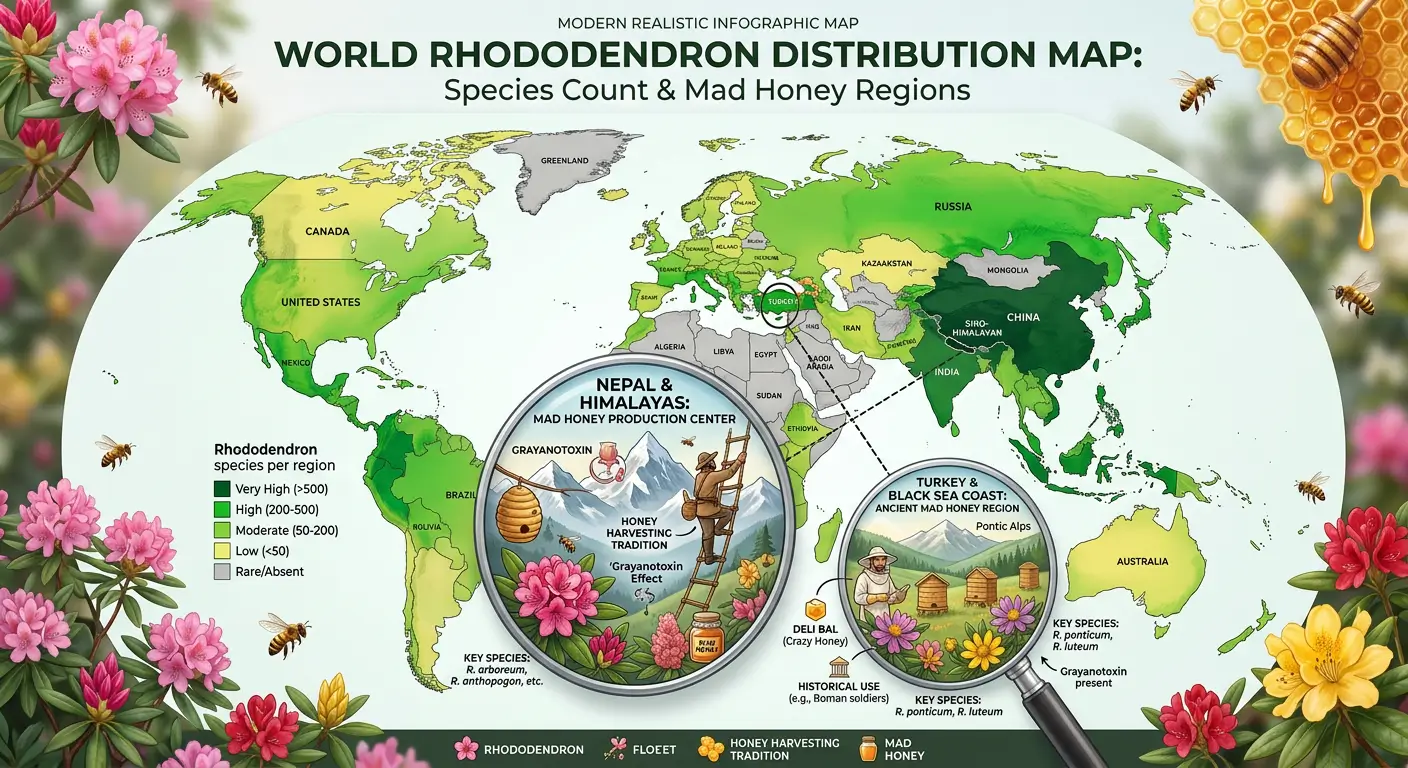
Mad Honey Rhododendron spp. Nepal, Himalayas Grayanotoxin Neuromodulatory and circulatory support Advanced wellness, traditional therapeutic use ★★★★★

Physician guidance required for diabetics

⚡ Editor’s Rating Note: Star ratings reflect each honey’s published research profile and compound uniqueness — not a medical endorsement. Mad Honey earns five stars because its active compound, grayanotoxin, is found in no other honey on earth. That biochemical distinction is objectively unmatched.

To understand the specific bee species responsible for producing Mad Honey, the complete guide to Apis laboriosa — the Himalayan giant honey bee — covers its biology, habitat, and harvesting in depth.

Monofloral vs. Polyfloral — Which Is Actually Better?

Monofloral honeys — Manuka, Acacia, Buckwheat, Mad Honey — are specialists. Their compound profiles are concentrated and consistent because bees are foraging primarily from one plant source. If you want a targeted effect, a monofloral variety gives you a higher, more predictable concentration of the relevant compound.

Polyfloral honeys — wildflower, meadow, forest blends — are generalists. Their antioxidant spectrum is broader, their flavor more complex, and their compound profile more variable season to season. For daily, all-purpose use, a good raw wildflower honey from a trusted source is hard to beat.

The mistake most people make is assuming one is superior in absolute terms. They serve different purposes. A well-stocked honey collection — much like a well-stocked spice rack — has room for both.

Two honeys in that table deserve a significantly deeper look. The first you have probably heard of. The second is the reason this guide exists. Let us start with the one that already has a reputation — and then arrive at the one that genuinely earns it.

The Real Health Benefits of Honey — What Science Actually Says

There is a version of this section that lists every possible benefit of honey in breathless, superlative language and then quietly hopes you do not look anything up. You will find that version on dozens of websites.

This is not that version.

Scientific research supports several meaningful health benefits of honey — including antimicrobial activity, antioxidant protection, wound healing support, cough suppression, and prebiotic gut effects. These benefits are real and documented. They also vary significantly by honey type, are most pronounced in raw unprocessed varieties, and exist on a spectrum from well-established clinical evidence to promising-but-preliminary research.

Knowing the difference matters. So let us be precise about it.

What Does Honey Actually Do for Your Body?

Rather than presenting all benefits as equally proven, here is an honest evidence framework — three tiers, clearly separated.

Well-Established — Strong Clinical Evidence

Antimicrobial Activity

This is honey’s most thoroughly documented property, and the science behind it is genuinely elegant. Raw honey inhibits bacterial growth through three simultaneous mechanisms: its acidic pH (~3.9) disrupts bacterial cell function, its low water content starves microbes of moisture, and its glucose oxidase enzyme continuously produces hydrogen peroxide — a natural antiseptic.

What makes this particularly significant is that these mechanisms work together, making it difficult for bacteria to develop resistance in the way they do against single-mechanism antibiotics. Research published in peer-reviewed microbiology journals has demonstrated honey’s inhibitory activity against a broad range of bacteria, including Staphylococcus aureus and Escherichia coli.

Cough Suppression

This one surprises people because it sounds like folk medicine — but it has institutional backing. The World Health Organization lists honey as a potential demulcent (throat-coating agent) for cough relief, particularly in children over 12 months. Systematic reviews of clinical trials have found honey comparable to, and in some cases more effective than, over-the-counter cough suppressants for upper respiratory tract infections.

The mechanism is partly physical — honey’s thick consistency coats and soothes irritated throat tissue — and partly biochemical, through its anti-inflammatory compounds. Many pediatric guidelines in the USA now recommend honey as a first-line option for children’s coughs before reaching for medication.

Wound Healing

Honey’s application in wound care is not alternative medicine. It is FDA-recognized medicine. Medihoney — a medical-grade Manuka honey dressing — has received FDA 510(k) clearance for wound management, including chronic wounds and burns. The antibacterial, anti-inflammatory, and moisture-maintaining properties of honey create an environment that supports tissue regeneration while preventing infection.

Emerging Evidence — Promising, More Research Needed

Antioxidant Protection

Raw honey’s flavonoids and phenolic acids act as antioxidants — compounds that neutralize free radicals and reduce oxidative stress at a cellular level. Oxidative stress is implicated in cardiovascular disease, premature aging, and certain cancers. Some research suggests that regular honey consumption may contribute meaningfully to antioxidant status, particularly for individuals whose diets are otherwise low in polyphenol-rich foods.

That said, honey is not a substitute for the antioxidant load you get from vegetables, fruits, and whole grains. It is a worthwhile addition to a diet already built on those foundations.

Gut Health and Prebiotic Support

Honey contains oligosaccharides — complex carbohydrates that the human digestive system cannot fully break down, but that beneficial gut bacteria can ferment and thrive on. This makes honey a natural prebiotic: a food that feeds your microbiome rather than simply passing through it.

Additionally, some research suggests honey may demonstrate inhibitory activity against Helicobacter pylori — the bacterium associated with gastric ulcers — though this evidence is preliminary and should not be interpreted as a treatment recommendation.

Sleep Quality Support

The theory — supported by some nutritional researchers — is that honey’s natural sugars cause a modest insulin release, which facilitates the transport of tryptophan (an amino acid) across the blood-brain barrier. Tryptophan converts to serotonin and eventually to melatonin, the hormone that regulates sleep. A small amount of raw honey before bed may support the body’s natural melatonin production process. Direct clinical trials specifically on honey and sleep quality are limited, however — it is a reasonable, low-risk practice rather than a clinically proven sleep intervention.

Traditional Use — Limited Direct Clinical Evidence

Energy and Athletic Performance

Honey has been used as a pre-exercise energy source for centuries. Its natural glucose provides rapid fuel; its fructose offers more sustained energy release. Some sports nutrition research has examined honey as a carbohydrate source for athletic performance, with results broadly comparable to commercial sports gels. The mineral content of honey — particularly potassium and magnesium — also contributes to electrolyte balance during prolonged physical exertion.

Seasonal Allergy Modulation

Local raw honey — containing trace amounts of local pollen — may help modulate seasonal allergy responses over time. The theory is biologically plausible, similar in concept to allergy immunotherapy. The clinical evidence, however, is inconsistent. If you are managing seasonal allergies, speak with an allergist before treating honey as a therapeutic intervention.

People Also Ask

Is honey anti-inflammatory?

Raw honey contains flavonoids, phenolic acids, and other polyphenolic compounds with documented anti-inflammatory properties. Studies show these compounds can inhibit certain inflammatory pathways at a cellular level. The degree of effect varies significantly by honey type — darker, polyphenol-rich varieties like Buckwheat and Manuka show the strongest activity in research settings. Honey is not a replacement for anti-inflammatory medical treatment, but it is a functional food with genuine anti-inflammatory biochemistry.

Is honey good for your immune system?

Honey’s antioxidant and antimicrobial compounds contribute to overall immune function by reducing oxidative stress and inhibiting certain pathogens. However, honey supports immune function as part of a balanced diet — it does not “boost” immunity in any clinically meaningful standalone sense. The term “immune boosting” has no precise medical definition and is frequently used to overstate what functional foods can do.

For a deeper look at the specific benefits of honey and its active compounds, the research goes considerably further than standard wellness guides typically explore.

Raw vs. Processed Honey — Why “Raw” Is Not Just a Marketing Word

Walk through the honey aisle of any American grocery store and you will see the word “natural” on almost every jar. “Pure.” “Golden.” “Farm-fresh.” These words mean exactly nothing from a regulatory standpoint. The FDA does not have a legal standard definition for “natural honey” that prevents heavily processed products from using the term freely.

“Raw,” however, is different — and understanding why is one of the most useful things this guide can give you.

Raw honey is honey that has not been heated above the natural temperature of a healthy beehive — approximately 95°F (35°C) — and has not been fine-filtered to remove its naturally occurring pollen, propolis, and enzymes. Processing and pasteurization destroy key enzymes, measurably reduce antioxidant content, and eliminate most of the therapeutic properties that make honey worth consuming beyond its calories.

The gap between raw honey and processed supermarket honey is not a matter of degree. In many cases, it is a matter of kind.

What Pasteurization Actually Does to Honey

Pasteurization was developed to make dairy products safer by killing harmful bacteria through heat. Applied to honey — which is already naturally antimicrobial, already acidic, already inhospitable to microbial growth — it serves a different purpose entirely. It makes honey clearer, more visually appealing, and slower to crystallize on the shelf.

In other words: pasteurization improves honey’s commercial convenience. It does not improve honey’s safety. And it comes at a significant biochemical cost.

Here is what heat does to a jar of raw honey:

  • Glucose oxidase — temperatures above 104°F (40°C) begin to degrade its activity. Standard pasteurization at 145–160°F (63–71°C) effectively destroys it, significantly reducing honey’s antimicrobial capacity.
  • Diastase — denatures rapidly at pasteurization temperatures. European food safety standards set minimum diastase activity levels precisely because low diastase reliably indicates overheated or old honey.
  • Invertase — similarly degrades under heat treatment, affecting texture and sugar conversion.
  • Bee pollen — fine-filtered out of most commercial honey. Itself a complex nutritional substance containing proteins, vitamins, and anti-inflammatory compounds — removed entirely for clarity.
  • Propolis — the resinous antimicrobial substance bees use to seal and sterilize their hives. Present in raw, unfiltered honey. Absent from fine-filtered commercial products.

Pasteurizing honey for health benefits is a little like squeezing a fresh orange, then boiling the juice before drinking it. You keep the calories and the basic flavor. You lose most of what made it worth squeezing in the first place.

The Crystallization Myth — Why Solid Honey Is Premium Honey

Here is a belief that costs people money and quality every year: crystallized honey is spoiled honey.

It is not. It has never been.

Crystallization is one of the most reliable quality signals raw honey can give you. When honey crystallizes — turning from a clear liquid into an opaque, grainy solid — it is because its natural glucose content is precipitating out of solution. This is a completely normal physical process with nothing to do with spoilage, contamination, or age.

Only honey with sufficient natural pollen content and minimal processing crystallizes properly. Heavily filtered, pasteurized honey often resists crystallization indefinitely — not because it is fresher, but because the natural particles that seed crystallization have been removed.

If your raw honey crystallizes, it is telling you something good about itself.

To return crystallized honey to liquid form: place the open jar in a bowl of warm water — not hot, not boiling — and allow it to liquefy slowly. Never microwave raw honey. Localized heat spikes destroy the same enzymes that pasteurization destroys, defeating the entire purpose of buying raw in the first place.

The Honeycomb Factor — Benefits of Raw Honeycomb

Raw honeycomb — honey still sealed inside its beeswax cells, exactly as the bees built it — is the most complete, unprocessed form in which honey exists. Eating it gives you several things that extracted honey, even raw extracted honey, cannot fully replicate.

The honey itself is entirely raw, never having been extracted or exposed to any processing equipment.

The beeswax contains long-chain fatty alcohols — including triacontanol and octacosanol — that some preliminary research has associated with cardiovascular support, including potential effects on cholesterol profiles. Direct clinical evidence in humans for beeswax fatty alcohols remains limited, and this should not be read as a treatment claim. Traditional use across many cultures of consuming whole honeycomb does suggest a longstanding intuition that the complete product offers something the extracted parts alone do not.

Propolis, embedded in honeycomb cells as a natural sealant and antimicrobial agent, is present in meaningful quantities in raw comb honey. Its flavonoid content and antimicrobial properties are considerably better documented than those of beeswax.

The simplest way to eat raw honeycomb: on a wooden board with aged cheese and fruit. On warm sourdough toast. Or, if you want to consume it the way it has been eaten for most of human history — straight from the comb, wax and all. The beeswax passes through the digestive system harmlessly.

How to Identify Real Raw Honey — What the Label Is (and Is Not) Telling You

Given that “natural” and “pure” are essentially meaningless marketing terms in the U.S. honey market, how do you actually find raw honey worth buying?

Look for these words specifically:

  • Raw — the most meaningful single term on a honey label
  • Unfiltered or unpasteurized — indicates minimal processing
  • Cold-extracted — honey removed from comb without heat
  • Crystallizes naturally — a brand confident enough to say this is signaling quality

Treat these with skepticism:

  • Pure honey — legally meaningless in most U.S. markets
  • Natural honey — same
  • Organic honey — meaningful only if USDA-certified
  • Any honey in a bear-shaped squeeze bottle at a price too low to reflect real beekeeping economics

What genuine raw honey actually looks like:
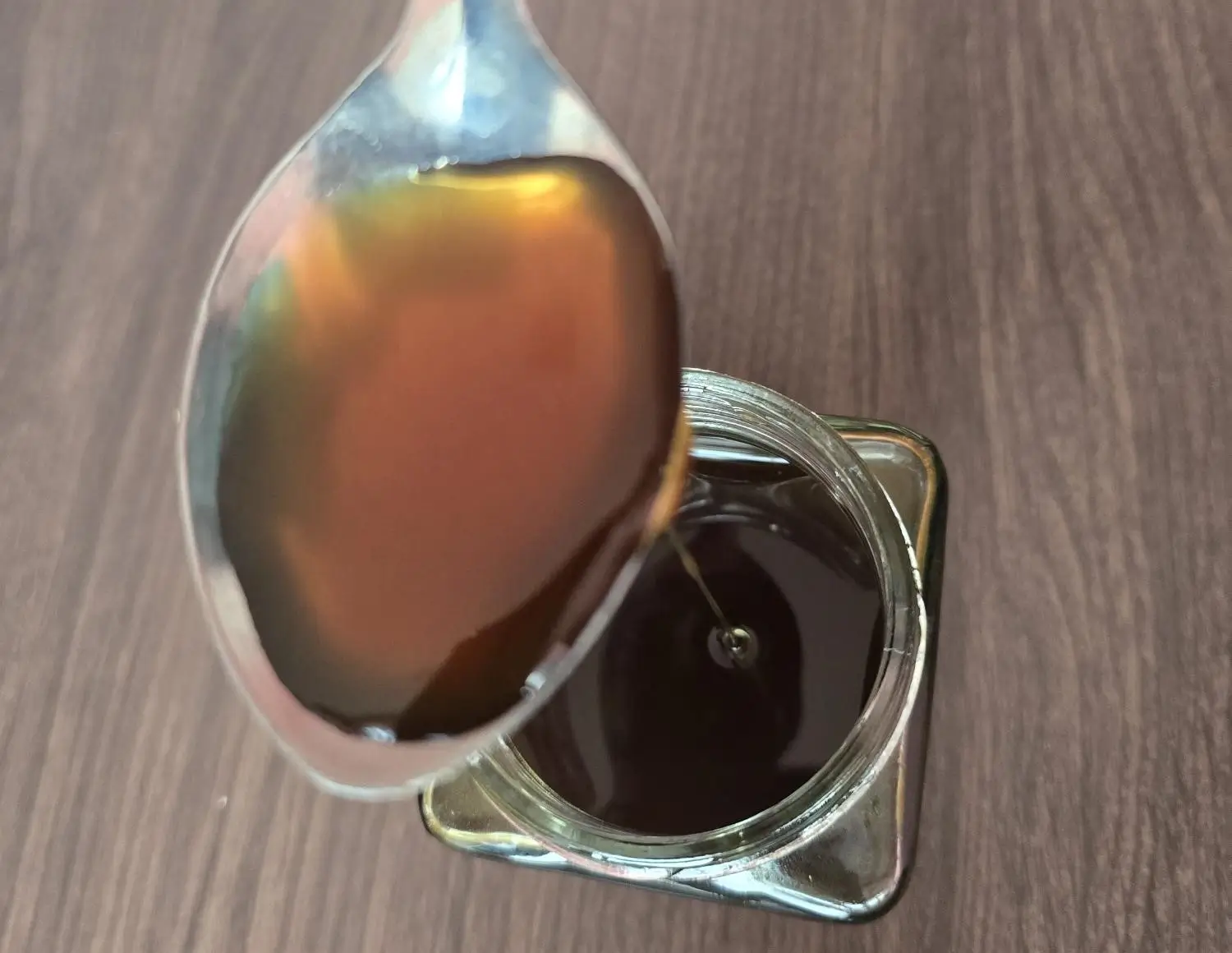
It may be slightly cloudy. It will often have visible microparticles — pollen, propolis traces — suspended in it. It will crystallize over time at room temperature. It will not be water-clear and perfectly uniform in color.

This is what Himalayan Giant sources: single-origin, spring-harvested, cold-extracted honey from wild cliff hives in the Lamjung and Myagdi districts of Nepal — brought down by Gurung honey hunters who have been doing this work, in this way, for generations. No pasteurization. No fine filtration. No additives. The jar you receive looks and behaves exactly as raw honey should. To understand why the sourcing story behind authentic Himalayan honey matters as much as the honey itself, that context is worth reading.

Manuka Honey — The Antibacterial Powerhouse From New Zealand

If you have spent any time in the natural health space, you have almost certainly encountered Manuka honey. It sits at the premium end of most health food store shelves, carries a price tag that raises eyebrows, and comes with a rating system that looks more like a pharmaceutical label than a food product.

That rating system exists for good reason. And the price, for genuine Manuka at therapeutic grades, is largely justified.

Manuka honey is produced by bees foraging on Leptospermum scoparium — the Manuka tea tree — native to New Zealand and parts of southeastern Australia. Its primary therapeutic compound, Methylglyoxal (MGO), gives it antibacterial activity that remains stable and potent even without hydrogen peroxide, making it biochemically unique among all honey varieties currently studied.

This distinction — antibacterial activity that does not depend on the enzyme-driven hydrogen peroxide system shared by other honeys — is what separates Manuka from the rest of the raw honey category and what drives its clinical applications.

What Is UMF? What Is MGO? And Why Do the Numbers Matter?

When you pick up a jar of Manuka honey, you will typically see one of two rating systems on the label. Understanding what they measure is essential to knowing what you are actually buying.

MGO (Methylglyoxal) is the specific chemical compound responsible for Manuka honey’s signature antibacterial activity, measured in milligrams per kilogram (mg/kg) of honey. Higher MGO = more concentrated antibacterial activity.

UMF (Unique Manuka Factor) is a broader quality trademark developed by the Unique Manuka Factor Honey Association (UMFHA) that measures the overall antibacterial strength — incorporating MGO alongside two additional marker compounds, leptosperin and DHA (dihydroxyacetone), that confirm genuine Manuka origin. Think of MGO as measuring one instrument in an orchestra, and UMF as rating the full performance.

Here is what the ratings actually mean in practice:

UMF Rating MGO Equivalent Evidence Level Best Applied For
UMF 5+ ~83 mg/kg Entry level General daily use, mild antioxidant support
UMF 10+ ~263 mg/kg Therapeutic entry point Gut health, general immune support, throat care
UMF 15+ ~514 mg/kg Clinically active Skin conditions, throat infections, digestive health
UMF 20+ ~829 mg/kg High therapeutic Wound care support, serious skin conditions
UMF 25+ ~1,200 mg/kg Medical grade Under professional healthcare guidance only

Source: Unique Manuka Factor Honey Association (UMFHA)

A practical note for American buyers: not all Manuka honey sold in the United States carries genuine UMFHA certification. The global Manuka honey market has significant adulteration problems — some estimates suggest the volume of honey sold globally as “Manuka” exceeds New Zealand’s total production capacity. If the jar does not carry a verifiable UMF trademark with a traceable certification number, treat the MGO claims skeptically.

Manuka Honey and Wound Healing — Where Food Meets Medicine

This is where Manuka honey’s story crosses from functional food into regulated medicine — and it is worth understanding exactly how that happened.

Medihoney — a medical-grade Manuka honey wound dressing — has received FDA 510(k) clearance for use in wound management, including chronic wounds, burns, and surgical sites. Its mechanism is straightforward: Manuka honey’s MGO-driven antibacterial activity prevents wound infection while its hygroscopic properties maintain the moist wound environment that supports tissue regeneration.

What makes MGO particularly valuable in wound care is its stability. Unlike the hydrogen peroxide mechanism in other honeys — which can be inactivated by wound fluids and tissue enzymes — MGO’s antibacterial activity persists in the complex biochemical environment of an open wound.

Some research has also examined Manuka honey’s activity against antibiotic-resistant bacterial strains, including Methicillin-resistant Staphylococcus aureus (MRSA). Early laboratory studies have shown inhibitory activity — findings that are scientifically promising but do not yet constitute a clinical treatment protocol.

⚠️ If you are managing a wound, skin infection, or any condition involving broken skin, consult a healthcare professional. Do not substitute any food-grade honey for medical wound care.

Is Manuka the Best Honey in the World?

Asked directly, this question deserves a direct answer: for antibacterial applications specifically, Manuka honey at therapeutic UMF grades is arguably the most clinically validated honey on earth. Its MGO mechanism is unique, its research base is extensive, and its FDA-recognized wound care application represents a level of institutional validation that no other honey variety has achieved.

But “best honey” is not a single-answer question. It depends entirely on what you need honey to do.

Manuka’s primary therapeutic action is antibacterial. Its research is concentrated in wound care, gut microbiology, and infection management. And for all its documented antibacterial strength, Manuka has relatively limited research into neurological effects, circulatory support, or the traditional therapeutic applications that have driven other honey varieties to prominence in different parts of the world.

Which brings us to something the natural food world is only beginning to understand properly.

There is a honey that has been used therapeutically for longer than New Zealand has been mapped by European explorers. It comes from a bee species so large and so specialized that it builds its hives on sheer cliff faces at altitudes where most people struggle to breathe. Its active compound is found in no other honey on earth. And for centuries, the communities who harvested it treated it not as a sweetener, but as a medicine, a ritual, and a rite of passage.

Manuka honey is exceptional at what it does.

What comes next does something else entirely.

The Himalayan Secret — Mad Honey, Grayanotoxin, and the World’s Most Extraordinary Honey

Twice a year — historically in spring and autumn, now primarily during the spring bloom — the Gurung people of Nepal’s mountain districts do something that has no modern equivalent. They descend sheer cliff faces on hand-woven rope ladders, carrying bamboo poles and smoke baskets, to harvest honey from hives the size of dining tables suspended hundreds of feet above the valley floor.

They move slowly, deliberately, reading the hive the way a surgeon reads a patient. One wrong move — a sudden noise, a shift in the smoke — and the bees respond collectively, in their tens of thousands.

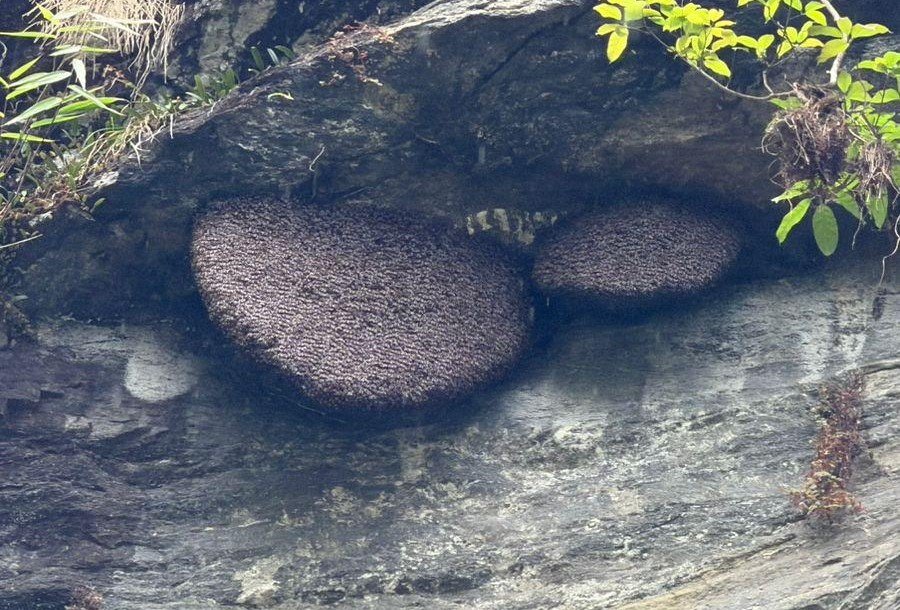
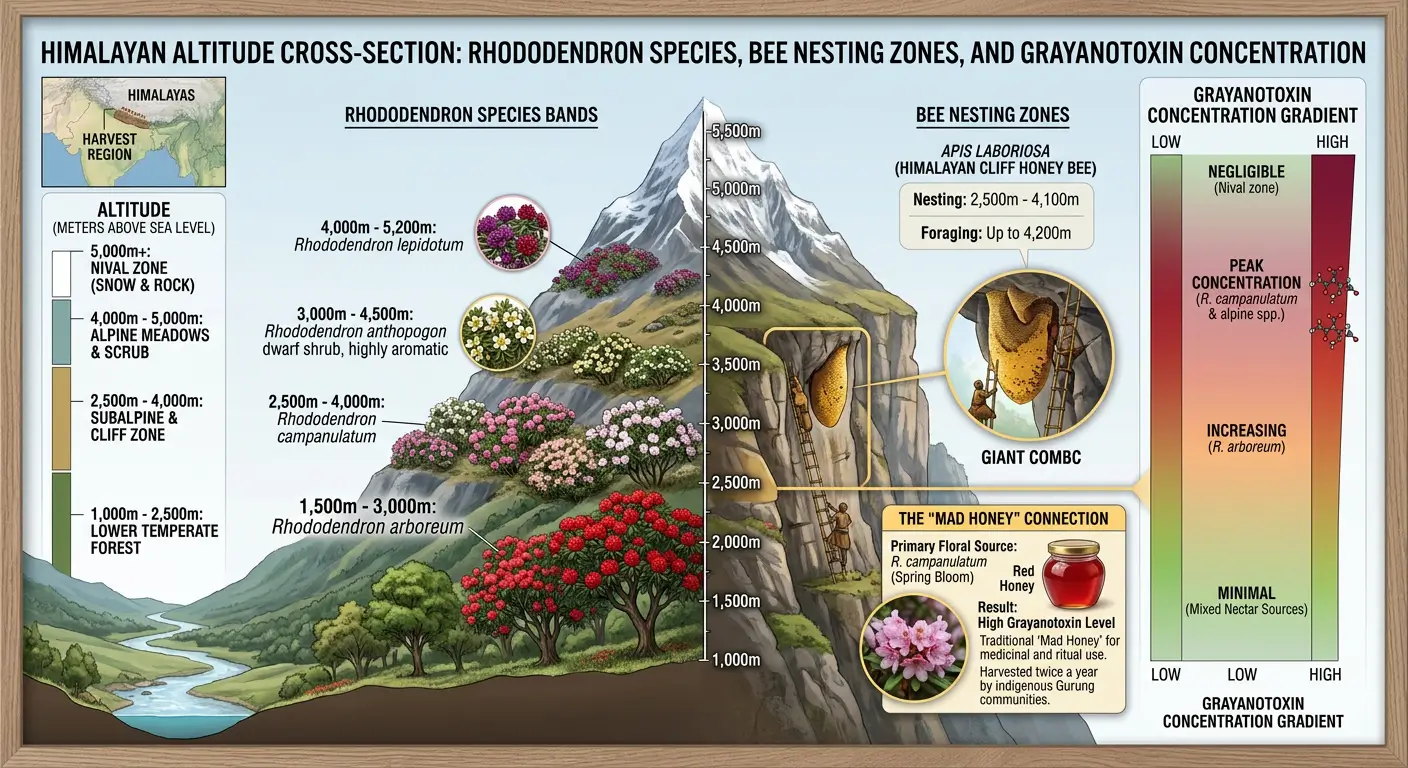
The bee they are harvesting from is Apis laboriosa — the Himalayan giant honey bee, the largest honeybee species on earth. It does not live in a wooden box managed by a beekeeper. It builds its single massive comb on vertical rock faces at altitudes between 1,400 and 1,800 meters in districts like Lamjung and Myagdi — places where the Rhododendron forests are dense and the air is thin enough that lowland visitors feel it in their lungs within hours of arriving.

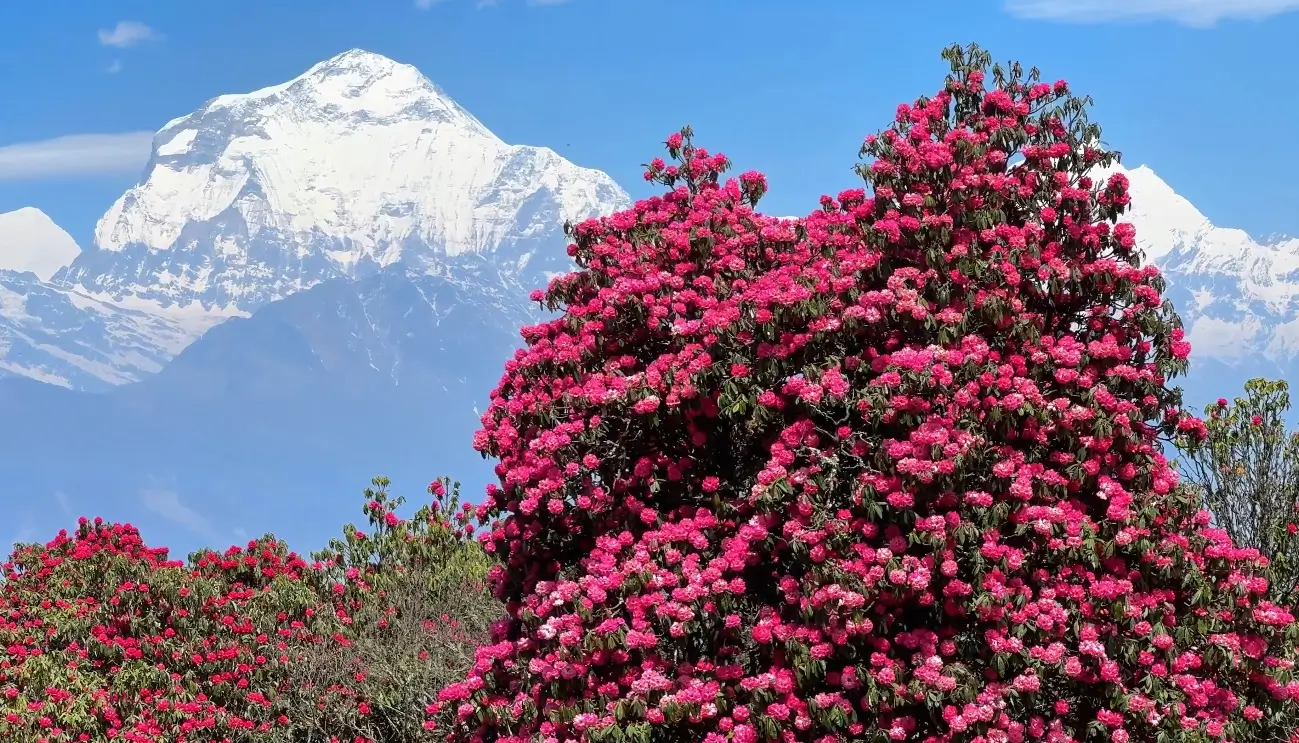
And the honey those bees produce — collected from Rhododendron flowers that bloom briefly each spring in those high-altitude forests — is unlike anything else collected from any hive, anywhere on earth.

This is what Mad Honey actually is. And by the time you finish this section, you will understand exactly why.

The Compound — What Grayanotoxin Actually Is

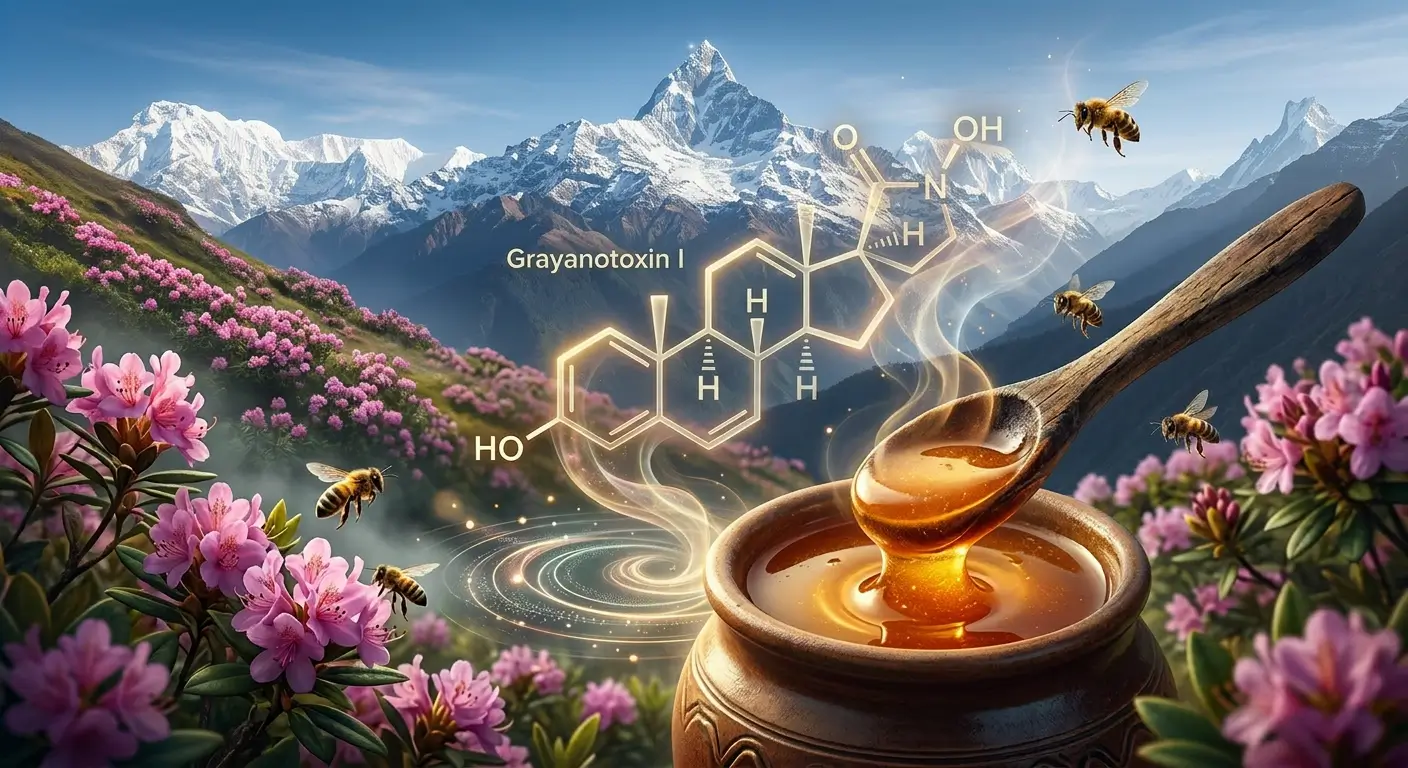
Mad Honey’s defining characteristic is the presence of grayanotoxins — naturally occurring diterpene compounds produced by Rhododendron plants and concentrated by Apis laboriosa bees as they forage almost exclusively on Rhododendron blossoms during the spring bloom.

To understand what grayanotoxins do, you need a brief detour into basic cell biology. Every cell in your body has ion channels — microscopic gates in the cell membrane that control the flow of charged particles in and out of the cell. These channels regulate nerve impulses, muscle contractions, heart rhythm, and virtually every other electrochemical process in the body. Grayanotoxins bind specifically to sodium ion channels and hold them in an open position longer than they would naturally remain open.

The effect of this, at low doses, is a modulation of nerve and muscle activity — a gentle resetting of the body’s electrochemical baseline. Think of it less like a light switch being flipped and more like a dimmer being adjusted: the system is still functioning, but the intensity and rhythm of its signals shifts measurably.

At high doses — when too much grayanotoxin enters the system — the effect tips from modulation into overstimulation. This is what produces the condition known as Mad Honey Disease (grayanotoxin poisoning): dizziness, low blood pressure, nausea, bradycardia (slowed heart rate), and in severe cases, temporary loss of consciousness.

The word “disease” sounds alarming. The reality is more nuanced: documented cases of Mad Honey Disease are almost universally the result of consuming large quantities — multiple tablespoons or more — rather than the controlled, small-dose traditional use practiced by the communities who have worked with this honey for centuries.

For a complete scientific breakdown, the full grayanotoxin guide covers the mechanism, documented effects, and research in considerable depth.

Dose is not just important here. Dose is everything.

⚠️ Mad Honey Safety — Read This Before Consuming

Mad Honey contains grayanotoxins, which are physiologically active compounds. Unlike other honeys in this guide, Mad Honey requires specific attention to quantity.

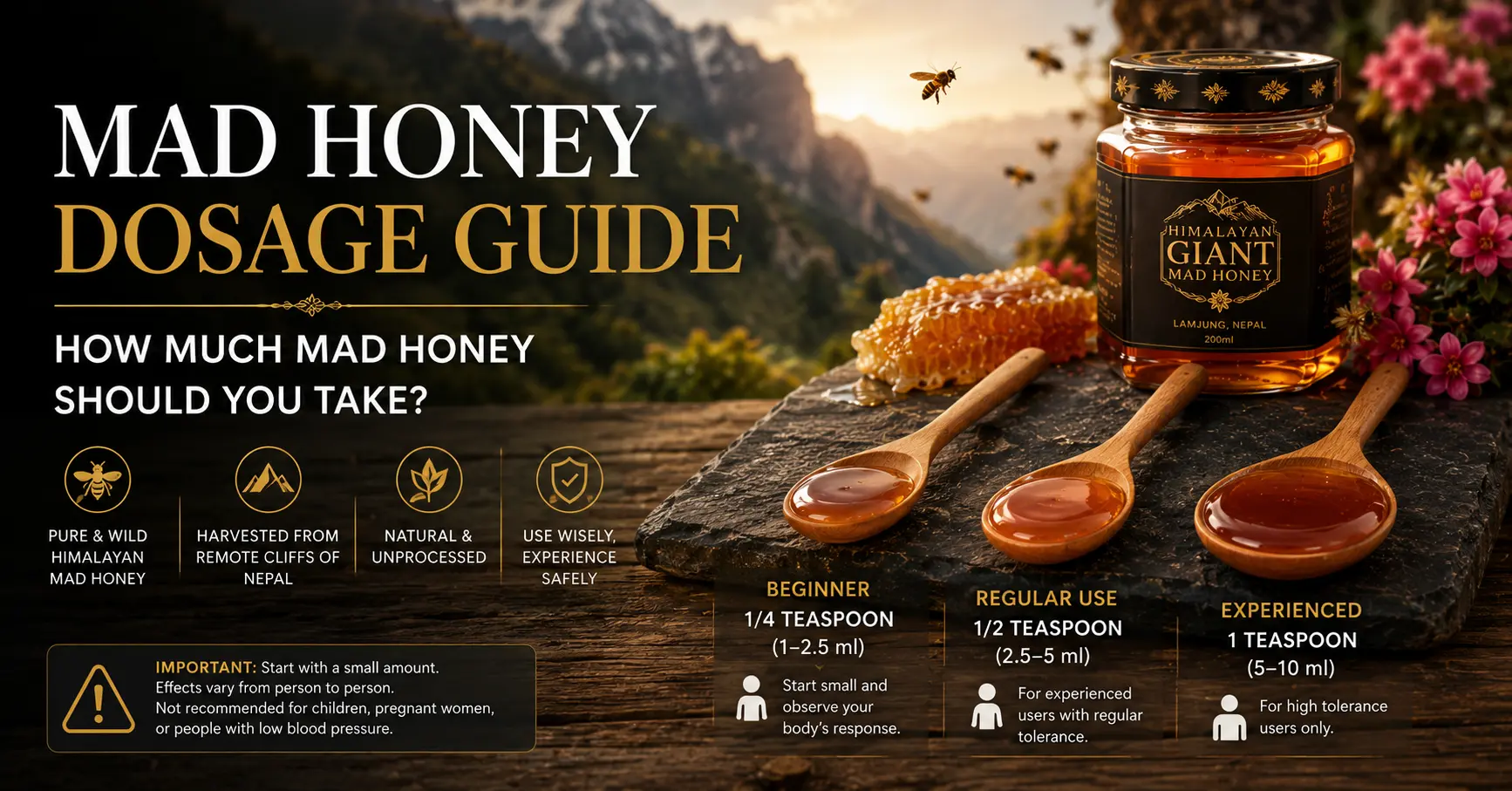
Recommended maximum serving: No more than 1 teaspoon (approximately 5ml / 7g) per day, consistent with traditional use guidelines across Himalayan and Black Sea communities.

Symptoms of excessive consumption (Mad Honey Disease):

Dizziness · Low blood pressure · Nausea · Slowed heart rate · Sweating · Temporary loss of coordination

Symptoms are typically transient and resolve within 24 hours. If severe or prolonged, seek medical attention immediately.

Mad Honey is not suitable for:

  • Pregnant or breastfeeding women
  • Individuals with heart conditions, arrhythmia, or low blood pressure
  • Anyone taking blood pressure, heart rate, or central nervous system medications
  • Children and adolescents under 18
  • Individuals with known hypersensitivity to Rhododendron species

This is not a food to consume casually or in large quantities. It is a traditional functional food with real physiological effects that require respect and restraint.

Always consult a qualified healthcare professional before incorporating Mad Honey into your routine, particularly if you have any existing health conditions or take any medications.

Mad Honey Benefits for Men — Traditional Use and Emerging Science

Traditional communities across the Himalayan region and the Black Sea coast of Turkey have used Mad Honey for centuries as a functional food specifically associated with male vitality, physical endurance, and circulatory health. Modern scientific understanding of grayanotoxin’s cardiovascular mechanism provides biological context for these traditional applications, though direct clinical trials focused specifically on male health outcomes remain limited.

Circulatory Support

Grayanotoxin’s effect on sodium ion channels extends to the cardiovascular system. At low doses, research has documented transient reductions in blood pressure and heart rate — effects that traditional users in hypertensive populations historically interpreted as therapeutic. Turkish and Nepalese traditional medicine both document the use of small quantities of Mad Honey for blood pressure management, predating modern antihypertensive medications by centuries.

Physical Vitality and Energy

High-altitude honey harvested from mineral-rich mountain ecosystems tends to carry a richer electrolyte profile than lowland commercial honey — higher potassium, magnesium, and calcium in particular. Traditional Gurung honey hunters consume small quantities of Mad Honey before and during harvest — not as a ritual gesture, but as a practical energy and endurance support that has been part of their practice for as long as the harvest itself.

Traditional Vitality Applications

Across Himalayan and Anatolian communities, Mad Honey has a longstanding traditional association with male vitality. We are deliberate in framing this as traditional association rather than clinical evidence — because direct research specifically examining Mad Honey’s effects on male sexual function does not currently exist at the clinical trial level. What can be said with scientific grounding: grayanotoxin’s documented effects on circulation and autonomic nervous system tone provide a plausible biological framework for the general vitality effects that traditional users describe.

To understand what Mad Honey actually feels like and what users report, firsthand accounts offer useful practical context alongside the science.

Mad Honey Benefits for Women — Tradition, Stress, and Anti-Inflammatory Properties

In traditional Himalayan medicine, Mad Honey has been used by women primarily for stress relief, support during hormonal transitions, and management of chronic inflammatory discomfort. The scientific context centers on grayanotoxin’s documented effects on the autonomic nervous system and the broader anti-inflammatory properties of high-altitude Rhododendron honey.

Stress and Nervous System Support

The autonomic nervous system governs the body’s stress response — the balance between sympathetic activation (“fight or flight”) and parasympathetic recovery (“rest and digest”). Grayanotoxin’s modulation of sodium channels in nerve tissue has been associated with shifts in autonomic tone at low doses. Traditional practitioners in Himalayan communities describe Mad Honey as having a calming, grounding effect when consumed in small quantities — an experience consistent with mild parasympathetic activation.

Hormonal Balance — A Note on Evidence

Traditional Himalayan medicine has historically used Mad Honey to support women during periods of hormonal fluctuation — including menstrual discomfort and the transition through menopause. We want to be straightforward about the evidence base here: direct clinical research on Mad Honey and female hormonal health does not currently exist. The traditional use is documented and longstanding. The scientific validation is not yet there. We present this as traditional knowledge, not established medical fact.

Anti-Inflammatory Support

This is where the evidence base strengthens. High-altitude Rhododendron honey carries a polyphenol profile that extends beyond standard wildflower honey, and grayanotoxin itself has demonstrated anti-inflammatory properties in preliminary research. For women managing chronic inflammatory conditions — including joint discomfort, skin inflammation, or digestive inflammation — the compound profile of Mad Honey offers a plausible functional food application, though this should complement rather than replace medical treatment.

Sleep and Recovery

At appropriate low doses, the mild autonomic modulation associated with grayanotoxin consumption has been traditionally associated with improved sleep onset and quality. This aligns with anecdotal reports from users in both Himalayan and Turkish communities who consume small quantities of Mad Honey in the evening. These are traditional observations — systematic clinical research specifically on this application does not yet exist.

Mad Honey Benefits on Skin — Anti-Inflammatory Properties and Traditional Topical Use

Mad Honey contains the full antimicrobial, humectant, and anti-inflammatory compound profile of raw honey — plus the additional anti-inflammatory dimension of its grayanotoxin content. Traditional topical applications in Himalayan communities include use for chronic skin inflammation, and the biological mechanisms involved are consistent with what modern dermatological research knows about honey’s effects on skin.

What raw honey does for skin — well established:

  • Humectant properties: draws and retains moisture in the skin
  • Antimicrobial activity: effective against bacteria associated with acne and minor skin infections
  • Anti-inflammatory polyphenols: reduce redness and irritation
  • Wound-healing properties: recognized at the medical device level in Manuka’s case, with direct relevance to compromised or inflamed skin barriers

What grayanotoxin may add — preliminary:

Grayanotoxin has demonstrated anti-inflammatory properties in preliminary research settings — inhibiting certain inflammatory signaling pathways in ways that may be relevant to chronic skin conditions characterized by persistent inflammation, such as eczema and psoriasis. Traditional topical applications of Mad Honey in Himalayan communities for chronic skin conditions suggest a longstanding intuition about these properties that modern research has not yet fully investigated.

How to use Mad Honey topically — practical guidance:

  • Always perform a patch test on a small skin area first
  • Apply a thin layer to clean, dry skin — do not use near eyes or on broken skin
  • Leave for 15–20 minutes before rinsing with warm water
  • Do not use as a replacement for prescribed dermatological treatments
  • If you experience any irritation or reaction, discontinue use immediately

⚠️ If you have a diagnosed skin condition managed under dermatological care — consult your dermatologist before using Mad Honey topically.

Why Source Is Everything With Mad Honey

By now, you understand what makes Mad Honey biochemically distinctive. But there is one more dimension that separates genuine therapeutic Mad Honey from the increasingly common imitations entering the market as demand grows.

Grayanotoxin concentration in Mad Honey is not fixed. It varies significantly based on the altitude of the harvest site, the density of Rhododendron growth in the foraging territory, the season of harvest, and the specific Rhododendron species present in the region. A jar labeled “Mad Honey” from an unknown source at a suspiciously low price point may contain negligible grayanotoxin content — enough to carry the name, not enough to carry the properties that name implies.

This is why, at Himalayan Giant, every jar comes from a single origin: the spring harvest from the Lamjung and Myagdi districts of Nepal, collected by Gurung honey hunters from Apis laboriosa hives at altitudes between 1,400 and 1,800 meters — within the Rhododendron belt where grayanotoxin-rich nectar is available during the brief spring bloom window.

The harvest is seasonal. The supply is genuinely limited. And because we work directly with the communities who have been doing this for generations, there is a chain of custody from hive to jar that mass-market “Mad Honey” products cannot replicate.

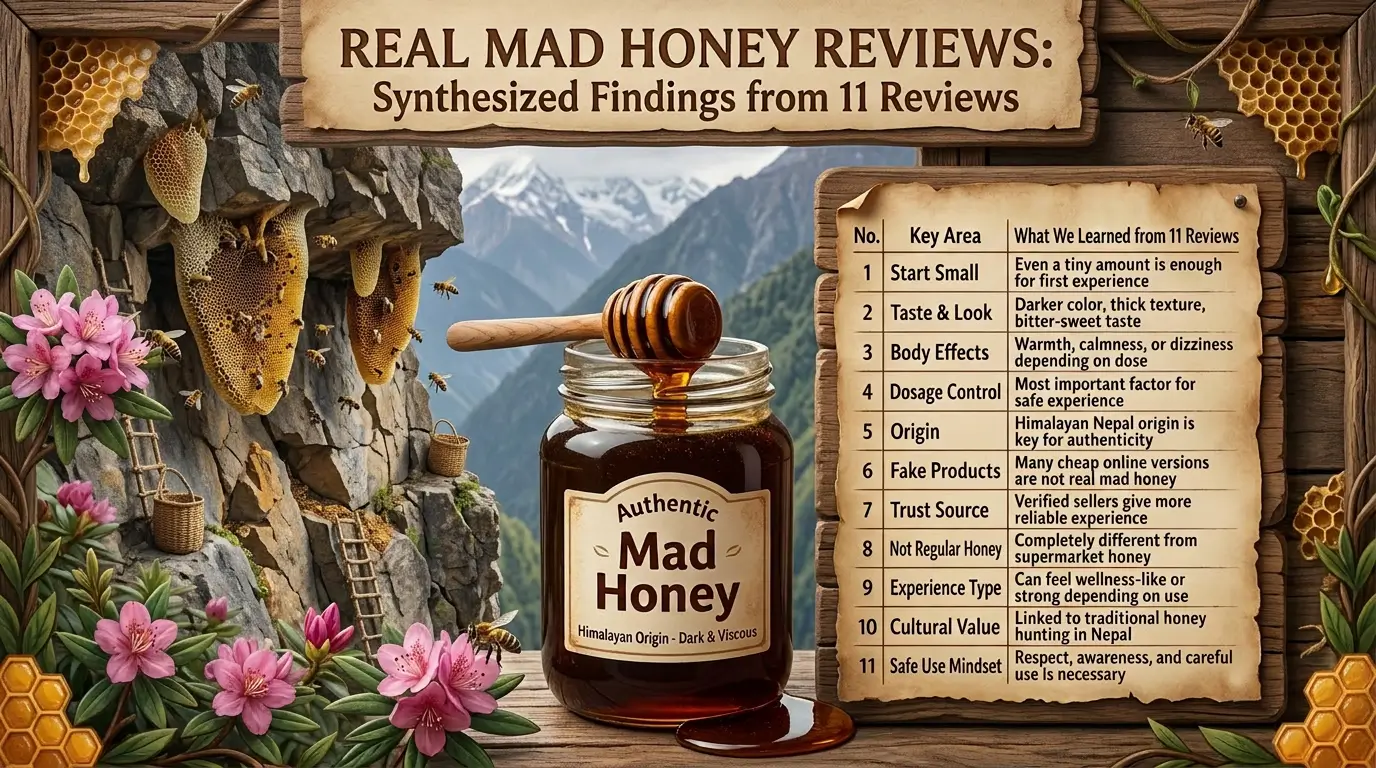
Read about how 11 real people experienced authentic Himalayan Mad Honey — firsthand accounts that no marketing copy can replicate.

If you are ready to explore it for yourself: shop our spring harvest Mad Honey.

The Definitive Guide — Best Honey for Every Health Goal

You have spent considerable time with the science now. You know what honey actually is, what raw means, what Manuka does, and what makes Mad Honey genuinely unlike anything else in the natural food world.

So let us make it practical.

The best honey for your health depends entirely on your specific goal. Each variety has a distinct compound profile that makes it optimal for different applications — from wound care and gut health to sleep, immunity, and circulatory support. Choosing the right honey is less about finding the single “best” option and more about matching the honey’s documented strengths to what your body actually needs.

Quick Reference — Best Honey by Health Goal

Your Health Goal Best Honey Choice Why It Works Key Compound Important Note
General daily wellness Raw Wildflower Broad-spectrum antioxidants, versatile Flavonoids Choose raw and unfiltered
Immune system support Buckwheat or Manuka UMF 10+ Highest polyphenol density + MGO activity Polyphenols, MGO Buckwheat for antioxidants; Manuka for antimicrobial
Gut health and digestion Forest Honey or Manuka Prebiotic oligosaccharides + H. pylori inhibitory activity Oligosaccharides, MGO Most effective raw, not cooked
Sleep quality support Raw Wildflower May support tryptophan transport and melatonin production Tryptophan precursors 1 tsp warm water before bed; evidence preliminary
Blood sugar management Acacia Lowest glycemic index (~35) among common honeys Fructose profile ⚠️ Consult physician
Wound care and skin healing Manuka UMF 15+ FDA-recognized antibacterial wound care MGO Medical-grade only; consult healthcare provider
Cough and throat relief Raw Wildflower or Buckwheat Demulcent coating + anti-inflammatory polyphenols Flavonoids WHO-referenced for adults and children over 12 months
Athletic recovery and energy Forest Honey or Buckwheat Higher mineral content; polyphenol recovery support Potassium, Magnesium Best within 30–60 minutes post-exercise
Circulatory support and vitality Mad Honey Grayanotoxin’s documented cardiovascular modulation Grayanotoxin Max 1 tsp/day; not for those with heart conditions
Stress relief and nervous system Mad Honey Autonomic nervous system modulation at low doses Grayanotoxin Traditional use; consult physician if on CNS medications
Advanced functional food use Mad Honey Unique compound profile found in no other honey Grayanotoxin + polyphenols Spring harvest, single-origin sourcing critical
Anti-inflammatory support Buckwheat or Mad Honey Highest polyphenol content + grayanotoxin anti-inflammatory action Polyphenols, Grayanotoxin Complementary applications, different mechanisms

⚡ Table Note: Recommendations reflect published research profiles and traditional use documentation — not medical prescriptions. For any health condition, consult a qualified healthcare provider before making significant dietary changes.

Which Honey Should You Take Every Day?

For most healthy adults looking for a meaningful daily upgrade from refined sugar:
Raw wildflower or raw acacia honey from a trusted, unfiltered source. These offer the broadest antioxidant coverage, the most accessible price point, and the most established safety profile for regular, unrestricted daily use. One to two tablespoons per day — in tea, on food, or eaten directly — is a reasonable, evidence-consistent approach.

For those with a specific therapeutic goal:
Match to the table above. Manuka at UMF 10+ for gut and immune support. Buckwheat for maximum antioxidant load. Acacia for the gentlest glycemic impact.

For those who want to explore the frontier of functional honey:
A small daily dose of authentic, spring-harvested Mad Honey — no more than one teaspoon, consumed consistently rather than experimentally — represents the most biochemically distinctive honey application available. It is not for everyone. It requires sourcing diligence, respect for dosage, and ideally a conversation with a healthcare provider if you have any cardiovascular or neurological health considerations.

The honest truth is this: the best honey is the one you will actually use consistently, sourced from a place you can trust, in a form that retains its therapeutic value. A raw wildflower honey from a verified local beekeeper beats an expensive pasteurized “superfood” honey from a mass-market brand every single time.

The Refined Sugar Swap — A Simple Change Worth Making

Research consistently supports replacing refined sugar with raw honey as a meaningful nutritional upgrade. You get a lower glycemic impact, measurable antioxidant contribution, enzymatic activity, and trace minerals — in exchange for essentially the same sweetening function.

Practical guidance for the swap:

  • Honey is sweeter than sugar by volume — use approximately 75% of the honey volume for the sugar amount called for (three-quarters cup of honey per full cup of sugar)
  • Reduce other liquids slightly — honey adds moisture; reduce other liquids by roughly one tablespoon per quarter cup of honey used in baking
  • Lower oven temperature by 25°F (~15°C) — honey’s natural sugars brown faster than refined sugar
  • Never heat raw honey above 104°F (40°C) — if you want to preserve its enzymatic activity for direct consumption

The caloric content of honey and refined sugar is similar — this swap is a nutrient quality upgrade, not a calorie reduction strategy. That distinction is important, and it is exactly the kind of honest framing that makes a real difference when you are trying to make good decisions about what you eat.

For anyone wondering where to buy authentic Mad Honey online from a verified source, the considerations around provenance, testing, and authenticity are worth understanding before purchasing.

Honey by the Numbers — Facts and Figures Worth Knowing

Every section of this guide has been built around one principle: give you information that is actually true, actually useful, and actually sourced. This section distills that principle into the most compelling, citable, and genuinely surprising facts about honey that the science and historical record have to offer.

Fact 1 — Honey Is One of the Most Chemically Complex Foods on Earth

Raw honey contains over 180 identified chemical substances — including at least 6 distinct enzyme groups, more than 18 amino acids, over 30 identified polyphenolic compounds, a full spectrum of trace minerals, and multiple classes of organic acids.

For context: table sugar contains exactly one substance. Sucrose. That is the entire list.

The biochemical gap between a jar of raw honey and a bag of refined sugar is not a matter of degree. It is a matter of category. One is a complex living food product with documented therapeutic properties. The other is a purified industrial chemical with a pleasant taste.

Fact 2 — Honey Is More Acidic Than Coffee

At an average pH of 3.9 — with a natural range of 3.2 to 4.5 depending on floral source — honey is more acidic than coffee (pH ~5.0), more acidic than milk (pH ~6.5), and only marginally less acidic than orange juice (pH ~3.5).

This acidity is not incidental. It is one of three simultaneous mechanisms — alongside low water content and enzymatic hydrogen peroxide production — that make honey naturally hostile to bacterial growth. Bacteria that thrive in neutral or alkaline environments simply cannot establish themselves in a substance this acidic.

Fact 3 — Authentic Raw Honey Does Not Expire

Archaeologists excavating ancient Egyptian tombs have discovered honey estimated to be over 3,000 years old — still intact, still chemically recognizable as honey, and by all accounts still edible.

This is not a preservation anomaly. It is the predictable result of honey’s chemistry: water activity so low that microbes cannot reproduce, pH so acidic that most cannot survive, and continuous hydrogen peroxide production that actively prevents microbial establishment.

The practical implication: if your raw honey crystallizes in the jar, it has not gone bad. It has demonstrated that it is genuine.

Fact 4 — One Tablespoon Contains a Surprisingly Complete Nutritional Picture

A single tablespoon of raw honey — 21 grams, or just under three-quarters of an ounce — contains approximately 64 calories, 17 grams of carbohydrates, and trace amounts of potassium, calcium, magnesium, phosphorus, and iron, plus measurable quantities of antioxidant flavonoids and phenolic acids.

None of these quantities are large enough to constitute a significant portion of daily recommended intakes on their own. The nutritional argument for honey over refined sugar is not about the absolute amounts — it is about the presence of meaningful compounds versus the complete absence of them.

Fact 5 — The World’s Largest Honeybee Builds the World’s Largest Honeycombs

Apis laboriosa — the Himalayan giant honey bee, the species responsible for producing Mad Honey — is the largest honeybee on earth, with worker bees reaching body lengths of up to 3 centimeters (just over an inch).

Its hives are equally extraordinary. Single Apis laboriosa combs can measure over 1.5 meters (approximately 5 feet) in width, suspended from sheer rock faces at altitudes between 1,400 and 1,800 meters in districts like Lamjung and Myagdi in Nepal — within the Rhododendron belt where the spring bloom produces the nectar that makes Mad Honey what it is.

These are not managed hives accessed by a beekeeper on a stepladder. They are wild colonies on vertical cliff faces in some of the most remote mountain terrain on earth — accessible only to the Gurung honey hunters who have developed the knowledge, the equipment, and the physical courage to reach them over generations of practice.

No commercial beekeeping operation can replicate this. The geography is not incidental to the product — it is the product. Explore the complete origin story of Mad Honey from Nepal to understand how geography shapes what ends up in the jar.

Fact 6 — The Global Honey Market Has a Significant Authenticity Problem

World honey production stands at approximately 1.9 million metric tons annually, with China, Turkey, Argentina, Ukraine, and the United States among the leading producers.

Within that market, adulteration — the addition of sugar syrups, the mislabeling of floral origins, and the misrepresentation of raw or specialty honeys — is a documented and persistent problem. Studies examining honey sold in U.S. and European markets have found significant percentages of products that do not meet the compositional standards of genuine honey or that fail to deliver the floral source claimed on the label.

For consumers, this makes sourcing transparency not just a premium feature but a basic prerequisite for getting what honey’s health profile actually promises.

Fact 7 — Honey Has Been Used Medicinally for at Least 3,500 Years

The Ebers Papyrus — an ancient Egyptian medical text dated to approximately 1550 BCE and one of the oldest known medical documents in existence — references honey in hundreds of medicinal preparations, including treatments for wounds, gastrointestinal conditions, and eye irritations.

Honey also appears in ancient Ayurvedic texts, traditional Chinese medicine records, and ancient Greek medical writings. Aristotle wrote about honey’s medicinal properties in the 4th century BCE.

The trajectory from those ancient papyrus scrolls to a modern FDA-cleared wound dressing represents 3,500 years of accumulated human observation — eventually validated by the molecular biology and clinical research of the 20th and 21st centuries.

And within that 3,500-year tradition, the communities harvesting Mad Honey from Himalayan cliff faces occupy one of the oldest and least-understood chapters — one that modern science is only beginning to catch up with.

Frequently Asked Questions

Q: Is honey actually good for you, or is it basically just sugar?

Honey is significantly more than sugar. Raw honey contains over 180 bioactive compounds — including antioxidants, live enzymes, amino acids, and natural antimicrobial agents — that refined sugar completely lacks. Its glycemic index (~58) is lower than table sugar (~65), and its therapeutic properties are supported by peer-reviewed research. The key qualifier: these benefits apply to raw, unprocessed honey. Heavily pasteurized supermarket honey loses most of what makes honey nutritionally meaningful.

Q: What is the difference between raw honey and regular honey?

Raw honey has not been heated above approximately 95°F (35°C) and has not been fine-filtered to remove pollen, propolis, and natural enzymes. Regular processed honey is pasteurized — heated to 145–160°F (63–71°C) — for clarity and extended shelf life. This heat destroys glucose oxidase, diastase, and invertase enzymes, reduces antioxidant content, and removes pollen and propolis. The result is a product that retains honey’s sweetness but loses most of its documented therapeutic properties.

Q: What is Mad Honey and where does it come from?

Mad Honey — known as Deli Bal in Turkish — is a rare honey produced by Apis laboriosa bees foraging on Rhododendron flowers in the Himalayan region of Nepal and the Black Sea coast of Turkey. It contains grayanotoxins, naturally occurring compounds that produce mild neuromodulatory effects at low doses. It has been used in traditional Himalayan and Anatolian medicine for centuries. Authentic Mad Honey is harvested during the spring bloom and is among the rarest honey varieties on earth. Learn more in our complete guide to what Mad Honey is.

Q: Is Mad Honey legal to buy in the United States?

Mad Honey is legal to purchase and consume as a specialty food product in the United States. It is not classified as a controlled substance by the FDA. Because it contains grayanotoxins — physiologically active compounds — it occupies a unique regulatory position as a functional food with real effects rather than a conventional sweetener. Always purchase from transparent, reputable sources that disclose origin and harvesting practices. For full details, read our dedicated article on whether Mad Honey is legal in your state and country.

Q: How much honey should you eat per day?

For standard raw honey varieties, most nutritionists suggest limiting consumption to one to two tablespoons (21–42 grams) per day for healthy adults. For Mad Honey specifically, traditional use guidelines across Himalayan and Black Sea communities consistently apply a maximum of one teaspoon (approximately 5ml / 7 grams) per day. Individuals managing diabetes or blood sugar conditions should consult their healthcare provider before making honey a regular dietary staple. This is general guidance — not medical advice.

Q: Can honey help you sleep better?

Some nutritional research suggests that honey’s natural sugars may facilitate a modest insulin response that helps transport tryptophan — an amino acid — across the blood-brain barrier, where it converts to serotonin and eventually melatonin, the hormone that regulates sleep onset. The traditional remedy of one teaspoon of raw honey in warm water before bed has a plausible biological basis. Direct clinical trials on honey as a sleep intervention are limited, however — treat this as a low-risk supportive practice rather than a clinically proven sleep treatment.

Q: Is honey safe for people with diabetes?

Honey has a lower glycemic index than refined sugar — approximately 58 compared to 65 for table sugar — and contains bioactive compounds that may moderate blood sugar response. However, honey still raises blood glucose meaningfully and cannot be treated as a sugar-free food. Acacia honey, with its lower GI of approximately 35, is the most commonly referenced option for blood-sugar-conscious consumers. Individuals with diabetes must consult their healthcare provider before incorporating honey regularly and should monitor their individual blood glucose response carefully. This is not medical advice.

Q: What are the benefits of eating raw honeycomb?

Raw honeycomb delivers honey in its most complete, unprocessed form — including the beeswax structure itself, which contains long-chain fatty alcohols that some preliminary research associates with cardiovascular support. The embedded propolis adds documented antimicrobial and antifungal properties. Bee pollen, present in unfiltered comb honey, contributes additional protein and phytonutrient content. The beeswax itself passes through the digestive system harmlessly and can be chewed and swallowed safely. Overall, honeycomb is considered the most nutritionally complete form of honey available.

Q: What is the difference between Manuka honey and Mad Honey?

Manuka honey and Mad Honey are fundamentally different products with different active compounds and different therapeutic applications. Manuka — from New Zealand’s Leptospermum scoparium tree — is defined by its Methylglyoxal (MGO) content, which gives it exceptional, clinically studied antibacterial activity. Mad Honey — from Nepal’s Apis laboriosa bees foraging on Rhododendron — is defined by its grayanotoxin content, which produces neuromodulatory and circulatory effects. They do not compete; they serve entirely different purposes.

Q: Does crystallized honey mean it has gone bad?

No. Crystallization is one of the most reliable quality indicators raw honey can display — not a sign of spoilage. Only honey with sufficient natural pollen content and minimal processing crystallizes properly. Heavily filtered or pasteurized honey often resists crystallization indefinitely — not because it is fresher, but because the natural particles that seed crystallization have been removed. To reliquefy crystallized honey, place the jar in warm water. Never microwave raw honey, as heat spikes destroy the enzymes that make raw honey therapeutically valuable.

Q: Which honey is best for immunity?

For immune support specifically, Buckwheat and Manuka honey lead the evidence base. Buckwheat honey has among the highest polyphenol density of any widely available honey variety — antioxidants that contribute to reduced oxidative stress and overall immune function. Manuka honey at UMF 10+ adds clinically studied antimicrobial activity through its MGO compound. Raw wildflower honey from local sources may also offer seasonal immune modulation benefits through trace local pollen content, though this evidence is less consistent.

Q: Is it safe to give honey to children?

Honey of any kind — raw, processed, or specialty — must never be given to infants under 12 months of age. The risk of infant botulism from Clostridium botulinum spores present in honey is a firm medical consensus with no exceptions. For children over 12 months, raw honey is generally considered safe and is referenced by the WHO as an appropriate remedy for cough in young children. Mad Honey is not appropriate for children or adolescents under 18 due to its grayanotoxin content. Always consult your pediatrician.

Q: Is Mad Honey the same as the honey in the Netflix documentary?

Mad Honey gained significant international attention following media coverage of Gurung honey hunters in Nepal. The honey featured in those documentaries is the same variety: spring-harvested from Apis laboriosa cliff hives in Himalayan districts like Lamjung and Myagdi, containing grayanotoxins from Rhododendron nectar. For a comparison of how Mad Honey is portrayed versus what it actually is, the real Mad Honey vs. the media version is worth reading before forming conclusions.

The Final Verdict — Which Honey Should You Choose?

We started this guide with a question that seems simple on the surface: is honey actually good for you?

Having spent the last several thousand words inside the biochemistry, the history, the varieties, the processing methods, the clinical research, and the cultural traditions that surround this extraordinary substance — the answer is clear, and it is worth stating directly.

Yes. Raw honey, chosen deliberately and sourced honestly, is genuinely good for you — in ways that go well beyond what most people understand when they reach for a jar. Its antioxidant profile, antimicrobial properties, enzymatic activity, and — in the case of specialty varieties — unique therapeutic compounds place it in a category of functional food that no other common sweetener occupies.

But the more useful answer is the specific one. Not just “is honey good for you” — but which honey, for what purpose, from where.

Your Decision Framework — The Short Version

For everyday use and a meaningful upgrade from refined sugar:
Raw wildflower or raw acacia honey — unfiltered, cold-extracted, from a source you can verify. Use it daily. It is better than what it replaces in every measurable way.

For targeted immune and gut support:
Buckwheat honey for antioxidant depth. Manuka at UMF 10+ for antibacterial and gut health applications.

For wound care or serious skin applications:
Manuka at UMF 15+ or higher, under the guidance of a healthcare professional. Certified medical-grade only — not food-grade from a grocery shelf.

For the most biochemically distinctive functional honey experience available:
Authentic, spring-harvested Mad Honey from the Himalayan region of Nepal — sourced from a supplier with transparent origin, honest harvesting practices, and the knowledge to tell you exactly what you are consuming and how to consume it safely. One teaspoon. Respect the dose. Understand what you are working with.

The hierarchy of honey is not complicated once you understand the science. Raw beats processed. Single-origin beats blended. Verified beats assumed. And among all the honeys this planet produces, nothing carries a compound profile quite like what Apis laboriosa builds from Rhododendron nectar at altitude.

That is not a brand claim. That is biochemistry.

A Final Word on Sourcing

We opened this guide with the image of honey hunters descending cliff faces in Nepal — and we close with them, because they are the reason any of this matters.

The Gurung communities of Lamjung and Myagdi do not harvest Mad Honey because it is trendy. They harvest it because it is part of a relationship with the land, the bees, and the seasons that predates every scientific paper written about grayanotoxins by centuries. The knowledge embedded in that practice — the timing of the spring bloom, the reading of the hive, the understanding of how much to take and how to use what you have taken — is a form of expertise that no laboratory has yet fully replicated.

At Himalayan Giant, we exist to bring that knowledge and that honey to people who want both: the product and the understanding of what makes it what it is. Not a novelty. Not a gimmick. A rare, seasonal, single-origin functional food from one of the most extraordinary ecosystems on earth — handled with the care it has always deserved.

Experience Himalayan Giant Mad Honey

Spring Harvest Mad Honey — Single Origin, Nepal

Harvested once per year from Apis laboriosa cliff hives in Lamjung and Myagdi districts. Cold-extracted. Sourced directly from Gurung honey hunters who have practiced this craft for generations.

→ Shop Spring Harvest Mad Honey

→ Read Our Sourcing Story

→ What Is Mad Honey? Start Here

Sources & References

All health and scientific claims in this article are supported by peer-reviewed research, government agency documentation, or clearly disclosed traditional knowledge. Claims are organized by evidence tier.

Tier 1 — Peer-Reviewed & Government Sources

Honey Composition

  • Alvarez-Suarez, J.M. et al. Composition and Biological Activity of Honeys. Journal of Agricultural and Food Chemistry. → pubmed.ncbi.nlm.nih.gov
  • USDA FoodData Central. Honey, raw. → fdc.nal.usda.gov
  • Codex Alimentarius Commission. Standard for Honey (CODEX STAN 12-1981). → fao.org

Antimicrobial Properties

  • Kwakman, P.H.S. & Zaat, S.A.J. Antibacterial Components of Honey. IUBMB Life. → pubmed.ncbi.nlm.nih.gov
  • Cooper, R.A. Honey as an Effective Antimicrobial Treatment for Chronic Wounds. Journal of Wound Care. → pubmed.ncbi.nlm.nih.gov

Cough Suppression

  • World Health Organization. Cough and Cold Remedies for the Treatment of Acute Respiratory Infections in Young Children. → who.int
  • Paul, I.M. et al. Effect of Honey, Dextromethorphan, and No Treatment on Nocturnal Cough. Archives of Pediatrics & Adolescent Medicine. → pubmed.ncbi.nlm.nih.gov

Wound Healing & Manuka

  • U.S. Food and Drug Administration. 510(k) Premarket Notification — Medihoney. → fda.gov
  • Molan, P.C. The Evidence Supporting the Use of Honey as a Wound Dressing. International Journal of Lower Extremity Wounds. → pubmed.ncbi.nlm.nih.gov

Glycemic Index

  • Atkinson, F.S. et al. International Tables of Glycemic Index and Glycemic Load Values. Diabetes Care. → pubmed.ncbi.nlm.nih.gov

Grayanotoxin & Mad Honey

  • Gunduz, A. et al. Mad Honey Poisoning. American Journal of Emergency Medicine. → pubmed.ncbi.nlm.nih.gov
  • Yaylaci, S. et al. Rare and Dangerous Intoxication: Mad Honey. Wilderness & Environmental Medicine. → pubmed.ncbi.nlm.nih.gov

Gut Health

  • Kajiwara, S. et al. Oligosaccharide Profile in Honey. Bioscience, Biotechnology, and Biochemistry. → pubmed.ncbi.nlm.nih.gov

Global Production

  • Food and Agriculture Organization. FAOSTAT — Livestock Primary: Honey. → fao.org/faostat

Tier 2 — Academic & Research Organizations

  • Waikato Honey Research Unit, University of Waikato. → waikato.ac.nz
  • Unique Manuka Factor Honey Association (UMFHA). UMF Grading System. → umf.org.nz
  • Underwood, B.A. Seasonal Nesting Cycle of Apis laboriosa. National Geographic Research.
  • Crane, E. The World History of Beekeeping and Honey Hunting. Routledge.
  • Nunn, J.F. Ancient Egyptian Medicine. British Museum Press. (Ebers Papyrus reference)
  • Silici, S. & Atayoglu, A.T. Mad Honey Intoxication: A Systematic Review. Reviews on Environmental Health. → pubmed.ncbi.nlm.nih.gov

Tier 3 — Traditional Knowledge

  • Gurung community harvesting traditions: Documented through direct sourcing relationships maintained by Himalayan Giant in Lamjung and Myagdi districts, Nepal.
  • Traditional Himalayan and Anatolian applications of Mad Honey: Referenced via ethnobotanical literature and community knowledge.

Our Evidence Standards

Every health claim in this article is classified by evidence tier. Where research is limited — particularly for Mad Honey’s gender-specific and skin applications — we have written with explicit acknowledgment of that limitation rather than overstating what the science currently supports. We believe intellectual honesty about the boundaries of evidence is more valuable to our readers than the appearance of certainty we cannot genuinely offer.

About the Author

Himalayan Giant Editorial Team

The Himalayan Giant Editorial Team combines direct sourcing experience in Nepal’s Lamjung and Myagdi districts with in-depth research into the science, history, and traditional applications of Mad Honey and Apis laboriosa honey. Our content is written to the standard we would apply to information we rely on ourselves: accurately sourced, honestly hedged where evidence is limited, and genuinely useful to anyone trying to make informed decisions about what they consume.

We work directly with Gurung honey hunting communities whose knowledge of Mad Honey harvesting and use spans generations — and we believe that relationship is inseparable from the responsibility to represent that knowledge accurately.

THE ULTIMATE GUIDE TO APIS LABORIOSA: THE HIMALAYAN GIANT HONEY BEE AND MAD HONEY

Apis laboriosa — the Himalayan Giant Honey Bee — is the world’s largest known honey bee species. It lives exclusively on the high-altitude cliff faces of the Himalayas, above 2,500 meters. It produces Himalayan Mad Honey, one of the rarest honeys on Earth, which contains naturally occurring compounds from Rhododendron nectar that give it properties found in no other honey anywhere.

Picture yourself standing at the base of a sheer rock wall in Nepal’s Annapurna region. The air is thin. The cliff rises hundreds of meters above you. Somewhere up there, barely visible against the stone, hangs a single honeycomb the size of a door — alive with tens of thousands of bees moving as one.

This is not a hive you place in a garden. This is a wild colony of Himalayan giant bees, anchored to the mountain itself.

Whether you are a researcher, a traveler, a wellness reader, or someone who heard the words “mad honey” and needed to understand them — this guide is your complete, honest introduction to Apis laboriosa. It draws on published science, field observation, and the knowledge of our sourcing partners — the Gurung honey hunters behind every harvest we share.

In the sections ahead, we move from ecology to chemistry, from cliffside tradition to modern safety. We start with a question bigger than one bee species.

What Is the Most Important Living Being on Earth?

Many ecologists argue that bees hold this title. They pollinate roughly 75% of the world’s flowering plant species and approximately 35% of global food crop production depends on animal pollinators — with bees doing the largest share of that work. Remove a predator and an ecosystem shifts. Remove pollinators, and food systems collapse from the base upward.

The Earthwatch Institute has placed bees at the top of its list of the most critical species for planetary stability — ahead of fungi, plankton, and primates — based on their irreplaceable role in plant reproduction across every continent.

There are more than 20,000 known bee species worldwide, according to the Integrated Taxonomic Information System. Most people will never hear the names of 99% of them. Each fills a specific ecological niche.

And among all of them, one stands apart.

Not just because of its size — though it is the largest. Not just because of where it lives — though few insects survive at its altitude. But because of what it produces, and the chain of biology, geography, and culture that makes that possible.

That bee is Apis laboriosa.

The rest of this guide explains why that matters — for ecology, for culture, and for the honey itself.

Understanding Apis Laboriosa: The World’s Largest Honey Bee

Apis laboriosa is the Himalayan Giant Honey Bee — the largest honey bee species currently recognized by science. It is native to the high-altitude cliff systems of Nepal, Bhutan, and China’s Yunnan province, where it builds single, open-air combs on vertical rock faces above 2,500 meters elevation.

You may still see the name Apis dorsata laboriosa in older texts. That was its original classification — a subspecies of the Giant Honey Bee (Apis dorsata), first formally described in the scientific literature in the 19th century. At the time, researchers believed it was a high-altitude variant of the same species.

That view changed as methods improved.

Modern genetic analysis and behavioral research now recognize Apis laboriosa as a fully distinct species — not a subspecies. The differences go beyond size. They include altitude-specific physiological adaptations, unique nesting architecture, seasonal migration behavior, and thermoregulatory capacity that allows survival in conditions that would be fatal for most other bees.

This is not just a bigger Apis dorsata. It is its own evolutionary story.

Its geographic range follows the arc of the Himalayas — central Nepal in particular, including the Annapurna, Myagdi, and Lamjung regions — extending into Bhutan and Yunnan. Nesting altitude typically spans 2,500 to 4,100 meters, varying by season and terrain.

Within the genus Apis — which includes Apis mellifera (the common European honey bee), Apis dorsata (the tropical giant honey bee), and Apis florea (the dwarf honey bee) — Apis laboriosa occupies the most extreme ecological position. It thrives where most pollinators simply cannot function.

And then there is the question of scale.

Himalayan Giant Honey Bee Size: How Big Does It Actually Get?

Apis laboriosa workers measure approximately 2.8–3 cm in body length — making them the largest honey bees on Earth. That is roughly twice the size of the European honey bee (Apis mellifera), which averages 1.3 to 1.5 cm.

Here is how Apis laboriosa compares to other honey bee species:

Bee Species Body Length Habitat Altitude Distribution
Apis laboriosa ~2.8–3 cm 2,500–4,100 m Nepal, Bhutan, Yunnan
Apis dorsata ~1.8–2 cm Sea level–1,500 m South & Southeast Asia
Apis mellifera ~1.3–1.5 cm Varied Worldwide (domesticated)
Apis florea ~0.7–1 cm Low altitude South & Southeast Asia

Sources: Engel (1999), Oldroyd & Wongsiri (2006), Hepburn & Radloff (2011)

Size is not just visual. A larger body allows greater pollen loads per foraging trip and better heat retention in cold, thin air — a significant advantage at altitude. Research on Apis dorsata and related species indicates that larger body mass improves foraging capacity at lower ambient temperatures.

These are not garden bees. Seen up close, they are built for a different world.

Life on the Edge — Habitat, Cliff Nesting, and the Himalayan Giant Honey Bee Sting

The first thing you notice is not the bees. It is the silence.

High on a south-facing cliff in Mustang, the rock holds heat from the morning sun. Then the sound arrives — a low, steady vibration, like something trapped inside the mountain. As your eyes adjust, the comb appears. One single sheet of honeycomb, hanging exposed, glowing amber against dark stone.

This is home for Apis laboriosa.

Unlike most honey bees, they do not nest inside cavities. Each colony builds a single, open-air comb suspended from an overhanging cliff face, often reaching 1.5 to 2 meters across, with colonies that can number well over 20,000 individuals. Multiple colonies often share the same cliff wall. The reason is simple and practical: these sites offer an exact combination of sun exposure, wind protection, and predator resistance that is rare to find.

Orientation matters more than most people realize. South and southwest-facing cliffs receive the longest sun exposure through the day. That warmth helps the colony regulate brood temperature in cold mountain air. As you will see later, this same detail has implications for honey chemistry.

The Bee’s Defense — Understanding the Sting

When the colony is disturbed, the first response is not an attack.

It is a warning.

A ripple moves across the comb surface — thousands of bees lifting their abdomens in synchronized waves that pass from one side to the other. This behavior is called shimmering, and it is documented in giant open-nesting bee species as a coordinated defensive signal. It is both a warning and a communication between workers.

If the disturbance continues, the response escalates.

Apis laboriosa is not inherently aggressive. But it is intensely defensive when its colony is threatened. The Gurung honey hunters we work with describe the bees as giving clear signals. “Before they sting, they tell you,” one of our partners from Lamjung explained. “If you understand the movement, you understand the moment to stop.”

Their sting is reported to be more painful and longer-lasting than that of smaller honey bee species, which researchers attribute to greater venom volume per sting — a direct consequence of body size. The venom composition is similar to other Apis species but delivered at higher dose.

⚠️ Safety: Multiple stings can cause serious reactions. Anyone with a known bee venom allergy should never approach a colony. Signs of anaphylaxis — throat tightening, rapid swelling, difficulty breathing, dizziness — require immediate emergency medical attention. Call emergency services. Do not wait.

Despite this risk, experienced Gurung hunters work these cliffs regularly, twice a year, using knowledge built over generations. Their safety comes not from protective equipment alone but from understanding what the bees communicate.

Apis laboriosa also migrates seasonally — moving higher in warmer months when alpine flowers bloom, then descending to lower, forested altitudes in winter. This altitudinal migration is one of the behavioral traits that sets it apart from other honey bee species, and it directly shapes the honey it produces.

The Art of Honey Hunting: How Gurung Harvesters Approach the Colony

Gurung honey hunters follow a traditional multi-step harvesting process refined over many generations:

  1. A handmade rope ladder called a tango is lowered from the cliff top to reach the level of the comb.
  2. The lead hunter descends the tango, suspended in open air alongside the colony.
  3. Burning grass or specific local plants are lit below — smoke rises upward toward the comb.
  4. The smoke masks alarm pheromones the guard bees release, reducing the coordinated defensive response.
  5. The hunter identifies which comb sections to harvest — leaving enough for the colony’s survival.
  6. A long bamboo pole called a toko, fitted with a cutting blade and collection basket, is used to cut and capture sections of comb.
  7. The honey-filled sections are lowered carefully to the team waiting below.
  8. The hunter ascends while the rest of the team manages the collected comb.

This is never a solo operation. The community participates — from preparation through collection to the ceremonies that mark the harvest in some regions.

The knowledge behind this process is not written down anywhere. It is passed from experienced hunters to apprentices, on the cliff itself, over years of practice.

The danger is real and acknowledged by everyone involved. Even the most experienced hunters are stung. The goal is not to eliminate risk. It is to read the bees accurately enough to minimize it.

Why Is Himalayan Honey Psychedelic? The Science of Mad Honey

Himalayan Mad Honey is psychoactive because it contains grayanotoxins — naturally occurring compounds found in the nectar of Rhododendron plants, particularly Rhododendron arboreum, which bloom at high altitude each spring. When Apis laboriosa forages primarily from these flowers, grayanotoxins concentrate in the honey. These compounds act on voltage-gated sodium channels in the nervous system, disrupting normal nerve signaling and producing measurable physiological effects.

Grayanotoxin belongs to a class of compounds called diterpenes, produced by plants in the Ericaceae family as a natural defense against herbivores. The plants manufacture it to discourage insects and animals from consuming their leaves and flowers. For the bees, it poses no apparent harm. For humans, it is a different matter.

Here is what happens in the body, in plain terms.

Nerve and muscle cells communicate through channels in their membranes. Sodium channels open briefly to pass a signal, then close again. Grayanotoxin binds to these channels and holds them open — preventing the normal closing cycle. This causes sustained nerve activation. The result is a cascade of effects that varies significantly by the amount consumed.

Traditional accounts and published clinical case reports describe the effects in low amounts as:

  • A sensation of warmth or heat moving through the body
  • Tingling, particularly in the face and extremities
  • Mild dizziness or light-headedness
  • A state of altered, slowed perception sometimes described as deeply relaxed

At higher amounts, the same mechanism produces:

  • Nausea and vomiting
  • Significant bradycardia (very slow heart rate)
  • Hypotension (low blood pressure)
  • Loss of coordination
  • In severe cases, loss of consciousness

Onset is typically reported within 30 minutes to 2 hours after consumption, with effects lasting anywhere from 2 to 24 hours depending on amount consumed and individual sensitivity.

It is important to understand what mad honey is not.

It is not a classical psychedelic. Classical psychedelics such as psilocybin act on serotonin receptors. Grayanotoxin works through an entirely different mechanism — sodium channel modulation — that is distinct from serotonergic compounds. Calling it “psychedelic” is a simplification. It is more accurately described as a neurotoxic compound with psychoactive properties.

This distinction matters for understanding both its effects and its risks.

The history of human encounters with grayanotoxin goes back at least 2,400 years.

In 401 BC, the Greek historian Xenophon described soldiers of the Ten Thousand retreating through the Pontic region of northern Turkey. The soldiers consumed honey from local hives and within hours were unable to stand — disoriented, nauseous, incapacitated. By the following day, most had recovered. The account in Anabasis is one of the oldest documented cases of grayanotoxin poisoning in recorded history.

A similar phenomenon exists in Turkey today, where Rhododendron-rich regions of the Black Sea coast produce what locals call deli bal — “mad honey” in Turkish. The botanical and chemical basis is the same.

But the center of this practice, in terms of both scale and tradition, remains Nepal.

⚠️ Safety Notice: Himalayan Mad Honey is a powerful natural substance. Do not consume if you have cardiovascular conditions, heart rhythm disorders, low blood pressure, or if you are pregnant, breastfeeding, or taking any medications that affect heart rate or blood pressure. Do not give to children. Always begin with the smallest possible amount and wait a full two hours before assessing effects. Consult a qualified healthcare professional before consuming. This is not a medical treatment and is not intended to diagnose, treat, cure, or prevent any condition.

There is no universally established safe dose. Potency varies by season, geographic origin, harvest conditions, and individual physiology. Treat it accordingly.

The Southwest Cliff Secret — Why Orientation and Altitude Affect Honey Potency

Spring-harvested Himalayan Mad Honey contains the highest concentrations of grayanotoxins. Autumn-harvested honey from the same colonies contains little to no grayanotoxin. Traditional harvesting knowledge — carried by Gurung hunters across generations — also suggests that colonies on southwest-facing cliffs consistently yield more potent honey, though formal scientific study of this specific relationship is not yet widely published.

The seasonal difference is straightforward and chemically grounded.

Spring: Rhododendron arboreum and related species bloom across high-altitude zones. Apis laboriosa, foraging where few other flowers are available, collects nectar that is dense with grayanotoxin. The honey that forms from this nectar carries that chemical signature.

Autumn: Rhododendron season has passed. The bees forage from a broader mix of alpine flora. The resulting honey is complex and flavorful, but carries none of the psychoactive load.

Both are genuine Apis laboriosa honey. They are simply different products from the same bees at different times of year.

The southwest cliff observation is different. It comes not from published research but from accumulated observation by the people who know these colonies best.

Gurung hunters who have harvested from multiple cliff sites across decades report consistently: colonies on southwest-facing walls, which receive longer periods of direct sunlight, tend to produce honey with stronger effects.

The explanation, while awaiting formal study, aligns with known principles of honey chemistry. Extended sun exposure accelerates natural dehydration of comb honey — reducing water content. Lower water content means higher concentration of every compound in the honey, including grayanotoxins.¹⁹ This is the same principle behind why high-quality honey is valued at lower moisture levels in food science.

Altitude adds a further layer. At 3,000 meters and above, the shorter flowering season means fewer competing plant species are available during Rhododendron bloom. The bees’ diet becomes more exclusive, which concentrates the source compound further.

We document this as traditional knowledge — the honest framing it deserves. But it is not merely anecdote. It is consistent observation from experienced practitioners, grounded in principles that science does not contradict. We believe it warrants formal study, and it represents one of the ways our direct sourcing relationships inform what we know about this honey.

Apis Laboriosa Honey Benefits: Beyond the Psychoactive Effect

In traditional Himalayan medicine, Apis laboriosa honey has been used for generations in practices related to blood pressure, respiratory comfort, digestion, and general vitality. Some of these uses are beginning to attract scientific attention, but clinical evidence remains early-stage and limited. These are not established medical treatments.

Before discussing any properties, one distinction is essential.

Two Types of Himalayan Honey — Not Interchangeable

Type Season Grayanotoxin Content Typical Use
Spring Mad Honey March–May High Traditional use in very small amounts
Autumn Honey September–November Low to none Nutritional, culinary use

They come from the same bees and the same cliffs. Their chemical profiles are different enough that they should be treated as separate products.

What Traditional Use Suggests

In the communities we source from, small amounts of spring honey have historically been associated with:

Supporting healthy blood pressure. This traditional use has a plausible mechanism — grayanotoxin’s known effect on the cardiovascular system includes temporary reduction in heart rate and blood pressure. However, this same mechanism is also what makes overconsumption dangerous. Traditional use is in amounts far smaller than what produces toxicity — a meaningful distinction. This is not a substitute for blood pressure medication or medical supervision.

Soothing persistent coughs. Honey — across species — is widely recognized for its coating and soothing effect on mucous membranes. The WHO acknowledges honey as a reasonable option for managing cough symptoms in adults and children over one year of age. Himalayan honey is used in this way within traditional Gurung communities.

Supporting digestive comfort. Raw honey contains enzymes and naturally antimicrobial compounds. Traditional use as a digestive tonic is common across many honey-producing cultures, and some microbiome research supports the prebiotic potential of raw honey, though specific data on Apis laboriosa honey is limited.

Physical stamina. Honey’s fructose-glucose profile provides both immediate and sustained energy. Traditional use as a physical tonic, particularly by communities at altitude who consume it during demanding seasonal work, is consistent with its nutritional density.

⚠️ Important: None of these traditional uses should be pursued without consulting a healthcare professional. Do not use mad honey as a self-treatment for any medical condition.

What Science Has Established About Raw Honey

The following properties are documented in peer-reviewed research and apply to quality raw honey across species:

  • Antioxidant content: Raw honey contains polyphenols and flavonoids that function as antioxidants.
  • Antibacterial properties: The combination of hydrogen peroxide, low pH, and the compound defensin-1 gives raw honey documented antibacterial activity.
  • Cough reduction: Clinical studies, including a Cochrane-reviewed analysis, support honey’s effectiveness in reducing cough frequency and severity compared to some over-the-counter options.
  • Energy availability: The natural fructose-glucose ratio provides rapid and sustained energy — established nutritional fact.

The Altitude Factor

Plants growing at high altitude face greater UV radiation, more dramatic temperature swings, and shorter growing seasons. In response, many produce higher concentrations of secondary metabolites — the compounds plants use to protect themselves. These can include phenolic acids, flavonoids, and terpenes.

When bees forage from these plants, those compounds transfer into nectar and ultimately into honey. High-altitude honey often shows a different — and typically richer — secondary compound profile compared to honey from lowland sources. The full implications of this for Apis laboriosa honey are still being studied, but the chemical logic is sound.

What State Has the Best Honey? Reframing the Question

North Dakota ranks as the top honey-producing state in the United States by volume, consistently ahead of Montana, South Dakota, California, and Florida, according to USDA National Agricultural Statistics Service data.

That is the honest answer to the question as most people ask it.

Commercial honey production across these states is efficient, consistent, and important. It supplies an enormous share of US honey consumption and supports large-scale agricultural pollination.

But volume and rarity are different things.

Himalayan Mad Honey cannot be produced at scale. It depends on altitude, wild Rhododendron bloom, seasonal timing, physical cliff access, and the skill of a small number of people trained in a harvesting method passed down through generations. Each harvest is limited. Each batch differs from the last.

So if the question shifts — from “which produces the most” to “which produces something that exists nowhere else on Earth” — the answer changes entirely.

By that measure, the high Himalayas sit in a category of their own.

Conservation and the Future of Apis Laboriosa

Apis laboriosa is not currently listed as globally threatened on the IUCN Red List, but its population faces real and increasing pressures that deserve attention.

The most significant of these is climate change.

Rhododendron arboreum blooms in spring. Apis laboriosa times its high-altitude arrival to align with that bloom. If warming temperatures shift the bloom window earlier — which climate data from Nepal’s mountain zones increasingly suggests is happening — the bees may arrive after peak nectar availability. The result is reduced foraging, weaker colonies, and less honey. It is a timing problem that cannot be solved by the bees alone.

Deforestation creates a separate pressure point. During winter migration to lower altitudes, Apis laboriosa depends on forested zones for refuge. As those forests are cleared in parts of Nepal and Yunnan, the available habitat shrinks.

Pesticide exposure during lower-altitude migration is an emerging concern. High-altitude nesting zones are largely free of agricultural chemicals. Lower wintering areas increasingly are not.

And then there is harvesting pressure.

Done with restraint — the way our sourcing partners operate — honey hunting is sustainable. The traditional Gurung approach takes only a portion of the comb, harvests at the right moment in the season, and leaves the colony with enough stores to survive the winter. This is not environmentalism as a concept. It is practical knowledge refined by necessity.

Done poorly — taking too much, too often, at the wrong time — harvesting can weaken or collapse a colony.

As global demand for mad honey grows, so does the risk that commercial pressure will push practices beyond what the colonies can absorb. That is why the sourcing relationship matters beyond ethics.

If Apis laboriosa populations decline, the honey cannot be sourced from elsewhere. It does not exist elsewhere. No farm, no factory, no substitute can replicate what this specific bee produces in this specific place. The conservation interest and the commercial interest are, in this case, the same interest.

You can learn more about our approach to sustainable sourcing and community partnerships.

How to Choose Authentic Himalayan Mad Honey — and Why Source Matters

Authentic Himalayan Mad Honey can be identified by its geographic origin, harvest season, processing method, and — most reliably — its verified chemical profile. Without clear documentation of all of these, it is impossible to know with confidence what you are buying.

The market for mad honey has grown significantly over the past decade. That growth has brought increased mislabeling, dilution, and products that carry the name without the substance.

Here are seven things to verify before purchasing Himalayan Mad Honey:

  1. Geographic origin: Look for specific named regions — Myagdi, Lamjung, Kaski, Annapurna — not simply “Nepal” or “Himalayan.” Specific origin indicates genuine traceability.
  2. Harvest season: Spring harvest indicates potential grayanotoxin content. Autumn harvest does not. A seller who cannot tell you which season should not be trusted.
  3. Processing method: Raw and unfiltered preserves the honey’s full compound profile. Heating or filtering removes volatile compounds and alters the chemical character of the product.
  4. Color and appearance: Authentic spring mad honey is typically dark amber to reddish-brown. Crystallization over time is normal and indicates an unprocessed product — not a defect.
  5. Taste profile: A characteristic bitterness or slight astringency is present in genuine Rhododendron-derived honey. This comes from the same plant compounds that carry grayanotoxin. Standard commercial honey does not have this note.
  6. Laboratory verification: Third-party testing for grayanotoxin content is the gold standard. It confirms both authenticity and potency. A reputable seller should be willing and able to provide these results.
  7. Community sourcing documentation: Can the seller name the specific community or region they source from? Transparent sourcing is a quality signal and an accountability signal.

If a product is priced at commodity honey levels and lacks sourcing documentation, skepticism is warranted. Authentic mad honey is labor-intensive to produce, limited in seasonal yield, and geographically constrained. Its price reflects that reality.

At HimalayanGiant.com, every batch we carry is sourced directly from Gurung harvesting communities in Nepal’s high-altitude regions.

⚠️ Reminder: Lab verification matters for safety as much as authenticity. Knowing the approximate grayanotoxin content of a specific batch helps you approach consumption with appropriate care.

Apis Laboriosa in History and Culture — A Bee That Shaped Civilizations

Long before modern pharmacology described grayanotoxin, people had already encountered it. And recorded what happened.

In 401 BC, Xenophon wrote in Anabasis about Greek soldiers retreating through the Pontus region of what is now northern Turkey. The soldiers found and consumed honey from local hives. Within hours, they could not walk. They were disoriented, vomiting, and in no condition to fight. By the next day, most had recovered. Xenophon noted it plainly: the honey had done it.

The Rhododendron-dense forests of Pontus were producing the same compound, through a different bee species, under the same botanical logic.

Later historical accounts — debated among scholars — suggest that similar honey may have been used deliberately in warfare during the Pontic campaigns of the first century BC, with Roman troops attributed with suffering poisoning from local honey stores.³² Whether this was strategic use or coincidence is not settled history. But the accounts exist, and they point to a long human awareness of what certain honeys can do.

In Nepal, this is not ancient history. It is current practice.

For the Gurung communities we work with, the honey harvest is not a tourist event or a relic. It is part of the annual rhythm. Spring and autumn — the bees move, and the hunters follow. The climb, the smoke, the cut, the descent. It happens because it has always happened, and because the knowledge to do it safely lives in the people who have always done it.

That knowledge transfers in a specific way. Not through books or classes, but through presence. A young hunter stands beside an experienced one, season after season, until the older man’s reading of the bees becomes his own.

“You don’t learn the bees in a day,” one of our partners described. “You learn them in years. You learn what they do before they do it.”

There are parallels in Turkey, where deli bal is sold in markets and used in traditional medicine. The Black Sea coast’s Rhododendron forests produce honey with the same chemical basis — a different geography, the same ancient relationship between plant, bee, and human.

Today, global interest is growing again. Researchers are publishing more on grayanotoxin pharmacology. Travelers seek the harvest experience. Wellness communities look for substances that exist outside industrial production.

But the center of this story has not moved. It remains on the cliffs, with the bees, and with the people who have understood them longer than any researcher has been studying them.

Frequently Asked Questions

Q: What is Apis laboriosa?

Apis laboriosa is the Himalayan Giant Honey Bee — the world’s largest known honey bee species. It lives on the high-altitude cliff systems of Nepal, Bhutan, and China’s Yunnan province, building open-air nests above 2,500 meters. It is the only bee species known to produce naturally occurring psychoactive honey through exclusive Rhododendron foraging.

Q: What is the difference between Apis laboriosa and Apis dorsata?

Apis laboriosa was originally classified as a subspecies of Apis dorsata under the name Apis dorsata laboriosa. Modern genetic and behavioral research now recognizes it as a fully independent species. Key differences include extreme altitude adaptation (nesting at 2,500–4,100 m), larger body size, unique seasonal migration, and production of grayanotoxin-containing honey.

Q: How large is the Himalayan Giant Honey Bee?

Workers measure approximately 2.8–3 cm in body length — nearly twice the size of the European honey bee (Apis mellifera), which averages 1.3–1.5 cm. They are the largest honey bee species currently recognized by science.

Q: Is Himalayan Mad Honey safe to eat?

In very small amounts, healthy adults without cardiovascular conditions may tolerate it. Higher amounts can cause serious effects including very slow heart rate, low blood pressure, nausea, and loss of consciousness. It is not safe for people with heart conditions, those taking heart or blood pressure medications, pregnant women, breastfeeding women, or children. Always consult a healthcare professional before consuming. There is no universally established safe dose.

Q: What makes Himalayan honey psychedelic?

Grayanotoxins — found in the nectar of Rhododendron arboreum and related species — concentrate in the honey when Apis laboriosa forages from these flowers during spring bloom. These compounds act on voltage-gated sodium channels in nerve and muscle cells, altering normal signaling and producing effects that range from mild warmth and altered perception at small amounts to serious cardiovascular symptoms at higher doses.

Q: Is the Himalayan Giant Honey Bee endangered?

Apis laboriosa is not currently listed as globally threatened on the IUCN Red List, but it faces increasing pressures from climate change altering Rhododendron bloom timing, deforestation of lower-altitude winter habitats, and the risk of overharvesting as commercial demand rises.

Q: How do Gurung honey hunters harvest mad honey?

They use a handmade rope ladder called a tango, lowered from the cliff top, to reach the colony. Smoke from burning grass is used to mask alarm pheromones. A long bamboo pole called a toko, fitted with a cutting basket, is used to harvest sections of comb. The process is a community effort governed by timing and restraint protocols developed over many generations.

Q: What is the difference between spring and autumn Himalayan honey?

Spring-harvested honey is collected during Rhododendron bloom (typically March–May) and contains the highest concentration of grayanotoxins — this is the psychoactive “mad honey.” Autumn-harvested honey is collected after Rhododendron season and contains little to no grayanotoxin. Both come from Apis laboriosa, but they are chemically distinct products.

Q: How long have humans used mad honey?

At least 2,400 years, based on written records. Xenophon documented a mass incapacitation event caused by honey in 401 BC in northern Turkey. The Gurung honey hunting tradition in Nepal is estimated to be even older, though the earliest documented accounts are less precisely dated.

Q: Where can I buy authentic Himalayan Mad Honey?

Buy from sources that provide specific geographic traceability, seasonal harvest documentation, raw/unfiltered processing, and ideally third-party laboratory verification of grayanotoxin content. HimalayanGiant.com sources directly from Gurung harvesting communities in Nepal’s high-altitude regions and provides full sourcing transparency on every product.

Q: Can mad honey be used for medical purposes?

Traditional Himalayan medicine has used it for purposes including blood pressure support and cough relief. Some of these uses have mechanistic plausibility based on grayanotoxin’s known effects. However, mad honey is not a clinically approved treatment for any medical condition and should never replace prescribed medication or professional medical care. Consult a healthcare professional.

Q: What does Himalayan Mad Honey taste like?

It is darker and richer than standard commercial honey, typically deep amber to reddish-brown in color. The flavor carries a complexity from high-altitude alpine flora alongside a characteristic slight bitterness and astringency that comes from Rhododendron compounds. Experienced honey enthusiasts describe it as bold, wild, and noticeably different from anything produced at lower altitudes.

Conclusion

Apis laboriosa is not simply the world’s largest honey bee. It is a species shaped over millions of years by altitude, cold, and an extreme environment that would eliminate most insects. The honey it creates is a direct product of that biology — and of the specific geography, flora, and seasonal timing that no other place on Earth replicates.

The honey also carries something that science alone cannot fully measure: the knowledge of the Gurung communities who have worked these cliffs for generations. That knowledge lives in the way they read the bees, time the harvest, and take only what the colony can afford to give.

Three things are worth carrying forward from this guide.

First, Apis laboriosa is ecologically irreplaceable — a high-altitude pollinator whose decline would cascade through the mountain ecosystems it serves. Second, the honey it produces is chemically complex and demands the same respect that any powerful natural substance does — it is not something to approach casually. Third, its authenticity depends entirely on the integrity of the sourcing chain, from the cliff face to the jar.

Understanding all of this is what allows the honey to be appreciated properly — and safely.

If you are ready to experience it yourself, explore our collection of sustainably harvested Himalayan Mad Honey — or reach out to our team directly. We are happy to answer questions before you buy. That conversation is part of what we do.

The Molecular Science of Himalayan Mad Honey: A Complete Biochemical Analysis for the Performance-Focused Mind

Content Disclosure: This article is educational and presents scientific information about grayanotoxin and Himalayan mad honey for informational purposes only. Nothing here constitutes medical advice, a diagnosis, a treatment recommendation, or a substitute for consultation with a qualified healthcare provider. Grayanotoxin is a pharmacologically active compound with documented dose-dependent effects. Individuals with cardiovascular conditions, those taking prescription medications, and pregnant or nursing individuals should not consume grayanotoxin-containing products without prior medical consultation. Legal status of mad honey varies by jurisdiction — verify local regulations before purchase or import.

In 401 BC, Xenophon’s soldiers in the Pontus region consumed wild honey and soon lost coordination, became disoriented, and then recovered within a day. What they experienced is now understood as exposure to grayanotoxin. In the Himalayas of Nepal, Gurung honey hunters still harvest this same type of honey — deliberately, at altitude, during a narrow seasonal window shaped by plant biology.

That continuity raises a precise question: what did these communities understand through observation that modern chemistry is only now able to describe at the molecular level?

Grayanotoxin is unusual among compounds that affect the nervous system. Most work by blocking ion channels. This one does the opposite — it holds voltage-gated sodium channels open, preventing them from resetting. Early kinetic research described this behavior in the 1990s, and it remains the key to understanding how the compound interacts with the body.

Himalayan mad honey contains this compound because bees forage on Rhododendron arboreum and related species above 3,000 meters, where environmental stress changes plant chemistry. Alongside grayanotoxin, the honey contains flavonoids, enzymes, and other secondary compounds shaped by altitude and season.

This article examines that system step by step — from high-altitude ecology to molecular structure, from sodium channel mechanics to dose-response patterns, and then to the broader bioactive profile. The goal is clear: to separate what is well established from what is still being studied, and to understand this compound on its own terms, without exaggeration or dismissal.

What Makes Himalayan Mad Honey Biologically Unique

Himalayan mad honey differs from regular honey because it is shaped by altitude, plant species, and bee behavior before it is ever harvested. It is produced by Apis laboriosa bees foraging on Rhododendron arboreum and Rhododendron campanulatum above 3,000 meters. Those conditions produce a chemical environment — including grayanotoxins and elevated flavonoids — that is not found in conventional lowland honey.

Unlike commercial honey, which often comes from mixed floral sources at low elevation, Himalayan mad honey is tied to a specific ecological system. The Nepal Himalayas — particularly regions like Lamjung and Myagdi — provide the altitude, climate, and plant diversity this compound profile requires. These conditions cannot be replicated in lowland agriculture.

The result is not just a different honey. It is a different chemical environment, shaped by altitude, season, and species interaction. The Gurung honey hunters, through generations of direct observation, have aligned their harvest practices with this ecology — encoding knowledge that modern plant chemistry is only now providing the molecular language to describe.

The Rhododendron Ecosystem at 3,000 Meters

At elevations between roughly 2,800 and 4,000 meters in the mid-Himalayan belt, Rhododendron arboreum and Rhododendron campanulatum dominate the spring landscape. These species produce nectar that contains grayanotoxins under high-altitude conditions. Cold temperatures, strong UV radiation, and low atmospheric pressure all shape this chemical output.

The bee responsible for collecting this nectar is Apis laboriosa — the Himalayan giant honey bee. It is the largest honey bee species in the world and builds exposed hives on cliff faces. During the spring bloom, it forages heavily on Rhododendron flowers, concentrating the compounds in the nectar into honey.

This tight link between plant, altitude, and bee behavior explains why mad honey is geographically rare. It depends on a specific ecological alignment that does not occur in most honey-producing regions of the world.

Species-Specific Compound Production

Not all Rhododendron species produce grayanotoxins at meaningful levels. Within the Himalayan context, Rhododendron arboreum is the primary contributor. Rhododendron campanulatum, found at higher elevations, is associated with variations in compound concentration between the two species.

Even within these species, production is not fixed. It varies based on altitude, soil conditions, and seasonal stress. This means two harvests from different locations — or even different years — can show different compound profiles. This is why batch-level testing matters more than category-level claims.

How Altitude Stress Triggers Secondary Metabolite Production

Plants at high altitude operate under constant environmental stress. Increased UV radiation, colder temperatures, thinner air, and limited nutrients all influence plant metabolism. In response, plants produce more secondary metabolites — compounds that are not required for basic survival but serve protective and adaptive functions.

In Rhododendron species, this includes terpenes and phenolic compounds such as flavonoids. Grayanotoxins fall within this broader category. They are produced in the plant tissue and transferred into the nectar, where bees later collect them.

Research on alpine plants supports this pattern. Stress conditions are consistently linked with higher concentrations of protective compounds. The honey produced from this nectar carries forward that same chemistry — reflecting the environmental conditions of the altitude where it originated.

Why Harvest Altitude Changes the Biochemical Profile

Altitude changes honey at the chemical level. When bees collect nectar above 3,000 meters, the plants they visit have already adapted to intense UV light, colder temperatures, and thinner air. These conditions shift how compounds are produced in the flower. That change carries through into the honey.

Studies on altitude and honey composition show that higher elevations are linked with measurable differences in phenols and flavonoids (Acacia honey from different altitudes: total phenols and flavonoids contents, laser-induced fluorescence spectra, and anticancer activity. 2020. PMID: 32776800). While that research is not specific to Rhododendron, it supports a clear pattern: when the environment changes, the chemistry changes with it.

In Himalayan mad honey, this means the final product reflects the stress conditions of the mountain ecosystem. It is not just where the honey is collected — it is how that location shapes every compound inside it.

UV Radiation and Flavonoid Concentration

UV radiation increases with altitude. Plants respond by producing more flavonoids — compounds that act as natural UV filters and protect plant tissue from damage.

In Rhododendron arboreum, this response leads to higher flavonoid levels in nectar at elevation. Bees collect that nectar and convert it into honey, carrying those compounds forward.

Research on honey composition confirms that altitude is a key variable in polyphenol content (PMID: 32776800). The pattern is consistent: more UV exposure is associated with higher flavonoid presence in the resulting honey.

Atmospheric Pressure and Nectar Concentration Mechanics

Altitude also changes the physics of honey production. At lower atmospheric pressure, water evaporates more easily. This affects how nectar is processed into honey inside the hive.

As moisture evaporates, dissolved compounds become more concentrated per unit of weight. This may contribute to higher apparent concentrations of bioactive compounds in high-altitude honey.

This mechanism is consistent with basic physical chemistry. Direct studies on honey production at altitude are limited, so it is best understood as a contributing factor — working alongside plant biology rather than replacing it.

The Gurung Spring Harvest Window — Biology, Not Tradition

The timing of mad honey harvest is not arbitrary. Gurung honey hunters collect honey during the spring bloom, when Rhododendron arboreum flowers produce nectar rich in grayanotoxins.

Outside this window, the same region produces very different honey. Autumn harvests come from other floral sources and contain little to no grayanotoxin. The difference is not subtle — it is a shift in the entire compound profile of the honey.

This timing reflects a precise understanding of plant cycles developed over generations. The Gurung community’s harvesting practices align closely with the biology of the ecosystem — a system refined through multigenerational observation and now supported by modern botanical analysis.

Why the Peak Bloom Window Determines Compound Potency

Grayanotoxin levels in nectar are not constant throughout the bloom period. They rise during peak nectar production and decline as the flower matures beyond its apex.

Himalayan Giant’s harvest protocol is built around this peak-bloom phase — the period when nectar output is highest and compound concentration is most pronounced. This aligns with the biology of flowering plants, where chemical output shifts over the course of bloom.

The exact timing of this peak can vary by altitude and seasonal conditions. What remains consistent is the principle: when the harvest happens matters as much as where it happens.

Grayanotoxin — The Compound at the Center of the Science

Grayanotoxin is a diterpene compound produced by plants in the Ericaceae family — especially Rhododendron arboreum — that modifies the function of voltage-gated sodium channels in nerve and muscle cells. It exists in multiple structural forms and is the defining compound that separates Himalayan mad honey from conventional honey at a molecular level.

This compound has been studied across several decades. A 1997 study (Kinetics of grayanotoxin evoked modification of sodium channels in squid giant axons. PMID: 9082327) described how it alters sodium channel behavior. Later work (Distinct sites regulating grayanotoxin binding and unbinding to voltage-dependent sodium channels. 2003. PMID: 12524436) identified specific binding interactions. A 2025 review (Grayanotoxins in Mad Honey: Mechanisms of Toxicity, Clinical Management, and Research Gaps. PMID: 40635392 — brings these findings together and outlines what is known — and what remains uncertain.

Molecular Structure and Classification

From a chemistry perspective, grayanotoxin belongs to the diterpene family — built from four isoprene units forming a 20-carbon framework. More specifically, it falls within the andromedane (ericane) subgroup, which has a complex ring structure with multiple hydroxyl groups attached.

In plant tissue, grayanotoxin exists bound to a sugar molecule called a glucoside. It becomes biologically active only after this bond is broken during digestion, releasing what is called the aglycone form. This is why its effects are not immediate at the moment of consumption.

Diterpene Chemistry — Why This Class of Compound Is Significant

Diterpenes are a well-studied class of natural compounds. They include molecules like taxol and ginkgolides — both known for interacting with cell-level systems.

Grayanotoxin fits into this broader pattern. Compounds in this class often interact with membrane proteins, including ion channels. Its behavior follows known chemical principles that help explain how it interacts with nerve cells.

Grayanotoxin Variants — GTX I, II, III, and Their Different Profiles

Grayanotoxin is not a single molecule. It is a group of related variants. The most studied are GTX I, GTX II, and GTX III.

  • GTX I: The most extensively studied variant, commonly referenced in sodium channel research
  • GTX II: Structurally similar to GTX I, but less frequently isolated in detailed studies
  • GTX III: Also interacts with sodium channels and appears in certain Rhododendron species

Different Rhododendron species produce these variants in different ratios. Two honey batches with similar total grayanotoxin levels may still behave differently depending on their specific variant composition. This is why batch-level variant analysis — identifying which variants are present and at what concentration — is more meaningful than a single combined total.

The Sodium Ion Channel Mechanism — Explained Without a Chemistry Degree

The core of grayanotoxin’s activity comes down to how it interacts with sodium channels in cells.

In normal physiology, sodium channels open briefly when a nerve signal passes. Sodium ions enter the cell, creating an electrical impulse. Then the channel quickly closes and resets. This cycle — open, close, reset — happens in milliseconds. It controls how signals move through the body.

Grayanotoxin interrupts this cycle.

Instead of letting the channel close, it binds to the channel and keeps it open. A 1997 kinetics study (PMID: 9082327) showed that this effect targets the inactivation step — the closing phase. A 2003 study (PMID: 12524436) further identified specific binding sites that support this mechanism.

The result is prolonged sodium entry into the cell. In plain terms: it acts like a doorstop that prevents the channel from shutting.

This extended signal changes how nerve and muscle cells behave — especially in systems that rely on tight electrical timing.

How Voltage-Gated Sodium Channels Function in Normal Physiology

Voltage-gated sodium channels are proteins embedded in the cell membrane. They open when the electrical charge across the membrane changes.

When they open, sodium ions rush into the cell. This creates an action potential — the basic signal used by nerves and muscles. Immediately after opening, the channel inactivates and resets before it can open again. This rapid cycle allows precise timing in nerve communication.

What Grayanotoxin Does at the Channel Level — Step by Step

  1. Grayanotoxin binds to a specific site on the sodium channel
  2. The channel opens as part of normal signaling
  3. The inactivation (closing) step is blocked by the bound compound
  4. Sodium continues to enter the cell longer than normal
  5. The electrical signal is extended beyond its intended duration

This is different from toxins that block the channel completely. Rather than stopping the signal, grayanotoxin extends it.

Why This Mechanism Is Relevant to Autonomic Nervous System Function

The autonomic nervous system controls functions like heart rate and blood pressure. It relies on the same sodium channels found in other nerve cells.

Clinical research on mad honey poisoning (Clinical review of grayanotoxin/mad honey poisoning past and present. 2008. PMID: 18568799) shows that high levels of grayanotoxin can lead to bradycardia (slow heart rate) and hypotension (low blood pressure). These effects are linked to parasympathetic pathways — especially the vagus nerve.

This connection is important because it shows the compound’s effects are not random. They follow directly from how grayanotoxin interacts with sodium channels in autonomic nerve fibers.

The Dose-Response Relationship — Where Science and Safety Intersect

⚠️ The content below describes the documented dose-response profile of grayanotoxin based on published clinical literature. It does not constitute medical advice or a dosage recommendation. If you are considering intentional consumption of any product containing grayanotoxin, consultation with a physician familiar with your full health profile is essential before proceeding.

Grayanotoxin does not behave the same at all levels. Its effects change sharply depending on concentration. At low exposure, no visible effects are reported in published case data. As concentration increases, measurable physiological changes begin to appear. At higher levels, a well-documented clinical syndrome occurs.

This pattern is consistent across the literature. Clinical reviews (PMID: 18568799; PMID: 40635392) show the difference between no effect and toxicity is steep. Understanding the dose-response relationship is essential for interpreting both traditional use records and clinical risk data.

Subthreshold Doses — What the Research Documents

Below the level where effects can be observed, grayanotoxin exposure produces no documented symptoms in human case reports. This is referred to as the sub-threshold range.

This range has not been clearly defined in controlled human studies. A 2025 review (PMID: 40635392) identifies this as one of the most significant gaps in current research. Most available information comes from observational case data, not controlled trials.

“No observable effect” does not mean fully understood. It means effects have not been detected under current study conditions — a distinction that matters when evaluating the evidence.

The Threshold Zone — Where Effects Become Observable

At higher concentrations — within ranges described in some traditional use contexts — case reports document mild and temporary effects. These include sensations of warmth, light dizziness, and changes in perceived heart rate.

These effects are typically short-lived and resolve without medical intervention in documented cases (PMID: 18568799). However, the exact boundary between no effect and noticeable effect is not clearly defined in the research literature.

Individual response varies. Body weight, baseline cardiovascular health, concurrent medications, and individual sensitivity all influence how the same concentration affects different people.

Above-Threshold Doses — Mad Honey Poisoning Literature Review

⚠️ Important: High-dose grayanotoxin exposure causes a documented medical condition. Anyone experiencing cardiovascular symptoms after consuming mad honey should seek immediate medical attention.

High-dose grayanotoxin exposure causes a condition known as mad honey poisoning — also documented in the clinical literature as grayanotoxin poisoning syndrome. Symptoms include bradycardia (slow heart rate), hypotension (low blood pressure), nausea, vomiting, dizziness, and in more severe cases, altered consciousness and cardiac rhythm disturbances.

These findings are consistently reported in clinical case series, with the largest body of evidence coming from Turkey (PMID: 18568799; PMID: 40635392). Most patients recover with supportive care. Medical management is required in severe cases.

What Peer-Reviewed Research Shows

The scientific understanding of grayanotoxin comes from multiple research areas studied over nearly three decades.

Early mechanistic work established the core interaction. A 1997 study (PMID: 9082327) demonstrated that grayanotoxin alters channel behavior by preventing normal inactivation — not by blocking activation. This was the foundational finding.

A 2003 study (PMID: 12524436) added structural detail by identifying specific binding sites on the sodium channel. This showed the interaction is precise and site-specific, not generalized.

Clinical research followed. A 2008 review (PMID: 18568799) analyzed poisoning cases and documented the full symptom pattern alongside treatment approaches. This connected the molecular mechanism to real-world outcomes.

Botanical and food science studies then expanded the context. Research on Rhododendron bioactive compounds (Utilisation of Rhododendron luteum Sweet bioactive compounds as valuable source of enzymes inhibitors, antioxidant, and anticancer agents. 2020. PMID: 31837349) and altitude-related honey composition (PMID: 32776800) helped explain how these compounds enter the honey in the first place.

A 2025 review (PMID: 40635392) has brought these threads together — summarizing current knowledge and clearly identifying major gaps, especially the absence of controlled human studies at sub-toxic exposure levels.

The research is strong on mechanism and toxicity. It is still developing when it comes to controlled human outcomes at lower exposure levels. That gap is real, significant, and worth naming directly.

The Neurological Dimension — Why Performance-Focused Researchers Are Paying Attention

Interest in Himalayan mad honey is not random. It comes from a clearly defined biological mechanism. Grayanotoxin interacts with the autonomic nervous system — the system that controls heart rate, stress response, and recovery. This makes it relevant to people who track performance metrics like heart rate variability (HRV).

At the same time, the evidence must be read carefully. The mechanism is well understood. Human research at low, non-toxic levels is limited. Most clinical data comes from poisoning cases, not controlled studies in healthy individuals. That gap matters and should not be minimized.

The current interest is based on mechanistic plausibility — not confirmed outcomes.

Autonomic Nervous System Modulation — The Mechanism That Matters

The autonomic nervous system has two branches: sympathetic (activation) and parasympathetic (recovery). Both rely on voltage-gated sodium channels to send signals through nerve fibers.

Grayanotoxin interacts with these channels in autonomic nerve fibers. Clinical evidence shows that at high doses, the effect is strongly parasympathetic — seen as slowed heart rate in poisoning cases (PMID: 18568799).

This does not mean the same effect occurs at lower levels. It means the pathway exists. Whether sub-toxic exposure produces meaningful autonomic modulation in healthy individuals remains an open research question — one that no published controlled trial has yet answered.

Sympathetic vs Parasympathetic — The Balance That Defines Performance

Performance science often focuses on the balance between stress and recovery systems. One practical way to measure this balance is heart rate variability — the variation in time between consecutive heartbeats.

Higher HRV is generally associated with better recovery capacity and autonomic adaptability. Because grayanotoxin interacts with parasympathetic pathways, there is a logical hypothesis about possible effects on this balance.

That hypothesis is biologically coherent. It is not yet confirmed in controlled human studies.

How Sodium Channel Interaction Affects Autonomic Tone

Autonomic nerves depend on sodium channels to transmit signals. When grayanotoxin alters these channels, it changes how those signals behave.

At toxic levels, this produces clear outcomes — slower heart rate and reduced blood pressure. These are well documented (PMID: 18568799).

At lower concentrations, the same mechanism is present. The degree and direction of its effect in healthy individuals, at non-toxic doses, is not yet characterized in peer-reviewed human research.

The Vagus Nerve Connection — What the Research Suggests

The vagus nerve is the main pathway of the parasympathetic system. It connects the brain to the heart, lungs, and digestive organs and is one of the primary regulators of autonomic balance.

The bradycardia seen in grayanotoxin poisoning is consistent with vagal activation. This suggests the vagus nerve is one of the key pathways affected by the compound — a conclusion supported by the clinical literature (PMID: 18568799).

Separately, there is growing medical research on vagus nerve stimulation as a therapeutic approach. This does not validate grayanotoxin as a tool for that purpose. It does help explain why researchers interested in autonomic modulation are paying attention to compounds that interact with this pathway.

HRV as a Measurable Proxy — What Biohackers Should Track

For people monitoring autonomic function, HRV is the most practical available metric. Devices such as WHOOP, Oura Ring, and Garmin wearables provide continuous HRV data alongside sleep staging and composite readiness scores.

Because HRV reflects parasympathetic activity, it aligns with the pathway grayanotoxin is documented to affect. This makes it a logical tool for self-observation — not because an effect is established, but because it measures the system where the mechanism operates.

These are observational tools, not clinical instruments. Any patterns observed should be interpreted carefully and discussed with a qualified healthcare professional before drawing conclusions.

Cognitive Performance and Neuroactive Compounds — Separating Signal From Noise

Grayanotoxin is sometimes grouped with cognitive performance compounds. This is where precision matters most.

Its mechanism — sodium channel modulation — is fundamentally different from the pathways involved in classic cognitive enhancement. Acetylcholine signaling, BDNF expression, and neuroplasticity pathways are distinct systems. As of current research (PMID: 40635392), there are no controlled human studies examining cognitive performance effects at sub-toxic dose levels.

The interest comes from mechanism. Not from proven outcomes. These are not the same thing.

What “Metabolic Flexibility” Means in This Context

Metabolic flexibility refers to how efficiently the body switches between fuel sources in response to changing energy demands. It is associated with autonomic regulation in the broader literature.

There is no direct research connecting grayanotoxin to metabolic flexibility. Any connection is conceptual — based on shared regulatory pathways, not on direct evidence.

At this stage, it is a hypothesis, not a finding. It should be treated accordingly.

Where the Evidence Is Solid and Where It Is Still Emerging

What the research clearly supports:

  • Sodium channel mechanism is well established (PMID: 9082327; PMID: 12524436)
  • Cardiovascular effects at high doses are documented in clinical case series (PMID: 18568799)
  • Clinical management of poisoning is well described (PMID: 40635392)
  • Grayanotoxins are confirmed present in Rhododendron nectar and transferred to honey

What remains uncertain:

  • Effects at sub-toxic levels in healthy human subjects
  • The precise degree of autonomic modulation below the poisoning threshold
  • Cognitive or broader performance-related outcomes
  • Long-term safety profile at any repeated exposure level

This is the current state of the science. The mechanism is clear. The boundaries of its real-world application are still being mapped. That is not a weakness in the compound — it is the honest condition of an emerging research area.

The Full Bioactive Profile — Beyond Grayanotoxin

Himalayan mad honey is not defined by grayanotoxin alone. It is a complex biological mixture shaped by plant chemistry, altitude, and processing conditions. Alongside grayanotoxin, the honey contains flavonoids, polyphenols, enzymes, and trace minerals — each contributing to its overall chemical profile.

Focusing on a single compound gives an incomplete picture. The full bioactive matrix reflects both the Rhododendron source and the high-altitude environment where the nectar is produced. Some of these components are well documented in published research. Others require confirmation through batch-specific laboratory testing.

Flavonoids and Polyphenols — The Supporting Cast

Rhododendron-based honey contains a range of flavonoids, including quercetin and kaempferol — commonly identified in botanical analysis of this genus. These compounds originate in the plant and pass into the nectar, then into the honey.

Altitude plays a key role. Studies on high-altitude honey show higher total polyphenol content compared to lowland varieties (PMID: 32776800). Research on Rhododendron species (PMID: 31837349) supports the presence of similar compounds in plant tissue, which explains their appearance in the final honey product.

These are measurable chemical components. They describe what is present in the honey — not what it does in the human body.

Specific Flavonoids Found in High-Altitude Rhododendron Honey

Flavonoids commonly associated with Rhododendron-derived materials include:

  • Quercetin — widely studied in plant chemistry and found across many flowering species in the Ericaceae family
  • Kaempferol — structurally related to quercetin and often present alongside it in Rhododendron analysis
  • Myricetin — another flavonoid identified in botanical studies of Ericaceae species

Their presence in honey is consistent with the known chemistry of Rhododendron plants. Confirming exact levels in any specific product requires a batch-specific Certificate of Analysis.

Antioxidant Activity at Altitude — What the Measurements Show

Laboratory tests used to measure antioxidant capacity — including DPPH and FRAP assays — often produce higher values in high-altitude honey samples.

A 2020 study (PMID: 32776800) found measurable differences in phenol and flavonoid content in honey collected at different elevations. These results were supported by validated analytical methods that detect compound variation across samples.

These measurements are in vitro — they describe chemical behavior in a laboratory setting, not outcomes in the human body. The distinction between chemical measurement and physiological effect matters and should not be collapsed.

Enzyme Activity in Raw, Unprocessed Honey

Raw honey contains active enzymes produced by bees and plants. The primary ones are diastase, invertase, and glucose oxidase.

These enzymes are sensitive to heat. When honey is processed at high temperatures, enzyme activity drops significantly. Cold extraction avoids this problem and helps preserve enzyme levels through to the final product.

Diastase activity is the standard measurement for this. It is expressed as a number on the Schade scale and is used in food science to assess processing conditions and freshness.

What Cold Extraction Preserves That Pasteurization Destroys

Cold extraction keeps heat-sensitive components intact. This includes enzymes, certain volatile compounds, and some polyphenol fractions.

Two key laboratory measurements reflect the effect of processing on the honey:

  • Diastase activity — higher values indicate less heat exposure during processing
  • HMF (hydroxymethylfurfural) — low levels indicate minimal heat processing; elevated HMF is a known marker of overheating or prolonged storage at high temperature

These are objective markers. They show how the honey was handled, not how it is marketed. International standards — including the Codex Alimentarius honey benchmark — use HMF as a primary quality indicator, with a maximum of 40 mg/kg for most honey categories.

Diastase Activity as a Freshness and Potency Marker

Diastase activity is one of the main quality indicators used in professional honey testing. The Codex Alimentarius sets a minimum value of 8 on the Schade scale for processed honey.

Raw, cold-extracted honey often exceeds this level. Over time or with heat exposure, this number decreases — making diastase a reliable, objective marker of both freshness and processing integrity.

Mineral Profile and Trace Element Density

The mineral content of honey reflects the soil where the source plants grow. In the Himalayas, soils are shaped by glacial activity and low agricultural input — producing a distinct mineral environment with limited contamination from industrial agriculture.

Plants absorb these minerals through their roots. The minerals move through the plant’s internal system, reach the flowers, enter the nectar, and are partially retained in the honey that bees produce.

The exact mineral profile varies by location and batch. It is measurable and is typically included in a comprehensive Certificate of Analysis.

How High-Altitude Soil Composition Reaches the Final Honey Product

The pathway is direct. Soil minerals enter plant roots, move through the plant’s vascular system, and reach the flower. From there, they become part of the nectar collected by bees.

When bees convert nectar into honey, some of these dissolved minerals remain in the final product.

This is why honey carries a geographic signature. Its composition reflects where it was produced — not just how it tastes or how it was processed.

How Himalayan Giant’s Spring Harvest Protocol Affects the Final Bioactive Profile

The scientific patterns described above — altitude ecology, plant chemistry, and harvest timing — only matter if they are preserved during sourcing and processing. In practice, this comes down to a series of decisions. Where the honey is collected, when it is harvested, how it is handled, and how it is tested all shape the final compound profile.

Himalayan Giant’s spring harvest protocol reflects these variables directly. The approach is built on altitude-specific sourcing above 3,000 meters, peak bloom timing, cold extraction, and batch-level third-party verification. Each of these decisions has a direct biochemical implication — and each is measurable in the laboratory.

Single-Origin Sourcing — Why Geographic Specificity Matters Biologically

Single-origin sourcing controls variability at the source. The compound profile of mad honey depends on local plant species, altitude, soil composition, and bloom timing. When honey is blended from multiple geographic regions, these variables mix and become difficult to interpret or verify.

Sourcing from defined locations within the Lamjung and Myagdi regions allows the chemical profile to remain tied to a specific ecosystem. This makes lab testing meaningful — the results reflect a single, traceable environment rather than an averaged mixture of different sources.

The Peak Bloom Harvest Window — What It Preserves at the Compound Level

The timing of harvest directly affects compound concentration. In Rhododendron arboreum, nectar production — and the presence of grayanotoxins — peaks during a specific phase of active bloom. After the peak, nectar chemistry changes and compound concentration declines.

Himalayan Giant’s protocol focuses collection on this peak-bloom window. This is consistent with plant biology: nectar chemistry shifts as flowers mature, and compound levels are highest at the apex of secretion, not before or after.

The exact timing varies by season and altitude. The principle does not vary: harvesting during peak bloom captures the highest available concentration for that cycle.

Cold Extraction — The Process Decision That Protects Bioactivity

Once harvested, how the honey is processed determines what remains intact. Honey enzymes — particularly diastase and glucose oxidase — are sensitive to heat. At temperatures above roughly 40°C, enzyme activity begins to decline measurably.

Standard commercial processing often exceeds this temperature range. Cold extraction avoids heat application entirely, preserving enzyme activity and maintaining the original chemical structure of the honey through to the finished product.

This is a verifiable claim. Diastase activity levels and HMF concentrations in the laboratory report reflect the thermal history of the honey — objectively, not as a marketing assertion.

Third-Party Lab Verification — What the HG-RSH-001 Report Measures

A batch-specific Certificate of Analysis (COA) provides the clearest picture of what is actually present in the honey. For Batch HG-RSH-001, testing is conducted by an independent third-party laboratory using validated analytical methods.

A complete COA for this product type includes:

  • Grayanotoxin variants (GTX I and GTX III) measured by HPLC or LC-MS, with specific concentrations per gram
  • Moisture content — target below 20% for microbiological stability
  • HMF levels — aligned with Codex Alimentarius guidelines (maximum 40 mg/kg)
  • Diastase activity on the Schade scale — reflecting enzyme preservation
  • Microbiological screening for safety indicators

This data does not make claims. It provides measurements.

What a Certificate of Analysis Should Show for This Product Type

A credible COA should quantify, not just detect. It should state how much grayanotoxin is present per gram, and which variants were identified — not simply note that grayanotoxin was found.

It should also align with international quality benchmarks. Moisture below 20%, HMF within Codex Alimentarius parameters, and a diastase Schade number above 8 are the minimum quality indicators for a properly processed honey.

If any of these parameters are missing from a COA, the document is incomplete. Absence of data is not confirmation of quality — it is an information gap.

Chain of Custody — From Cliff Face to Cold Storage to Testing

Chain of custody documentation ensures that what is tested is the same product that was harvested. For Himalayan mad honey, this chain includes:

  • Harvest location and date recorded at point of collection
  • Transport conditions from mountain to processing
  • Extraction method — cold, no heat applied
  • Storage environment prior to testing — temperature and light controlled
  • Laboratory submission records linking the sample to the specific batch

Each step in this chain is a potential variable that affects the final compound profile. Documenting it allows the results to be traced from origin to analysis — and gives the COA its traceability value.

How Performance-Focused Individuals Are Approaching This Compound

⚠️ Important: The following section describes traditional use records and published observations regarding sub-threshold grayanotoxin consumption. It does not constitute medical advice or a recommendation to consume this or any neuroactive compound. Individuals considering any dietary change involving pharmacologically active compounds should consult a qualified healthcare provider before proceeding.

Interest in grayanotoxin at sub-toxic levels comes from its clearly defined mechanism. It interacts with sodium channels and has documented effects on the autonomic nervous system at high doses. This creates a biologically plausible basis for investigating what happens at lower levels — but plausibility is not the same as confirmed effect.

The evidence base for low-dose intentional use is limited. Most clinical research addresses poisoning cases. What exists outside that comes from traditional use records and modern self-observation — not controlled trials.

The Micro-Dose Framework — What Informed Self-Experimenters Document

Traditional use records from Nepal and Turkey describe intentional, low-quantity consumption of mad honey within specific cultural contexts. The Gurung community has long-standing practices tied to seasonal harvest and controlled use — practices developed through multigenerational observation, not clinical experimentation.

Modern self-experimenters reference these records alongside the known pharmacology. Self-reported observations exist within biohacking communities. They are not standardized, clinically validated, or peer-reviewed.

No published guideline defines a safe or effective low-dose range for healthy individuals. The dose-response relationship is steep. Small changes in quantity — especially without knowing the exact grayanotoxin concentration of a specific batch — may produce very different outcomes between individuals.

Prior to any intentional consumption of grayanotoxin-containing products, consultation with a qualified healthcare provider is essential.

Protocol Integration Contexts — What Traditional Use Records Show

Ethnobotanical records show that mad honey has been used in specific contexts rather than as a daily food item. In Nepal, Gurung honey hunters have historically used it in relation to seasonal cycles and physical demands of their work. In the Black Sea region of Turkey, historical accounts describe similar patterns of controlled, context-specific use.

These practices were developed through observation over many generations. They are not the result of controlled experimentation, and they vary significantly by region and cultural context.

This distinction matters. Traditional use reflects accumulated empirical experience — not clinical validation. Both forms of evidence have value. They answer different questions and should not be conflated.

What to Observe and Track — The N=1 Measurement Framework

Self-experimenters often apply an N=1 framework — tracking individual responses over time using baseline data as a comparison reference. One variable is introduced at a time. Specific metrics are pre-selected. Records are maintained over a defined period.

For compounds with documented autonomic relevance, common metrics include HRV, resting heart rate, and sleep staging data — all measurable with consumer wearable devices.

The goal of this framework is systematic observation, not clinical conclusion. Patterns at the individual level are not generalizable outcomes.

⚠️ The content in this section and the sections above describes traditional use contexts and observational self-experimentation frameworks. This does not constitute medical advice, a dosage recommendation, or an endorsement of self-experimentation with neuroactive compounds. The absence of a peer-reviewed clinical trial for sub-threshold use in healthy subjects is a genuine evidence gap — not an implicit endorsement of safety. If you are considering intentional consumption of any product containing grayanotoxin, consultation with a physician familiar with your full health profile is essential before proceeding.

Wearable Data Correlation — HRV, Sleep Staging, Readiness Scores

Devices such as Oura Ring, WHOOP, and Garmin provide continuous data on HRV, sleep stages, and composite readiness scores. These metrics reflect autonomic nervous system activity in real time.

Because grayanotoxin interacts with autonomic pathways, these tools are commonly used by self-experimenters to observe personal response patterns over time. They provide structured observational data.

They are measurement tools, not clinical diagnostic instruments. Any interpretation should be cautious and discussed with a healthcare professional before acting on it.

Frequently Asked Questions

What is grayanotoxin and where does it come from?

Grayanotoxin is a diterpene compound produced by plants in the Ericaceae family — especially Rhododendron species such as Rhododendron arboreum. It is found in nectar, pollen, and leaves, and enters honey when bees collect nectar from these plants.

It is not created by bees. It transfers directly from plant to nectar to honey. The highest documented concentrations occur in regions where Rhododendron species dominate the landscape — including the Nepal Himalayas and the Black Sea coast of Turkey.

Grayanotoxin exists in multiple structural variants — GTX I, GTX II, and GTX III — which differ in structure and biological activity. The specific variant composition depends on which Rhododendron species are present in the foraging area.

Is Himalayan mad honey safe to consume?

Himalayan mad honey contains grayanotoxin, a compound with a well-documented dose-dependent effect profile. At high intake levels, it causes a clinical condition known as mad honey poisoning — characterized by bradycardia, hypotension, nausea, and dizziness.

At quantities described in traditional use contexts, adverse effects are not typically documented in healthy adults in the published literature. However, this does not establish a universal safety level. Individual response varies based on body weight, cardiovascular baseline health, concurrent medications, and individual sensitivity to the compound.

There are no controlled clinical trials establishing safety at sub-threshold levels in healthy individuals. Interactions with medications affecting heart rate or blood pressure are specifically documented in the clinical literature (PMID: 18568799).

Safety is not a fixed category for any pharmacologically active compound. It is dose-dependent, context-dependent, and individual-dependent.

Consultation with a qualified healthcare provider is recommended before any intentional consumption.

What is the difference between mad honey and regular honey?

Mad honey and regular honey differ primarily in their floral source and compound profile.

Regular commercial honey:

  • Produced from mixed floral sources at various elevations
  • Contains no grayanotoxin
  • Varies widely in composition depending on geographic origin and processing

Himalayan mad honey:

  • Produced from Rhododendron nectar by bees foraging at high altitude
  • Contains grayanotoxin in concentrations that vary by harvest and batch
  • Associated with elevated flavonoid and polyphenol levels due to altitude-related plant stress

Himalayan mad honey also differs from Turkish mad honey — both are grayanotoxin-containing products, but they originate from different Rhododendron species compositions, different altitude profiles, and different ecological conditions. These differences may produce distinct compound profiles, though direct comparative research between the two regional sources is limited.

Standard commercial honey is not routinely tested for grayanotoxin. In regions where Rhododendron species are present, absence of a label does not always confirm absence of the compound.

How does grayanotoxin affect the nervous system?

Grayanotoxin affects the nervous system by acting on voltage-gated sodium channels — proteins in nerve and muscle cell membranes that control electrical signaling.

In normal function, these channels open briefly, allow sodium to enter the cell, generate an electrical signal, then close and reset. Grayanotoxin binds to the channel and prevents the closing step. Sodium continues to enter the cell longer than normal. The electrical signal is extended beyond its intended duration.

The autonomic nervous system — which regulates heart rate, blood pressure, and digestion — is particularly sensitive to this mechanism. At high doses, the documented effects include slowed heart rate and lowered blood pressure (PMID: 18568799).

These effects are dose-dependent. At lower concentrations, the same mechanism is active, but observable effects in healthy individuals have not been formally characterized in peer-reviewed human studies.

What makes spring harvest Himalayan honey different from autumn harvest?

Spring harvest honey is collected during the active bloom of Rhododendron arboreum and Rhododendron campanulatum — the period when nectar contains grayanotoxin at its seasonal peak concentration.

Autumn harvest honey comes from a different floral palette. By autumn, Rhododendron flowering has ended. The bees forage on whatever is in bloom at that time. The resulting honey typically contains little or no grayanotoxin and has a fundamentally different bioactive profile.

This difference is driven entirely by plant biology and seasonal nectar availability — not by processing or handling. The Gurung harvesting tradition aligns with the spring bloom cycle precisely because the compound profile of the honey depends on it.

See also: The Gurung Spring Harvest Window

Is mad honey legal in the United States?

Mad honey is not classified as a controlled substance in the United States. It is regulated as a food product under FDA jurisdiction.

There are currently no federal restrictions on the purchase, possession, or consumption of mad honey by adults in the US. Imports are subject to standard FDA food import inspection procedures at the port of entry.

Individual state regulations may vary. Regulatory frameworks can change. Consumers are advised to verify current requirements with relevant local authorities before purchase or import.

See also: Legal Status section

Note: This information reflects the current regulatory status as understood at the time of publication. It does not constitute legal advice.

How much mad honey is considered a micro-dose versus a high dose?

There is no clinically defined micro-dose for mad honey in peer-reviewed human research. This term does not appear in the formal scientific literature for this compound.

Clinical literature documents adverse effects at intake levels reported in poisoning cases — but these cases vary widely in quantity, honey concentration, and individual factors (PMID: 18568799). The variation makes it impossible to extract a universal threshold from case data.

Traditional use records describe intentional consumption in small quantities, but these are not standardized across sources or validated in controlled research.

Without knowing the exact grayanotoxin concentration of a specific batch — which varies significantly between products — quantity alone is not a reliable reference point. The same volume of honey from two different sources can represent very different compound exposures.

Any intentional consumption should be discussed with a qualified healthcare provider before proceeding.

What does a third-party lab report verify in mad honey?

A Certificate of Analysis (COA) verifies what is chemically present in a specific batch of honey and confirms that it meets defined quality standards.

A credible COA for Himalayan mad honey includes:

  • Grayanotoxin variant identification and quantification — GTX I and GTX III measured by HPLC or LC-MS, with specific concentrations per gram (not just presence or absence)
  • Moisture content — below 20% for microbiological stability
  • HMF concentration — within Codex Alimentarius guidelines (maximum 40 mg/kg), indicating appropriate heat management
  • Diastase activity — Schade scale measurement, confirming enzyme preservation
  • Microbiological screening — confirming safety parameters

A COA that reports only “grayanotoxin present” without quantification, variant identification, or batch-specific traceability provides insufficient information for meaningful product evaluation.

Can mad honey interact with medications or supplements?

Yes. Grayanotoxin affects heart rate and blood pressure through its action on voltage-gated sodium channels in autonomic nerve and cardiac tissue. This creates a documented risk of pharmacodynamic interaction with medications that act on the same physiological systems.

Medications of particular concern include:

  • Antihypertensive agents (blood pressure medications)
  • Beta-blockers
  • Calcium channel blockers
  • Cardiac glycosides (such as digoxin)

A pharmacodynamic interaction means two compounds with overlapping physiological effects act together — the combined effect may be stronger than either alone.

This interaction risk is documented in the clinical literature on grayanotoxin poisoning (PMID: 18568799). It applies at any dose level in individuals taking these medication classes.

Anyone taking cardiovascular, neurological, or autonomic-modulating medications must consult a physician before consuming any grayanotoxin-containing product.

This is not a comprehensive drug interaction profile. Only a qualified pharmacist or physician can assess interactions with a specific individual’s medication list.

How is Himalayan Giant’s honey different from other mad honey brands?

The primary differences are measurable and documented:

  • Single-origin sourcing — Lamjung and Myagdi regions, Nepal, above 3,000 meters
  • Spring harvest timing — collected during peak Rhododendron bloom, not blended across seasons
  • Cold extraction — no heat applied, preserving enzyme activity and polyphenol integrity
  • Batch-specific third-party testing — COA for Batch HG-RSH-001 with grayanotoxin variant quantification, not category-level testing
  • Chain of custody documentation — traceable from harvest location through cold storage to laboratory analysis

The key differentiator is the Certificate of Analysis. A batch-specific COA with quantified grayanotoxin variants — not just a general “lab tested” claim — is the only document that allows meaningful evaluation of what is actually in the product.

Regardless of brand, requesting a batch-specific COA that quantifies grayanotoxin variants before purchase is the most informed approach to evaluating any mad honey product.

What research exists on grayanotoxin in humans?

Most published human research on grayanotoxin focuses on clinical toxicology — case reports and case series documenting the poisoning syndrome following accidental or excessive consumption.

The key areas of research include:

  • Mechanistic studies — sodium channel binding kinetics and site identification (PMID: 9082327; PMID: 12524436)
  • Clinical poisoning documentation — symptom profile, dose context, and treatment (PMID: 18568799)
  • Synthesis and review — summary of current evidence and identified research gaps (PMID: 40635392)

There are no published controlled trials examining effects at sub-threshold doses in healthy human subjects. This is the most significant gap in the current literature — explicitly identified in the 2025 review.

The science is strong on mechanism and on the toxicity profile. It is limited on controlled human outcomes at lower exposure levels. Both facts are important and neither should be minimized.

How should Himalayan mad honey be stored to preserve its bioactive compounds?

Store at room temperature in a sealed container, away from direct heat sources and prolonged UV light exposure.

  • Avoid temperatures above ~40°C — this threshold is where enzyme activity begins to decline measurably. Do not microwave.
  • Avoid direct sunlight — extended UV exposure may degrade certain polyphenol fractions over time.
  • Refrigeration is not required — and may cause crystallization, which is a physical state change, not a quality defect.
  • Crystallization is reversible — gentle warming in a water bath below 40°C restores the liquid state without degrading enzyme fractions.

Grayanotoxin itself is relatively heat-stable compared to the enzyme and polyphenol components. Storage concerns are primarily relevant to preserving diastase activity and the flavonoid profile.

Does grayanotoxin have any documented cardiovascular effects in humans?

Yes. Clinical literature clearly documents that grayanotoxin produces cardiovascular effects at high doses.

The compound’s action on voltage-gated sodium channels in cardiac muscle and autonomic nerve fibers produces dose-dependent effects including bradycardia (slowed heart rate) and hypotension (lowered blood pressure). These are the defining cardiovascular features of mad honey poisoning as described in the clinical literature (PMID: 18568799; PMID: 40635392).

These effects are typically reversible upon cessation of exposure and resolve with supportive care in most documented cases.

At sub-toxic dose levels, the same mechanism is active. However, measurable cardiovascular effects in healthy individuals at low doses have not been formally characterized in controlled peer-reviewed studies. The mechanism exists; the sub-threshold cardiovascular effect profile in healthy adults remains an open research question.

How does grayanotoxin compare to other neuroactive compounds found in honey?

Grayanotoxin is unique among honey-associated bioactive compounds because it directly modifies voltage-gated sodium channel function. No other compound typically found in honey shares this mechanism.

Standard honey bioactives — quercetin, kaempferol, caffeic acid phenethyl ester, and hydrogen peroxide-generating enzyme systems — act through antioxidant, antimicrobial, or receptor-modulating pathways. These are fundamentally different mechanisms.

Manuka honey’s notable bioactivity is driven by methylglyoxal — a compound with antimicrobial properties through a completely different chemical pathway. There is no mechanistic overlap with grayanotoxin’s sodium channel interaction.

Grayanotoxin’s specific molecular target is what makes mad honey pharmacologically distinct within the broader honey category. A defined molecular target also means a more defined dose-response profile — which is why dose precision matters more here than with general-antioxidant honey products.

See also: Grayanotoxin — The Compound at the Center of the Science

What is “mad honey disease” and how is it different from intentional use?

“Mad honey disease” — the clinical term for grayanotoxin poisoning — refers to the toxidrome that results from consuming honey with high grayanotoxin concentrations, typically in amounts substantially above what traditional use contexts describe.

Documented symptoms include dizziness, nausea, bradycardia, hypotension, sweating, and in more severe cases, altered consciousness. Most cases in the clinical literature resolve within 24 hours with supportive care (PMID: 18568799).

The majority of documented poisoning cases involve accidental consumption — honey consumed without knowledge of its grayanotoxin content, or in quantities far exceeding traditional use amounts.

Intentional use in traditional Himalayan and Black Sea contexts involves much smaller quantities, consumed in deliberate cultural settings with multigenerational accumulated knowledge of dosing context. These are fundamentally different exposure scenarios.

The poisoning syndrome is well documented and real. Low-dose effects in healthy individuals remain less clearly defined in the formal research literature. Both facts coexist.

Conclusion

Grayanotoxin is not a simple compound. Its behavior depends on structure, source, concentration, and the biological context in which it acts. The altitude where the nectar forms, the Rhododendron species involved, the timing of the harvest, and how the honey is processed all shape the final chemistry.

That complexity is not a problem to resolve. It is the reason the compound continues to attract attention from researchers, clinicians, and informed individuals who want to understand — not estimate — what they are working with.

The science is clear in certain areas. The sodium channel mechanism is well established (PMID: 9082327; PMID: 12524436). The toxicity profile is well documented (PMID: 18568799). The research gaps are also clear: controlled human studies at sub-toxic levels do not yet exist. Acknowledging this honestly is not a limitation of this analysis — it is the condition of responsible engagement with an emerging research area.

What the Gurung community developed over centuries of direct observation was an empirical knowledge system. They did not have mass spectrometry. They had something harder to replicate: multigenerational, real-world feedback from a consistent ecological source. Modern analytical chemistry has not replaced that knowledge. It has provided the molecular language to describe it.

What matters now, for anyone approaching this compound seriously, is verification at the batch level. Which grayanotoxin variants are present. At what concentration. Under what processing conditions. These are answerable questions — and a batch-specific Certificate of Analysis is the document that answers them.

What would you like to do next?

Reserve your allocation
The 2026 Spring Reserve represents a single harvest from a single geographic source. Spring harvest yields are finite by biological definition — determined by bloom duration, hive output, and altitude access windows, not production schedules.

→ Access the 2026 Spring Reserve

Content Disclosure: This article presents scientific information about grayanotoxin and Himalayan mad honey for educational purposes only. Nothing in this article constitutes medical advice, a diagnosis, a treatment recommendation, or a substitute for consultation with a qualified healthcare provider. Grayanotoxin is a pharmacologically active compound with documented dose-dependent effects. Individuals with cardiovascular conditions, those taking prescription medications, and pregnant or nursing individuals should not consume grayanotoxin-containing products without prior medical consultation. Legal status of mad honey varies by jurisdiction — verify local regulations before purchase or import.


Mad Honey Benefits: What Science and Tradition Tell Us

Medical Disclaimer

This article is for educational and informational purposes only. It is not intended as medical advice, diagnosis, or treatment. Mad honey contains grayanotoxin, a bioactive compound that can cause adverse effects. The benefits described below are based on historical traditions, preliminary research, and anecdotal user reports — not clinical recommendations.

Always consult a qualified healthcare provider before consuming mad honey or any bioactive natural product. Himalayan Giant does not claim that mad honey treats, cures, or prevents any disease.

Before exploring potential benefits, we strongly recommend reviewing our full guide on mad honey safety and side effects.

Mad honey benefits have been recognized across cultures for thousands of years. Traditionally used in Nepali and Turkish folk medicine, mad honey contains grayanotoxin — a naturally occurring compound from Rhododendron nectar. Reported benefits include relaxation, digestive support, and cardiovascular effects, though scientific research remains preliminary. These should not be confused with medical claims.

Mad honey has a long history of traditional use in Nepal, Turkey, and ancient Greece. People have historically consumed it for digestive comfort, stamina, and relaxation. Modern researchers have explored its antioxidant, anti-inflammatory, and cardiovascular effects. All findings are early-stage. None constitute proven medical benefits.

A Tradition We’ve Witnessed Firsthand

During our sourcing expeditions in Nepal’s Lamjung and Myagdi districts, we’ve sat with Gurung elders who treat mad honey with deep respect. It is not consumed casually. It is measured carefully, often shared socially, and discussed with the same seriousness one might give a strong herbal preparation.

In those villages, mad honey isn’t marketed as a miracle. It’s part of seasonal living — harvested in spring when Rhododendron forests bloom at 8,000–14,000 feet. Knowledge of its effects is passed down orally, generation to generation.

That lived experience matters. But so does science.

The Compound Behind the Effects: Grayanotoxin

Mad honey’s distinctive properties come from grayanotoxin, a naturally occurring diterpenoid compound. Grayanotoxin I — the most commonly referenced form — has the molecular formula C₂₂H₃₆O₇. It originates in certain Rhododendron species whose nectar is collected by Apis laboriosa, the giant Himalayan cliff bee.

Grayanotoxin interacts with voltage-gated sodium channels in cell membranes — the structures that regulate nerve signaling, heart rhythm, and muscle contraction. By modifying how these channels open and close, grayanotoxin can influence the autonomic nervous system, which controls heart rate and blood pressure.

This dual nature is essential to understand:

  • The reported relaxation and calming effects
  • The potential cardiovascular risks at higher doses

The same compound associated with traditional benefits is also responsible for documented adverse reactions. For a deeper breakdown of the chemistry, see our full guide on [how grayanotoxin works].

Tradition + Preliminary Science + Anecdote

When people search for mad honey benefits, they often want a clear yes-or-no answer. The honest answer is more nuanced.

Mad honey’s reported benefits fall into three categories:

  • Documented traditional uses (Nepal, Turkey, ancient Greece)
  • Preliminary scientific findings (lab studies and medical case literature)
  • Anecdotal user experiences (relaxation, sleep, mood effects)

But:

  • No large-scale human clinical trials exist
  • Effects are dose-dependent and highly variable
  • Risks are real — especially for people with heart conditions

This article draws from peer-reviewed research, historical texts including Xenophon’s Anabasis and Strabo’s Geographica, Turkish medical case reports, and direct sourcing experience in the Nepal Himalayas. We separate what history documents, what early science suggests, and what users report — clearly and responsibly.

Lab-Tested Transparency

Because grayanotoxin levels can vary by harvest and region, every batch of Himalayan Giant mad honey is third-party lab tested to verify purity and bioactive content. Transparency is non-negotiable.

Before exploring potential benefits, it is equally important to understand the risks. We cover those in full in our complete safety and side effects guide, which we recommend reading alongside this article.

What Is Mad Honey? A Brief Overview

Mad honey — known as deli bal in Turkey — is a rare honey produced by Apis laboriosa, the giant Himalayan cliff bee. These bees forage on certain Rhododendron flowers containing grayanotoxin, a naturally occurring compound responsible for mad honey’s distinctive effects. Depending on dose and potency, those effects range from mild relaxation to more pronounced physiological responses.

Unlike commercial honey, mad honey cannot be farmed or mass-produced. It is wild-harvested from high-altitude cliff faces in the Nepal Himalayas and parts of Turkey’s Black Sea region.

Its uniqueness comes not from added ingredients or processing — but from the plants the bees visit.

For a full deep dive into origins and harvesting, see our guide on [what mad honey is and how it’s produced].

How Mad Honey Gets Its Unique Properties

Mad honey’s properties begin with a simple but remarkable ecological chain:

Rhododendron flower → grayanotoxin-containing nectar → foraged by Apis laboriosa → concentrated into honey

Certain Rhododendron species naturally produce grayanotoxins, a class of diterpenoid compounds. Grayanotoxin I, the most commonly studied form, has the molecular formula C₂₂H₃₆O₇. These compounds are not added or altered — they exist in the nectar itself.

When Apis laboriosa bees collect this nectar at elevations typically between 8,000 and 14,000 feet, trace amounts of grayanotoxin remain in the finished honey. Grayanotoxin then interacts with voltage-gated sodium channels in nerve and muscle cells — the channels that regulate electrical signaling throughout the body, including heart rhythm and autonomic function.

Key points:

  • Mad honey’s effects are dose-dependent
  • Grayanotoxin concentration varies between harvests
  • The same mechanism explains both reported effects and documented adverse reactions

This is why potency can differ from jar to jar, even within the same season.

For a detailed biochemical explanation, visit our article on [how grayanotoxin works] and our overview of [Rhododendron species found in the Himalayas].

Visual suggestion: Infographic showing the pathway — Rhododendron bloom → Bee foraging → Cliff honeycomb → Grayanotoxin-containing honey

Why “Benefits” Requires Careful Language

When discussing mad honey health, precision matters.

Mad honey contains a bioactive compound that affects the nervous and cardiovascular systems. That places it in a category requiring responsible communication — particularly under modern health and safety standards.

Here is the distinction this article follows:

  • Traditional use — How cultures historically consumed mad honey, documented in ethnobotanical records and oral traditions
  • Preliminary research — Laboratory studies (in vitro), animal models, or medical case reports — not large human clinical trials
  • Anecdotal reports — Individual user experiences that have not been scientifically validated
  • Proven medical benefit — Demonstrated through controlled, peer-reviewed human clinical trials

Mad honey currently falls into the first three categories — not the fourth.

That does not make history unimportant. It does not invalidate early research. But it means traditional and experimental findings cannot be presented as medical fact.

At Himalayan Giant, our commitment is straightforward:

  • No cure claims
  • No exaggerated promises
  • Transparent discussion of risks
  • Lab testing for every harvest
  • Clear separation between education and marketing

If you are evaluating mad honey for personal use, we strongly encourage reviewing our complete safety and side effects guide before considering any potential benefits.

Traditional Benefits of Mad Honey — Documented Historical Uses

Traditional uses of mad honey span at least 2,500 years across multiple cultures. In Nepal, Gurung communities have historically used it for digestive discomfort and seasonal energy. In Turkey, deli bal has been consumed for stamina and vitality. Ancient Greek texts document its powerful physiological effects — observed in military contexts rather than therapeutic ones.

Before modern toxicology identified grayanotoxin, communities understood mad honey through experience. What follows reflects documented traditions, primary historical sources, and ethnobotanical research — not modern medical endorsements.

Nepal — Gurung Traditional Medicine

In Nepal’s mid-hill regions — particularly Lamjung and Myagdi — Gurung and Magar communities have harvested and consumed mad honey for generations.

In Nepali folk medicine, mad honey has historically been consumed for:

  • Gastrointestinal discomfort
  • Seasonal fatigue during high-altitude labor
  • Social and ceremonial gatherings
  • General vitality during physically demanding periods

Honey in Himalayan tradition has long occupied a place between nourishment and medicine — a concentrated substance gathered from the forest and treated with caution.

During our time with Gurung honey hunters, we observed that mad honey was never consumed casually. Portions were small. Elders guided younger members on how much to take. Dosing knowledge was transmitted orally — father to son, uncle to nephew — refined through lived experience rather than written instruction.

One lead hunter we work with, who has spent more than three decades climbing cliff faces to harvest this honey, described it simply:

“This honey is powerful. It is respected. Too much is not good.”

That perspective aligns with ethnobotanical studies conducted in Himalayan communities, which document traditional use for digestive and seasonal wellness — always with awareness of the honey’s potency.

To explore the cultural context further, see our article on Gurung honey hunting traditions and the hunters behind every jar.

Turkey & the Ottoman Empire — Deli Bal Tradition

In Turkey’s Black Sea region, mad honey — known locally as deli bal (“crazy honey”) — has centuries of documented use.

Ottoman-era trade records from the 18th century indicate that deli bal was a regulated commodity — bought, sold, and taxed — evidence of widespread use and recognized potency.

In Turkish folk medicine, deli bal was traditionally consumed for:

  • Energy and stamina
  • Male vitality
  • Digestive complaints
  • Respiratory discomfort

Historical and ethnobotanical sources describe small quantities being taken intentionally, often dissolved in warm liquids.

Turkish medical literature also documents numerous cases of mad honey intoxication — particularly in the Black Sea region. Modern case reports in Turkish medical journals describe bradycardia and hypotension following overconsumption. This dual record — intentional traditional use alongside documented adverse reactions — provides a balanced historical picture.

Ancient Greece & Rome — Battlefield Evidence

The earliest written records of mad honey date to classical antiquity.

In 401 BC, the Greek soldier and historian Xenophon described in Anabasis (Book IV) how members of his army consumed local honeycomb near the Black Sea and experienced disorientation, vomiting, diarrhea, and temporary collapse. He noted that none died and most recovered within a day — an observation consistent with modern case literature.

Later, in 67 BC, the geographer Strabo (Geographica, Book XII) recounted how forces under King Mithridates of Pontus allegedly used toxic honey strategically against Roman troops. Soldiers who consumed it became incapacitated. Pliny the Elder also referenced toxic honey in his natural histories.

These accounts were not therapeutic descriptions — they were battlefield observations. Yet they provide compelling evidence that the honey’s physiological effects were recognized more than two millennia ago.

The historical irony is striking: what ancient writers recorded as battlefield harm now helps modern researchers identify the bioactive mechanism of grayanotoxin.

Other Cultural Traditions

Beyond Nepal and Turkey, references to Rhododendron honey appear in Himalayan regions of northern India, Bhutanese mountain communities, and certain traditional Chinese materia medica texts referencing Rhododendron-derived honey.

These traditions developed independently across geographically separate regions. While documentation varies in detail, the recurring theme is consistent: awareness of a honey with unusually strong physiological properties. Such convergent recognition suggests that communities encountering this honey quickly understood it required caution and respect.

For botanical context, see our guide to Rhododendron species associated with mad honey.

Traditional Uses of Mad Honey Across Cultures

Culture / Region Time Period Traditional Use Historical Source
Nepal (Gurung/Magar) Centuries-old Digestive support, seasonal energy, ceremonial use Oral tradition, ethnobotanical studies
Turkey / Ottoman Empire 18th century+ Energy, stamina, vitality, digestive use Ottoman trade records, Turkish medical literature
Ancient Greece 401 BC Documented potent physiological effects Xenophon, Anabasis, Book IV
Roman Empire 67 BC Effects observed in military context Strabo, Geographica, Book XII
Himalayan India Traditional Folk medicine, energy Regional ethnobotanical documentation

All of the above represents historical documentation and cultural tradition. It does not establish clinical effectiveness, replace medical treatment, or imply safety for everyone.

But it does show something remarkable: across 2,500 years and multiple independent cultures, humans recognized that this honey was different.

The next question is what modern science — cautiously and carefully — has begun to explore.

Potential Benefits Based on Preliminary Scientific Research

Preliminary scientific research on mad honey and its active compound, grayanotoxin, has explored antioxidant properties, cardiovascular effects including blood pressure modulation, anti-inflammatory activity, and antimicrobial potential. Most available evidence comes from in vitro studies, animal models, or medical case reports. Large-scale human clinical trials do not currently exist. These findings are promising but not conclusive.

Modern mad honey research remains early-stage. Much of what appears in scientific literature focuses on the biochemical activity of grayanotoxin, laboratory analysis of Rhododendron honey, and clinical case reports involving toxicity.

Biological activity in a laboratory does not automatically translate to proven health benefits in humans.

Antioxidant Properties

Like many raw honeys, mad honey contains compounds with antioxidant properties in laboratory settings.

All unprocessed honey naturally contains flavonoids, phenolic acids, and enzymes that contribute to antioxidant activity. Preliminary research suggests that Rhododendron-derived honeys may contain measurable levels of phenolic compounds associated with free radical scavenging activity in vitro. Studies published in journals including Food Chemistry and regional food science publications have evaluated total phenolic content and antioxidant capacity in specialty honeys, including Rhododendron varieties.

However:

  • These findings come primarily from in vitro antioxidant assays
  • Antioxidant activity in a laboratory setting does not equal antioxidant benefit in the human body
  • No human clinical trials have confirmed antioxidant-related health outcomes from mad honey consumption

Further research is needed to determine whether these laboratory findings carry meaningful effects in real-world human physiology.

Cardiovascular Effects — Blood Pressure Modulation

Preliminary research suggests that grayanotoxin interacts with voltage-gated sodium channels in cardiac and nerve tissue. This interaction can increase vagal tone and influence heart rhythm — potentially reducing heart rate and lowering blood pressure.

Medical case reports — particularly from Turkey’s Black Sea region — have documented temporary bradycardia (reduced heart rate) and hypotension (lowered blood pressure) following mad honey consumption. These findings appear in Turkish medical journals and cardiology case series, including publications in the Turkish Journal of Medical Sciences.

It is critical to understand what these findings represent:

These cardiovascular effects were documented primarily in cases of accidental overconsumption — not in controlled therapeutic settings. They represent adverse physiological reactions, not intended health outcomes. The same mechanism that some might describe as a “benefit” is precisely what makes overconsumption dangerous.

No clinical trials have evaluated mad honey as a treatment for blood pressure conditions. People with heart disease, arrhythmias, low blood pressure, or those taking beta-blockers, calcium channel blockers, or other cardiac medications should not consume mad honey.

If you have any cardiovascular condition, consult a qualified healthcare provider before considering consumption. We strongly recommend reviewing our Safety & Side Effects Guide, how grayanotoxin works, and our educational Dosage Guide.

Research Reminder: The research summarized in this section is preliminary. None of these findings constitute medical advice or proven health benefits. Most available evidence comes from laboratory studies or case reports — not controlled human clinical trials.

Anti-Inflammatory Potential

Honey has been widely studied for anti-inflammatory activity in laboratory and wound-care settings.

Preliminary research suggests that phenolic compounds found in certain honeys, including Rhododendron-derived varieties, may demonstrate anti-inflammatory effects in cell-based studies. Some research published in journals including the Journal of Ethnopharmacology has explored plant-derived compounds related to Rhododendron species in cell culture models.

However:

  • Most findings are limited to cell-based assays
  • No large-scale human clinical trials have specifically evaluated mad honey’s anti-inflammatory effects
  • Effects observed in laboratory models do not automatically translate into clinical outcomes

Further research is needed to clarify whether these preliminary signals have practical significance in humans.

Antimicrobial Properties

Like other raw honeys, mad honey exhibits antimicrobial properties in laboratory conditions.

Honey’s antimicrobial activity is generally attributed to its low pH, high sugar concentration, hydrogen peroxide production, and various plant-derived compounds. Preliminary in vitro studies have tested specialty honeys — including Rhododendron varieties — against certain bacterial strains and observed inhibitory effects under laboratory conditions.

However:

  • Mad honey’s antimicrobial research is limited compared to Manuka honey
  • Manuka honey’s antibacterial activity, driven by methylglyoxal (MGO), has been studied extensively in clinical contexts
  • Mad honey lacks comparable clinical validation

Preliminary research suggests antimicrobial activity under laboratory conditions, but further human research is needed before drawing conclusions about practical applications.

Other Areas of Preliminary Research

Several other areas of mad honey research are emerging, though they remain in early investigative stages.

Preliminary grayanotoxin studies have explored neurological effects in animal models, metabolic responses in experimental settings, and broader toxicological mechanisms. Animal models have shown that grayanotoxin alters sodium channel behavior in predictable ways. However, translating these findings into safe, controlled therapeutic contexts would require rigorous human trials.

A major challenge is standardization: grayanotoxin concentration varies by harvest, botanical sources differ by region, and wild-harvested honey cannot be easily standardized for pharmaceutical study.

Further research is needed before additional claims could be responsibly discussed.

Summary of Preliminary Research on Mad Honey Compounds

Research Area Study Type Key Finding (Preliminary) Limitation Source Type
Antioxidant activity In vitro Phenolic compounds show free radical scavenging Lab only; no human clinical trials Food chemistry literature
Cardiovascular effects Case reports Temporary bradycardia and hypotension observed Documented in overconsumption cases, not therapeutic settings Turkish medical case literature
Anti-inflammatory In vitro Reduced inflammatory markers in cell cultures No human trials specific to mad honey Ethnopharmacology research
Antimicrobial In vitro Inhibition of certain bacterial strains Less studied than Manuka; variable potency Laboratory studies

📌 Research Limitations: Most mad honey research is conducted in laboratory settings or documented through medical case reports. Large-scale, controlled human clinical trials on mad honey’s health effects do not currently exist. The findings above are preliminary and should not be interpreted as medical recommendations.

In summary, mad honey science points to genuine biological activity — particularly related to grayanotoxin and plant-derived phenolic compounds. But at this stage, evidence is early, human data is limited, risks are well-documented, and further research is needed. Understanding these limits is part of responsible education.

Experiential Benefits — What Mad Honey Users Report

Mad honey users commonly report effects such as relaxation, mild euphoria, improved sleep quality, and a sense of calm. Some describe a warming sensation or temporary relief from minor discomfort. These are anecdotal, self-reported experiences that vary significantly depending on dose, body weight, tolerance, and honey potency. They are not scientifically validated health benefits.

When people ask “What does mad honey do?” they are often describing lived experience — not laboratory data. Over the years, through direct conversations with customers and community members in Nepal, we have heard consistent themes. We have also heard accounts of discomfort when too much was consumed.

Experiences with mad honey exist on a spectrum — and that spectrum is highly individual.

Relaxation and Stress Relief

Many users report a sense of relaxation after consuming mad honey.

Anecdotal accounts suggest that within 30–60 minutes of a small serving, some individuals describe a gentle calming sensation, reduced mental restlessness, and a subtle body warmth. Preliminary toxicological understanding suggests this may relate to grayanotoxin’s interaction with voltage-gated sodium channels, which can influence vagal tone and autonomic nervous system activity. However, the exact mechanism of perceived relaxation in humans is not fully understood.

To be clear:

  • Mad honey is not a treatment for anxiety or stress disorders
  • No clinical trials have evaluated it for mental health conditions
  • Effects vary widely between individuals

Some people report noticeable calm. Others report minimal change. A small number report dizziness or discomfort if they consume too much. For guidance on cautious first-time use, see our Sacred Protocol experience guide.

Sleep Quality

Some users report that small amounts of mad honey help them relax before bedtime.

Anecdotal accounts suggest that when consumed 1–2 hours before sleep, certain individuals describe falling asleep more easily, sleeping more deeply, or waking less frequently through the night.

However:

  • No clinical studies have investigated mad honey as a sleep aid
  • These experiences are self-reported and subjective
  • Individual responses vary significantly

It is worth noting that all raw honeys contain natural sugars that may support nighttime blood sugar stability in some people — a mechanism unrelated to grayanotoxin. Even so, no human clinical trials have confirmed sleep-related benefits specific to mad honey.

Mad honey should not be used as a substitute for medical treatment of insomnia or sleep disorders. If you experience chronic sleep issues, consult a qualified healthcare provider.

Mood Enhancement

Some users describe a mild mood lift or light euphoria after consuming small amounts of mad honey. These anecdotal reports suggest a subtle sense of wellbeing, heightened sensory awareness, and increased appreciation of surroundings.

However, this effect is highly dose-dependent. At slightly higher amounts, some individuals report disorientation, nausea, sweating, and dizziness. The same compound that some describe as mood-enhancing can produce uncomfortable or even dangerous symptoms if overconsumed.

Mad honey should not be framed as a mood-altering substance for recreational misuse. No clinical research supports its use for depression or mood disorders.

If you take psychoactive medications or manage a mental health condition, consult a healthcare provider before considering consumption. We strongly encourage reviewing our [Safety & Side Effects Guide] and [Dosage Guide].

Pain Relief (Anecdotal)

Anecdotal reports from some users suggest temporary relief from minor aches or discomfort. This aligns with certain traditional uses documented among Gurung communities, where mad honey was historically consumed in small amounts for general bodily discomfort.

However:

  • There is no clinical evidence supporting mad honey as a pain management strategy
  • Any perceived relief may relate to altered nerve signaling via sodium channel modulation, though this remains speculative
  • No controlled human trials have studied this effect

Mad honey should not be used as a substitute for medical pain treatment. If you experience chronic or severe pain, consult a licensed healthcare provider.

The Importance of Individual Variation

Mad honey effects vary significantly from person to person.

Several factors influence experience:

  • Body weight
  • Metabolism
  • Food intake prior to consumption
  • Individual sensitivity to grayanotoxin
  • Tolerance over time
  • Grayanotoxin concentration in the specific harvest

Because mad honey is wild-harvested, potency can vary between jars and seasons. What feels subtle to one person may feel intense to another. This variability is why experienced hunters in Nepal emphasize restraint.

Our guidance follows a simple principle: Start low. Go slow.

⚠️ User Reports vs. Medical Evidence: The experiences described in this section are based on self-reported accounts from mad honey consumers. They represent subjective individual experiences, not scientifically validated health outcomes. Your experience may differ significantly. Never use mad honey as a substitute for professional medical treatment.

Culinary and Lifestyle Benefits

Beyond traditional and experiential uses, mad honey offers distinct culinary and lifestyle value. Its bitter-sweet flavor profile — unlike commercial honey — makes it a rare, conversation-starting ingredient. Many people value it not just for taste, but for its cultural roots in Himalayan honey hunting and the mindful ritual surrounding its consumption.

For some, the appeal of mad honey has nothing to do with effects at all.

It is about flavor. About story. About connection.

Unique Flavor Profile

What does mad honey taste like?

From firsthand experience across multiple spring harvests, mad honey opens with familiar sweetness — then quickly shifts. The flavor unfolds in stages:

  1. Floral sweetness on the front of the tongue
  2. A distinct bitter undertone from Rhododendron nectar
  3. A subtle tingling sensation in the throat

The color is typically a deep reddish-amber. The texture tends to be thicker and more resinous than mass-produced supermarket honey.

Not everyone enjoys it. Some people love the complexity — the balance between sweet and bitter. Others find the bitterness surprising or intense.

Culinary pairing ideas, purely for taste exploration:

  • A small drizzle over 85% dark chocolate
  • A touch alongside aged cheese
  • Stirred gently into herbal tea
  • A minimal amount over warm sourdough bread

Because of its potency and flavor strength, mad honey is rarely used the way everyday honey is used. It is closer to a specialty botanical ingredient than a daily sweetener.

Ceremonial and Social Experience

Many consumers treat mad honey as a ritual — not a casual snack.

The act of consuming something harvested from vertical Himalayan cliffs, by hunters descending rope ladders hundreds of feet above ground, naturally changes the context. It becomes intentional.

Within Gurung communities, honey hunting is communal. It involves preparation, teamwork, and shared reward. While modern consumers are far removed from that setting, many still approach mad honey with a similar mindset: calm environment, small portion, no rush.

That philosophy inspired our Sacred Protocol, which emphasizes measured serving, a quiet setting, respect for potency, and no distractions.

Some people choose to share the experience with a trusted friend. Not as a party substance — but as something slow and reflective.

For those who want to witness the harvest firsthand, we document and offer educational insight into our Himalayan honey hunting expeditions.

Cultural Connection and Storytelling Value

Mad honey carries narrative weight.

Every jar of Himalayan Giant spring harvest includes QR-coded footage of the actual harvest — the cliffs, the smoke, the woven rope ladders, the hunters at work. That transparency is not marketing decoration. It is documentation.

Knowing where your food comes from changes the experience of consuming it.

Mad honey is part of a broader shift toward traceable sourcing, direct community partnerships, ethical harvesting, and preservation of indigenous knowledge. Our partnerships with Gurung honey hunters are long-term and direct. Compensation is transparent. Harvest volumes are limited. Production cannot be industrialized.

For many customers, this cultural connection is the primary reason they choose mad honey — not as a supplement, not as a cure, but as a rare food rooted in place and tradition.

Why Use Mad Honey?

For those asking “Why use mad honey?” the answer is often simpler than expected.

Not for daily sweetness. Not as a health shortcut. Not as a replacement for medical care.

But for:

  • A rare botanical flavor
  • A mindful consumption ritual
  • A direct connection to Himalayan tradition
  • An appreciation of wild, seasonal harvest

In a world of mass production, mad honey remains seasonal, limited, and human-scale. For many people, that is the real value.

Mad Honey Benefits vs. Regular Honey and Manuka Honey

Mad honey differs from regular and Manuka honey primarily because it contains grayanotoxin — a compound absent in commercially produced honeys. Regular honey offers general antioxidant and antimicrobial properties, while Manuka honey is clinically validated for certain antimicrobial applications. Mad honey’s distinct properties come from Rhododendron-derived compounds. Each serves a different purpose.

When people compare these three honeys, they often ask: Which is better?

The more accurate question is: Better for what?

Key Differences at a Glance

Property Regular Honey Manuka Honey Mad Honey (Himalayan)
Primary Source Various flowering plants Leptospermum scoparium (Tea tree) Rhododendron spp.
Active Compound Hydrogen peroxide (natural enzymatic activity) Methylglyoxal (MGO) Grayanotoxin
Antioxidants Moderate High Moderate–High (preliminary research)
Antimicrobial Yes (general) Yes (clinically validated) Yes (preliminary in vitro research)
Psychoactive Properties No No Yes (dose-dependent)
Clinical Research Volume Extensive Extensive Limited
Availability Mass-produced Commercially farmed Wild-harvested only
Price Point Low Medium–High Premium
Traditional Ceremonial Use Limited Limited Extensive (2,500+ years)
FDA Status (U.S.) Generally Recognized as Safe (GRAS) Generally Recognized as Safe (GRAS) Classified as honey; no specific FDA regulation for grayanotoxin

Mad Honey vs Regular Honey

Regular honey — especially raw, unprocessed varieties — is widely consumed as a sweetener and natural food product. It provides general antioxidant activity, mild antimicrobial properties, familiar sweetness, and a stable safety profile under normal dietary use.

Mad honey, by contrast, contains grayanotoxin, produces dose-dependent physiological effects, is wild-harvested and seasonal, and has a distinctive bitter-sweet flavor. Preliminary research suggests it shares some antioxidant and antimicrobial properties common to other raw honeys. However, its defining characteristic — grayanotoxin — also introduces safety considerations not associated with regular honey.

For most everyday culinary use, regular honey is the practical choice. Mad honey is typically approached with considerably more caution and intentionality.

Mad Honey vs Manuka Honey

Manuka honey is often considered the gold standard for medically studied honey.

Manuka honey contains methylglyoxal (MGO), which has been extensively studied for antimicrobial properties and used in regulated medical-grade wound care products. Its antibacterial potency is standardized through UMF and MGO rating systems.

Mad honey contains grayanotoxin — not MGO. It has limited human clinical research, no standardized potency rating, and is primarily valued for cultural tradition and experiential effects. Manuka honey’s antimicrobial applications are supported by substantial clinical evidence. Mad honey’s biological effects are primarily documented in toxicology and case report literature.

These are not direct substitutes. One is clinically researched for specific antimicrobial applications. The other is historically and culturally significant, with preliminary research and documented physiological effects rooted in 2,500 years of tradition.

Research Depth and Safety Profile

The difference in research volume matters considerably.

Regular honey has decades of nutritional and food science research. Manuka honey has extensive laboratory and clinical research. Mad honey has primarily case reports, in vitro studies, and toxicology research.

Mad honey’s effects are dose-dependent and can become adverse at higher amounts. Regular honey and Manuka honey do not carry the same cardiovascular risk profile under normal dietary use. Anyone considering mad honey consumption should review the [Safety & Side Effects Guide] before making a decision.

So — Is Mad Honey “Better”?

It is different.

  • Looking for everyday sweetness? → Regular honey
  • Looking for clinically validated antimicrobial activity? → Manuka honey
  • Looking for a rare, culturally rooted, dose-sensitive botanical experience? → Mad honey

Each honey occupies its own category. Understanding those differences allows you to choose intentionally — not based on hype, but on purpose.

Understanding the Risks — A Balanced Perspective on Mad Honey

Mad honey carries real risks that must be understood alongside any discussion of benefits. Overconsumption can cause nausea, vomiting, dizziness, bradycardia (slow heart rate), hypotension (low blood pressure), and in severe cases, cardiac complications. People with heart conditions, low blood pressure, or those taking cardiac medications should not consume mad honey. Responsible dosing is essential.

If an article discusses mad honey benefits without clearly addressing mad honey risks, it is incomplete.

Grayanotoxin — the compound responsible for mad honey’s reported effects — directly affects the cardiovascular and nervous systems. Safety cannot be treated as a footnote.

Before consuming mad honey, we strongly recommend reading our full [Safety & Side Effects Guide].

Known Side Effects and Adverse Reactions

Documented mad honey side effects are well described in medical literature, particularly in Turkish case reports from the Black Sea region.

The most commonly reported adverse effects include:

  • Nausea
  • Vomiting
  • Dizziness
  • Weakness
  • Excessive sweating
  • Blurred vision

Cardiovascular effects may include:

  • Bradycardia (slow heart rate)
  • Hypotension (low blood pressure)

In more severe documented cases — typically involving larger quantities — reports have described heart block, syncope (temporary loss of consciousness), and significant drops in blood pressure requiring medical monitoring.

These cases are documented in peer-reviewed Turkish cardiology and emergency medicine literature, where mad honey intoxication is a recognized regional phenomenon.

Importantly:

  • Most documented cases resolve within 2–6 hours with supportive medical care
  • Fatalities are extremely rare in modern clinical settings
  • Severity is strongly dose-dependent

These adverse effects are not hypothetical. They are medically documented.

For a detailed breakdown of symptom progression and emergency guidance, see our complete Safety & Side Effects article.

Who Should NOT Consume Mad Honey

Certain individuals should avoid mad honey entirely due to elevated risk of adverse reactions.

Mad honey contraindications include:

  • People with any heart condition (arrhythmias, coronary artery disease, heart failure, or related conditions)
  • People with low blood pressure
  • Individuals taking cardiac medications, including beta-blockers, calcium channel blockers, and antiarrhythmic drugs
  • Pregnant or breastfeeding women
  • Children under 18
  • People taking MAOIs or other psychoactive medications
  • Anyone with known allergies to honey or Rhododendron species

If you have any underlying medical condition or take prescription medication, consult a qualified healthcare provider before considering mad honey. This is not optional guidance — it is responsible practice.

Additional information is available in our Safety Guide and Dosage Guide.

The Dose-Dependent Reality

With mad honey, the difference between a mild experience and a medical emergency is dose.

Grayanotoxin affects sodium channels in a way that is predictable, measurable, and dose-dependent.

The Sacred Protocol — developed through direct experience with hunters and cautious consumer feedback — suggests:

  • Start with ¼ teaspoon (approximately 2–3 grams)
  • Wait at least 45–60 minutes before considering any additional amount
  • Never exceed 1 tablespoon (15 grams) within a 24-hour period

These are educational guidelines based on practical experience — not clinically validated safe limits. Individual responses vary, and no figure should be treated as a medical prescription. Consult a healthcare provider before consumption.

Another critical factor: grayanotoxin concentration varies by harvest, region, and hive. The same volume from two different jars may produce meaningfully different effects.

That variability is why starting conservatively and proceeding cautiously is essential.

For full serving education, visit our Dosage Guide and Sacred Protocol.

⚠️ Critical Reminder: Any honest discussion of mad honey benefits must include its risks. The same compound that creates reported effects — grayanotoxin — is also responsible for potential adverse reactions. Responsible dosing, education, and healthcare consultation are non-negotiable.

Is Mad Honey Safe?

Mad honey can be consumed by healthy adults when approached cautiously and in small amounts. However, it is not risk-free. It is not comparable to regular honey in safety profile. It should never be consumed casually or recklessly.

Understanding mad honey dangers is part of respecting the product itself. In the Himalayas, hunters treat this honey with care. Modern consumers should do the same.

Legal Status of Mad Honey by Country

Mad honey is legal to purchase and consume in most countries, including the United States, United Kingdom, Canada, and much of the European Union. It is not classified as a controlled substance. However, it falls under general food safety regulations, and certain countries maintain strict biosecurity or import controls. Always verify local regulations before purchasing or importing.

Whether mad honey is legal in your country depends on two things: whether it is classified as a controlled substance (it generally is not), and whether food import or biosecurity laws restrict its entry. Mad honey is typically regulated as a food product — not as a drug — though regulatory nuances vary.

Mad Honey Legal Status by Country

Legal information current as of publication date. Regulations may change. Always verify with local authorities before importing or purchasing. This information is general educational guidance, not legal advice.

Country Legal Status Notes
United States ✅ Legal Not classified as a controlled substance. Regulated under general FDA food and honey standards. No specific FDA regulation addressing grayanotoxin in honey.
United Kingdom ✅ Legal Subject to general food safety and import regulations. No specific restriction on mad honey.
European Union ✅ Legal (varies by member state) Regulated under EU food safety laws. Some countries may apply additional import requirements.
Canada ✅ Legal Regulated under CFIA food import and honey standards.
Australia ⚠️ Restricted Strict biosecurity and quarantine laws. Import permits may be required. Verify with DAFF before importing.
New Zealand ⚠️ Restricted Strong biosecurity controls similar to Australia. Import restrictions may apply.
South Korea ✅ Legal Available for purchase. Subject to standard food import regulations.
Turkey ✅ Legal Domestically produced and sold. Regulated as a food product.

United States — Is Mad Honey Legal?

Yes, mad honey is legal in the United States. It is not listed as a controlled substance, not classified as a scheduled drug, and is regulated as a food product. The FDA does not have a specific regulation for grayanotoxin in honey, though mad honey must comply with general food safety standards, labeling requirements, and import regulations.

Legal does not mean unregulated. All imported honey products must comply with FDA and U.S. Customs requirements.

For a deeper regulatory explanation, see our full Mad Honey Legality Guide.

Australia & New Zealand — Why Restrictions Exist

Australia and New Zealand maintain some of the world’s strictest biosecurity laws. These restrictions relate to agricultural protection, prevention of invasive species, and strict import quarantine frameworks — not to grayanotoxin classification specifically. Import permits may be required, and shipments can be seized if documentation is incomplete.

If you are located in these countries, always confirm with official government agricultural departments before ordering.

Age Considerations

Although most countries do not have a specific legal age restriction for mad honey, Himalayan Giant recommends consumption by adults 18 and over only. This is a safety recommendation — not a statutory requirement in most jurisdictions.

Important: Legal status can change over time. Import laws may differ from domestic purchase laws. Customs authorities retain discretion over imported food products. This information is provided for general educational purposes and does not constitute legal advice. Before importing or purchasing mad honey internationally, verify regulations with your country’s food safety authority or customs office.

How to Choose Authentic Mad Honey for Maximum Benefit

Authentic mad honey should be wild-harvested from Himalayan cliff bee (Apis laboriosa) colonies at high elevation, lab-tested for grayanotoxin content, and sourced with full transparency. Key quality indicators include spring harvest timing, single-origin sourcing, third-party lab verification, and documented harvesting practices.

Not all mad honey sold online is authentic. Because it commands premium pricing and global curiosity, imitation and dilution are common. Education protects you.

What to Look for in Quality Mad Honey

When evaluating mad honey quality, use this checklist:

✅ Spring Harvest Timing
Authentic Himalayan mad honey is typically harvested in spring during peak Rhododendron bloom — when grayanotoxin concentration is naturally highest. Autumn harvests generally contain lower levels.

✅ Wild-Harvested from Apis laboriosa
True Himalayan mad honey comes from the giant cliff bee — not domesticated honeybee species. Apis laboriosa cannot be commercially farmed.

✅ Single-Origin (Not Blended)
Blending mad honey with commercial honey dilutes potency and obscures origin. Reputable suppliers disclose specific region and harvest details.

✅ Transparent Sourcing
You should know the harvest region, the season, and the community involved. Vague geographic descriptions are a warning sign.

✅ Raw and Unprocessed
Authentic mad honey should not be heat-treated, ultra-filtered, or heavily processed. Excessive processing can alter flavor and natural composition.

✅ Ethical Harvesting Practices
Sustainable cliff harvesting and fair compensation to local hunter communities are critical for both ecosystem preservation and cultural continuity.

Red Flags — Signs of Inauthentic Mad Honey

The rise in global demand has led to counterfeit or diluted products.

🚩 Unrealistically Low Prices
Cliff harvesting is dangerous and labor-intensive. Genuine mad honey cannot be priced like mass-market honey.

🚩 Claims of “Farm-Raised” or “Domesticated” Mad Honey
Apis laboriosa cannot be domesticated. Any claim suggesting commercial farming is inaccurate.

🚩 No Harvest Origin Information
Authentic sellers disclose specific districts or regions.

🚩 Cure or Treatment Claims
Responsible producers do not make medical claims. Promises of curing disease signal non-compliance with food regulations.

If you suspect a product may be misrepresented, consult our detailed Mad Honey Buyer’s Guide before purchasing.

Why Himalayan Giant Meets These Standards

We believe authenticity should be demonstrated — not declared.

Himalayan Giant mad honey is:

  • Spring-harvested from Lamjung and Myagdi districts of Nepal
  • Wild-collected from Apis laboriosa colonies
  • QR-coded with harvest footage for every jar
  • Directly sourced from Gurung hunter communities
  • Limited in volume — approximately 350 jars per spring harvest

We have stood on those cliff edges. We have watched the woven rope ladders descend. We have shared meals with the hunters whose families have done this for generations.

That proximity allows us to verify harvest timing, ethical compensation, sustainable collection practices, and batch-level documentation.

You can review our About page, Sourcing Transparency documentation, and explore the current Spring Harvest Collection.

Choosing the Best Mad Honey

The best mad honey is not the strongest. It is the most transparent.

Strength without documentation is risk. Documentation without ethical sourcing is incomplete. Authenticity requires both.

Understanding what makes quality mad honey — and what signals a counterfeit — allows you to make an informed decision rooted in safety and respect for tradition.

Frequently Asked Questions About Mad Honey Benefits

What does mad honey do to your body?

Mad honey contains grayanotoxin, which interacts with voltage-gated sodium channels in cell membranes. This can produce effects including relaxation, mild euphoria, reduced heart rate, and lowered blood pressure. Effects are dose-dependent and vary between individuals. At excessive doses, adverse reactions including nausea and cardiac disturbance can occur.

Voltage-gated sodium channels control how nerves send electrical signals throughout the body. Grayanotoxin temporarily alters how these channels open and close, affecting the autonomic nervous system — the system responsible for heart rate, blood pressure, and other involuntary functions.

At low amounts, some users report subtle calming effects. At higher amounts, the same mechanism can slow heart rate and lower blood pressure to unsafe levels. The difference between mild and dangerous is dose. Always consult a healthcare provider before consuming mad honey.

Is mad honey actually good for you?

Whether mad honey is “good for you” depends on context. It has documented traditional uses and preliminary research suggesting antioxidant and anti-inflammatory properties. Some users report relaxation and sleep benefits. However, it carries cardiovascular risks, has not been clinically proven to provide health benefits, and should be consumed cautiously after consulting a healthcare provider.

Mad honey is not a clinically validated health supplement. Its reputation comes from historical tradition, early-stage laboratory research, and anecdotal experience. There are no large-scale human clinical trials confirming health benefits. At the same time, documented cardiovascular risks exist. Any evaluation must weigh both sides carefully.

What are the traditional uses of mad honey?

Mad honey has been traditionally used in Nepali folk medicine for digestive support and seasonal energy, in Turkish (Ottoman) tradition for stamina and vitality, and was documented by ancient Greeks and Romans for its potent physiological effects. These traditional uses span over 2,500 years.

In Nepal, Gurung communities historically consumed small amounts for digestive discomfort and seasonal wellness. In Turkey, deli bal was recorded in Ottoman trade and folk medicine. In 401 BC, Xenophon documented its physiological effects in Anabasis. Strabo later described its use in military contexts (67 BC). These are historical records — not modern medical endorsements.

What are the side effects of mad honey?

Known side effects include nausea, vomiting, dizziness, excessive sweating, blurred vision, bradycardia (slow heart rate), and hypotension (low blood pressure). In severe cases, loss of consciousness and cardiac complications have been documented. Most adverse effects resolve within 2–6 hours. People with heart conditions should not consume mad honey.

Turkish medical case literature documents dose-related toxicity. Symptoms typically begin within 30–60 minutes of consumption. Most cases resolve with supportive medical care, though severe cases may require monitoring. The severity is strongly dose-dependent.

How much mad honey should I take?

First-time users are generally advised to start with ¼ teaspoon (approximately 2–3 grams) and wait at least 45–60 minutes before considering more. Experienced users typically consume ½ to 1 teaspoon. Never exceed 1 tablespoon (15 grams) in a 24-hour period. Consult a healthcare provider before consumption.

The Sacred Protocol emphasizes starting conservatively because grayanotoxin levels vary by harvest and hive. Two jars may not produce identical effects. These guidelines reflect practical experience — not clinically validated safe limits. Individual responses vary. See our full [Dosage Guide] for detailed safety context.

Is mad honey legal in the United States?

Yes, mad honey is legal to purchase and consume in the United States. It is not classified as a controlled substance. Mad honey falls under general food safety regulations overseen by the FDA. There is no specific FDA regulation addressing grayanotoxin in honey.

Legal does not mean unregulated. Import, labeling, and food safety standards still apply. Regulations can change, so always verify current requirements. See our detailed [Mad Honey Legality Guide] for updates.

Can mad honey help with sleep?

Some mad honey users report improved sleep quality when consuming small amounts 1–2 hours before bedtime. This is anecdotal — no clinical studies have investigated mad honey as a sleep aid. It should not be used as a substitute for medical treatment of sleep disorders.

Perceived sleep effects may relate to the general relaxation some users report, or to honey’s natural sugars supporting nighttime blood sugar stability — a mechanism unrelated to grayanotoxin. However, no controlled trials confirm sleep-specific benefits from mad honey. Consult a healthcare provider for chronic sleep issues.

How is mad honey different from regular honey?

Mad honey differs from regular honey because it contains grayanotoxin from Rhododendron nectar — a compound absent in commercially produced honey. It is wild-harvested from Apis laboriosa, has dose-dependent physiological properties, a distinctive bitter-sweet flavor, and cannot be commercially farmed or mass-produced.

Regular honey is mass-produced and suitable for everyday use. Mad honey is seasonal, limited, and biologically active. It should be approached with caution and an understanding of its potency.

Is mad honey better than Manuka honey?

Mad honey and Manuka honey serve different purposes and cannot be directly ranked. Manuka honey has extensive clinical research supporting antimicrobial applications via methylglyoxal (MGO). Mad honey contains grayanotoxin and is rooted in traditional use and experiential effects. Manuka is medically validated; mad honey’s benefits remain preliminary.

Choosing between them depends on intention. Manuka is standardized and clinically studied for specific applications. Mad honey is culturally significant and biologically unique — but far less researched in clinical contexts.

Who should not eat mad honey?

People with heart conditions, low blood pressure, or those taking cardiac medications (including beta-blockers, calcium channel blockers, and antiarrhythmic drugs) should not consume mad honey. It is also not recommended for pregnant or breastfeeding women, children, people taking MAOIs or other psychoactive medications, or anyone with Rhododendron or honey allergies.

Grayanotoxin directly affects heart rhythm and blood pressure. Individuals in these categories face elevated risk. If you are uncertain about your health status, always consult a qualified healthcare provider before consuming mad honey.

Does mad honey have antioxidants?

Yes, like most raw honeys, mad honey contains phenolic compounds and flavonoids with antioxidant properties demonstrated in laboratory settings. However, antioxidant activity measured in lab tests does not automatically translate into proven human health benefits.

Antioxidant assays measure free radical scavenging capacity in vitro. Clinical relevance in humans requires further study. Current evidence remains preliminary.

What does mad honey taste like?

Mad honey opens with sweet floral notes, followed by a pronounced bitter undertone from Rhododendron nectar. Many people notice a slight tingling sensation on the tongue and throat. Its color is typically reddish-amber, and it is considerably thicker than most commercial honey.

The bitterness often surprises first-time tasters. Some appreciate the complexity; others prefer milder flavors. Small amounts are typically used because of both the flavor intensity and the potency of the honey.

How long do mad honey effects last?

Effects typically begin 30–60 minutes after consumption and last 2–4 hours at mild doses. Larger amounts may produce effects lasting up to 6 hours. Most adverse reactions resolve within 2–6 hours. Duration varies by dose and individual sensitivity.

The general timeline includes onset, peak effects, and gradual resolution. The Sacred Protocol recommends waiting at least one hour before consuming any additional amount, to avoid unintentionally stacking doses.

Can you eat mad honey every day?

No clinical research has evaluated the safety of daily mad honey consumption. Traditional use in most cultures involved occasional — not daily — consumption. Due to grayanotoxin’s cardiovascular effects, regular daily use is generally not recommended without medical guidance.

Long-term safety data is lacking. Until more research exists, conservative use is advisable. Consult a healthcare provider before establishing any regular consumption pattern.

Why is mad honey so expensive?

Mad honey is expensive because it is extremely rare and difficult to harvest. It is produced by wild Apis laboriosa cliff bees foraging on Rhododendron flowers at 8,000–14,000 feet in the Himalayas. Harvesting requires skilled hunters descending vertical cliff faces, occurs only once per year, and yields are naturally limited.

Cost reflects risk to honey hunters, limited seasonal production, high-altitude logistics, third-party lab testing, ethical compensation to local communities, and international transport and compliance requirements. Mad honey cannot be farmed or mass-produced. Its rarity is fundamental to its value.

The Bottom Line — What We Know and Don’t Know About Mad Honey Benefits

Mad honey has a documented history of traditional use spanning thousands of years across Nepal, Turkey, and the ancient Mediterranean. Preliminary scientific research points to antioxidant, anti-inflammatory, and cardiovascular activity, but human clinical trials are lacking. User reports describe relaxation and improved sleep. Risks are real, and responsible consumption with healthcare consultation is essential.

When evaluating mad honey benefits honestly, clarity matters more than hype. Here is what the evidence actually shows.

What Tradition Tells Us

The historical record is strong.

Gurung and Magar communities in Nepal have used mad honey for generations. Ottoman-era records document deli bal as a traded and consumed product across the Black Sea region. Xenophon described its physiological effects in 401 BC.

Across multiple cultures and centuries, people recognized that this honey was different. That is established history.

What Science Tells Us

Modern mad honey research is real — but early.

Preliminary research suggests antioxidant activity in laboratory assays, anti-inflammatory potential in cell models, and cardiovascular effects via sodium channel modulation — including documented bradycardia and hypotension in medical case reports.

However, most evidence comes from in vitro studies or case literature rather than controlled human clinical trials. Standardization is difficult due to natural variability in grayanotoxin concentration. The science is promising — but incomplete.

What Users Tell Us

Anecdotal reports consistently mention relaxation, improved sleep quality, mild mood elevation, and a warming, calming sensation. These reports are subjective. Experiences vary widely depending on dose, body weight, sensitivity, and harvest potency. What one person describes as subtle, another may find intense.

What We Don’t Yet Know

There are important gaps in the current evidence:

  • No long-term safety studies on regular use
  • No randomized controlled human trials
  • No standardized dosing models
  • No formal research comparing seasonal potency variations

Because mad honey is wild-harvested and variable by nature, it does not fit neatly into pharmaceutical-style research frameworks. That uncertainty requires humility.

Is Mad Honey Worth It?

That depends on your intention.

If you are looking for a clinically validated medical treatment, mad honey is not that. If you are looking for a rare, culturally rooted, biologically active honey with documented history, it may be worth exploring. If you are drawn to a mindful, ceremonial experience tied to Himalayan tradition, many people find genuine value there.

The key is informed choice.

If you decide to explore mad honey:

  • Read the Safety & Side Effects Guide first
  • Follow the Dosage Guide carefully
  • Consult a healthcare provider if you have any medical conditions
  • Source from transparent, lab-tested producers

If you are ready to experience ethically harvested spring mad honey, you can explore our limited seasonal collection in the Himalayan Giant Shop.

If you are still researching, our Ultimate Mad Honey Guide provides a complete overview from history to safety.

Mad honey is neither miracle cure nor myth.

It is a powerful, historically documented, biologically active honey — deserving of both curiosity and caution.

Respect the tradition. Respect the science. Respect the risks.

That balance is where informed appreciation begins.

Disclaimer

This article is for educational and informational purposes only and does not constitute medical advice. Mad honey contains grayanotoxin, a bioactive compound that can cause serious adverse effects including cardiac complications. The traditional uses, preliminary research findings, and user-reported experiences described in this article are not endorsements or medical recommendations. Do not use mad honey as a substitute for professional medical treatment.

Consult a qualified healthcare provider before consuming mad honey, particularly if you have pre-existing health conditions, are taking medications, are pregnant or breastfeeding, or are under 18.

Himalayan Giant makes no medical claims about its products.


Rhododendron & Mad Honey: The Flower Behind the World’s Most Unusual Honey

Every spring, between March and May, at altitudes above 8,000 feet across the Himalayan highlands and Black Sea coastlines, certain rhododendron species burst into bloom — painting mountainsides in crimson, pink, and gold. Hidden within their nectar is a compound called grayanotoxin (C₂₂H₃₆O₇), a naturally occurring diterpene that the plant produces as a chemical defense mechanism. When wild honeybees — particularly the giant Himalayan cliff bee (Apis laboriosa), the world’s largest honeybee — collect this nectar, the grayanotoxin transfers into the honey they produce. The result is mad honey: a rare, psychoactive honey that has been documented in human history for over 2,400 years, dating back to 401 BC.

This connection between rhododendron and mad honey is not theoretical — it is something we witness firsthand each spring in Nepal’s high-altitude forests. Working directly with Gurung honey hunting communities in districts like Lamjung and Myagdi, we track the bloom of Rhododendron arboreum as it climbs the mountainsides, signaling the narrow window when Apis laboriosa begins foraging intensively on these flowers. The honey harvested from cliff-face hives during this period carries the unmistakable chemical signature of those blooms.

What makes rhododendron mad honey unique is not simply the presence of grayanotoxin, but the specific ecological conditions under which it forms: high-altitude environments, wild bee foraging patterns, and precise seasonal bloom timing. These variables determine whether rhododendron nectar becomes ordinary honey — or something far more unusual.

But not all rhododendrons produce mad honey. Of the 1,000+ known species in the genus, only a handful contain grayanotoxin in concentrations high enough to create this effect. Understanding which species, where they grow, and why they produce this compound is essential to understanding mad honey itself.

What Is Rhododendron? — The World’s Largest Genus of Woody Flowering Plants

Rhododendron is a genus of over 1,000 species within the family Ericaceae (the heath family), making it one of the largest genera of woody flowering plants on Earth. The name derives from the Greek rhodon (rose) and dendron (tree). These plants range from low-growing alpine shrubs just a few centimeters tall to towering evergreen trees exceeding 30 meters in height. Found across multiple continents, rhododendrons are especially concentrated in mountainous regions with acidic soils and cool, moist climates.

orld rhododendron distribution map showing species count per region, highlighting NepalHimalayas and TurkeyBlack Sea as mad honey production zones

Key Botanical Facts

Attribute Detail
Genus Rhododendron
Family Ericaceae (Heath family)
Number of Species 1,000+ described species
Subgenera 8 (Rhododendron, Hymenanthes, Pentanthera, Tsutsusi, Azaleastrum, Candidastrum, Mumeazalea, Therorhodion)
Native Range Asia (highest diversity), Europe, North America, Northern Australia
Habitat Range Sea level to 5,500 m (18,000 ft)
Growth Forms Evergreen/deciduous shrubs, small trees, epiphytes
Flower Structure 5-lobed corolla, typically in terminal clusters (trusses)
Toxin-Producing Species Approximately 25+ species contain significant grayanotoxin
Most Relevant to Mad Honey R. ponticum, R. luteum, R. arboreum, R. campanulatum

Globally, rhododendron distribution follows clear ecological patterns:

  • Himalayas and Southeast Asia: The global center of diversity, with over 300 species recorded in China and more than 30 confirmed species in Nepal (Flora of Nepal; Royal Botanic Garden Edinburgh)
  • Turkey and the Black Sea coast: Dominated by Rhododendron ponticum and R. luteum — the original botanical source of Turkish “deli bal”
  • Europe: R. ponticum introduced and now aggressively invasive across parts of the UK and Ireland
  • North America: Native species including R. maximum and R. catawbiense, some containing mild grayanotoxin levels
  • Australasia: Limited presence, including R. lochiae in Queensland

In our work across Nepal’s highland rhododendron forests, we consistently encounter the small subset of species tied to mad honey production — primarily R. arboreum and R. campanulatum. This reflects an important reality: although the genus is vast, only around 2–3% of rhododendron species produce nectar with meaningful grayanotoxin concentrations. Most ornamental rhododendron shrubs in temperate gardens have no meaningful connection to mad honey production and should not be confused with wild highland species.

Which Rhododendron Species Produce Mad Honey? — The Definitive Species Guide

The primary rhododendron species responsible for mad honey production are:

  1. Rhododendron ponticum — the original source of Turkish deli bal
  2. Rhododendron luteum — a secondary but significant contributor across the Black Sea region
  3. Rhododendron arboreum — the dominant source of Himalayan mad honey

A handful of additional high-altitude Himalayan species contribute in smaller amounts, but these three form the core of the global rhododendron mad honey ecosystem.

Rhododendron ponticum — The Original Mad Honey Source (Black Sea, Turkey)

Attribute Detail
Common Names Common rhododendron, Pontic rhododendron
Native Range Black Sea coast (Turkey, Georgia), Iberian Peninsula, Lebanon
Invasive Range UK, Ireland, Belgium, New Zealand
Growth Habit Evergreen shrub/small tree, 2–8 m tall
Flower Color Purple to pink, spotted
Bloom Period May–June
Altitude (Native) Sea level to 2,100 m (6,900 ft)
Grayanotoxin Level HIGH — primary source of Turkish “deli bal”
Key Grayanotoxins Grayanotoxin I and III predominant
Historical Significance Source of honey in Xenophon’s 401 BC account and the Pontic trap of 67 BC
Conservation Status Least Concern (native range); Invasive (introduced range)
  • R. ponticum is the species most frequently cited in ancient mad honey accounts, including Xenophon’s Anabasis (401 BC) and Strabo’s Geographica (67 BC)
  • It thrives in the humid, acidic soils of Turkey’s eastern Black Sea region — particularly the provinces of Trabzon, Rize, and Artvin
  • Turkish “deli bal” continues to be produced from this plant under regional regulation with centuries of documented trade history
  • Grayanotoxin concentration in R. ponticum nectar varies significantly by altitude and microclimate — higher elevations consistently correlate with stronger nectar
  • Notably, invasive populations growing in the British Isles produce far less potent honey due to fundamentally different environmental conditions — demonstrating that the plant alone does not guarantee high grayanotoxin levels
  • Primary pollinator: Apis mellifera caucasica (Caucasian honeybee)

Rhododendron luteum — The Yellow Azalea of the Black Sea

Attribute Detail
Common Names Yellow azalea, Pontic azalea, honeysuckle azalea
Native Range Eastern Europe, Caucasus, Turkey
Growth Habit Deciduous shrub, 2–4 m tall
Flower Color Bright yellow, intensely fragrant
Bloom Period April–May (slightly earlier than R. ponticum)
Altitude 200–2,000 m
Grayanotoxin Level Moderate to High
Key Distinction Frequently co-occurs with R. ponticum; combined nectar may amplify grayanotoxin concentration
Conservation Status Least Concern
  • R. luteum blooms slightly earlier than R. ponticum, creating a sequential and sometimes overlapping nectar flow window
  • Honey collected during late spring often carries nectar from both species simultaneously — a “double exposure” that increases total grayanotoxin levels in Turkish deli bal
  • Historically, crushed R. luteum flowers were used to stun fish in streams — evidence of long-standing local awareness of the plant’s toxicity, well before scientific classification
  • The combination of R. ponticum and R. luteum flowering in the same foraging range is widely considered the primary driver of the most potent Turkish mad honey

Rhododendron arboreum — Nepal’s National Flower and the Source of Himalayan Mad Honey

Attribute Detail
Common Names Tree rhododendron, Burans (Hindi), Lali Gurans (Nepali — “red flower”)
Native Range Himalayas (Nepal, India, Bhutan, SW China), Sri Lanka
Growth Habit Evergreen tree, 7–14 m tall (can reach 20 m)
Flower Color Deep crimson red (lower altitudes); pink and white at higher elevations
Bloom Period March–May (altitude-dependent — lower elevations bloom first)
Altitude Range 1,500–3,600 m (4,900–11,800 ft)
Grayanotoxin Level HIGH — primary source of Nepali mad honey
Key Pollinators Apis laboriosa (primary at altitude); Apis cerana (lower elevations)
Cultural Significance National flower of Nepal since 1962
Conservation Status Widespread; locally pressured by climate change and deforestation
Unique Distinction First rhododendron species scientifically described (1796, by James Edward Smith)
  • R. arboreum is the cornerstone species of Himalayan mad honey — its nectar, collected by Apis laboriosa at extreme altitudes, produces the most sought-after mad honey in the world
  • Flower color shifts with altitude: deep red at 1,500–2,500 m, transitioning to pink and white above 3,000 m — a visual signal of changing environmental conditions
  • Higher-altitude white and pink varieties produce nectar with measurably stronger grayanotoxin signatures — which is precisely why our harvests target nests between 9,000 and 14,000 feet
  • Nepal is home to 30+ rhododendron species, but R. arboreum dominates mad honey production due to its abundance, altitude range, and bloom timing
  • Known locally as Lali Gurans (लालीगुराँस), it was designated Nepal’s national flower in 1962 and remains central to both ecological and cultural life across the Himalayan mid-hills

During our spring harvests in Lamjung and Myagdi, entire mountainsides turn crimson as R. arboreum comes into full bloom. Our Gurung hunting partners track this bloom progression upward through altitude bands — reading the flowering lines like a moving calendar. When the red flowers reach the cliff zones above 9,000 feet where Apis laboriosa builds its nests, the harvest window opens. That window lasts just three to six weeks.

Other Contributing Species — R. campanulatum, R. barbatum, and R. cinnabarinum

All Mad Honey Rhododendron Species — Full Comparison:

Species Region Altitude Range Grayanotoxin Level Bloom Period Flower Color Primary Pollinator Mad Honey Contribution
R. ponticum Turkey/Black Sea, Caucasus 0–2,100 m High May–Jun Purple-pink A. mellifera caucasica Primary (Turkish deli bal)
R. luteum Turkey/Caucasus, E. Europe 200–2,000 m Moderate–High Apr–May Yellow A. mellifera Supporting (Turkish deli bal)
R. arboreum Nepal, Himalayas 1,500–3,600 m High Mar–May Red/pink/white A. laboriosa, A. cerana Primary (Himalayan mad honey)
R. campanulatum Nepal, Himalayas 3,000–4,500 m Moderate Apr–Jun Pale purple/white A. laboriosa Supporting
R. barbatum Nepal, Himalayas 2,500–3,800 m Moderate Mar–Apr Blood red Various Minor
R. cinnabarinum E. Himalayas, Bhutan 2,700–4,000 m Low–Moderate Apr–Jun Orange-red Various Minor
R. ferrugineum European Alps 1,500–3,000 m Low Jun–Aug Pink A. mellifera Negligible
R. maximum E. North America 0–1,800 m Very Low Jun–Jul Pink-white A. mellifera Negligible
  • R. campanulatum grows at even higher elevations than R. arboreum — up to 4,500 m (14,800 ft) — contributing supplementary grayanotoxin to Himalayan mad honey where the two species’ ranges overlap
  • In mixed rhododendron forests, Apis laboriosa forages across multiple species simultaneously, creating a composite chemical profile in the resulting honey
  • North American and European rhododendrons rarely produce honey with any noticeable grayanotoxin effect — the specific combination of species, altitude, climate, and bee species found in the Himalayas and Black Sea regions is essentially irreplaceable
  • This ecological specificity is precisely why mad honey cannot be reproduced outside these regions — and why any claim to the contrary should be treated with skepticism

Why Do Rhododendrons Produce Grayanotoxin? — The Evolutionary Defense Mechanism

Rhododendrons produce grayanotoxin as a chemical defense mechanism against herbivores. This diterpene compound — found across the leaves, stems, pollen, flowers, and nectar — acts as a built-in deterrent, protecting the plant from being consumed. Far from accidental, grayanotoxin represents the result of long-term evolutionary pressure in environments where chemical resilience directly determines survival.

Grayanotoxin belongs to a class of compounds known as diterpene polyols. Its presence across all plant tissues suggests a multi-layered defense strategy rather than a single-purpose adaptation. To understand how grayanotoxin works at the molecular level, including its sodium channel binding mechanism and dose-dependent effects, the chemical formula C₂₂H₃₆O₇ gives only the beginning of the story.

Why grayanotoxin exists — the evolutionary evidence:

  • Anti-herbivore defense: Grayanotoxin disrupts normal nerve and muscle function in mammals. Cases of livestock poisoning from grazing on rhododendron foliage are well-documented in veterinary literature — reinforcing its primary role as a biological deterrent against browsing animals
  • Anti-fungal protection: Research in plant chemistry indicates these compounds inhibit certain fungal pathogens, offering protection that is especially relevant in the humid montane ecosystems where many rhododendrons grow
  • Selective pollinator filtering: One hypothesis is that toxic nectar discourages less efficient pollinators and nectar-robbing insects, while more grayanotoxin-tolerant species — such as honeybees — continue to forage unaffected, improving the plant’s overall pollination efficiency
  • Altitude-driven concentration: At higher elevations, plants face greater herbivory pressure relative to available food sources, potentially driving stronger chemical defenses through evolutionary selection. This directly aligns with field observations of consistently higher grayanotoxin levels in high-altitude rhododendrons
  • UV stress response: Increased ultraviolet radiation at altitude may also stimulate secondary metabolite production — including grayanotoxin — as a biochemical protective response

The pollinator paradox — why toxic nectar makes evolutionary sense:

There is an apparent contradiction in nectar containing a toxin: nectar exists specifically to attract pollinators, yet grayanotoxin could theoretically deter them. Research published in Ecology Letters (2008) offers a compelling explanation. Low-level naturally occurring toxins in nectar can actually strengthen pollinator fidelity — bees that forage on pharmacologically active nectar may develop site-specific foraging preferences, returning repeatedly to the same plant species. This behavior improves reproductive success for the rhododendron, turning an apparent paradox into an evolutionary advantage.

How grayanotoxin affects the body — simplified mechanism:

Step What Happens
1 Grayanotoxin binds to voltage-gated sodium channels in cell membranes
2 These channels are locked in an open position instead of cycling normally
3 Sodium ions continue flowing into cells without interruption
4 Nerve and muscle cells become overstimulated, then fatigued
5 Effects may include lowered heart rate, reduced blood pressure, dizziness, and altered perception
6 Effects are dose-dependent and typically temporary — lasting approximately 2–6 hours

Across multiple harvest seasons, altitude has proven to be the most consistent variable in our field observations. Honey collected from cliff hives above 3,000 meters consistently shows stronger grayanotoxin characteristics than honey from nests around 2,000 meters — reinforcing the direct link between environmental stress and toxin production.

Altitude, Climate, and Grayanotoxin — Why Geography Determines Mad Honey Potency

Not all rhododendron honey is mad honey. The concentration of grayanotoxin in rhododendron nectar — and therefore in the honey produced from it — varies dramatically based on altitude, microclimate, soil chemistry, and bloom timing. Geography is the single most important factor in determining whether rhododendron honey carries meaningful psychoactive properties.

Altitude cross-section of a Himalayan mountain showing rhododendron species bands, bee nesting zones, grayanotoxin concentration gradient, and harvest zone highlighted

Altitude–Concentration Relationship

Altitude Band Grayanotoxin Level Rhododendron Species Present Mad Honey Potential Notes
0–1,500 m (0–4,900 ft) Very Low to Negligible R. ponticum (lower range), ornamental species Minimal Warmer temperatures and lower UV exposure reduce secondary metabolite production
1,500–2,500 m (4,900–8,200 ft) Low to Moderate R. arboreum (lower range), R. barbatum Moderate Transitional zone; honey may carry mild grayanotoxin
2,500–3,600 m (8,200–11,800 ft) HIGH R. arboreum (upper range), R. campanulatum High — Primary harvest zone Optimal combination: cold stress, UV exposure, acidic soils
3,600–4,500 m (11,800–14,800 ft) High but limited R. campanulatum, alpine species High potency, low volume Extreme conditions; fewer flowers, shorter bloom, reduced bee activity
Above 4,500 m (14,800 ft) None None None Above shrub line — no rhododendron growth

Climate factors that drive grayanotoxin production:

  • Cold stress: Harsh winters and cold spring nights stimulate greater production of defensive secondary metabolites, including grayanotoxin
  • UV radiation: Increased ultraviolet exposure at altitude directly triggers secondary metabolite production as a biological stress response
  • Soil acidity: Rhododendrons thrive in acidic soils (pH 4.5–5.5); nutrient-poor mountain soils at altitude may further amplify chemical defenses as the plant compensates for limited resources
  • Moisture balance: Cloud forest conditions at mid-altitude support ideal rhododendron growth, but excessive moisture at lower elevations can dilute nectar concentration
  • Floral isolation: Remote high-altitude rhododendron forests are largely free from competing nectar sources, meaning bees forage almost exclusively on rhododendron — producing concentrated, effectively monofloral honey

In our harvest work across Lamjung and Myagdi, we operate between 2,700 and 4,200 meters — the ecological sweet spot where R. arboreum grayanotoxin concentration peaks and Apis laboriosa nesting sites are most abundant. Over multiple seasons, we have consistently observed measurable differences between hives at 2,800 m and those above 3,500 m — in taste profile, consistency, and physiological effect — reflecting real shifts in compound concentration.

Nepal vs. Turkey — Key Differences

Factor Nepal (Himalayan Mad Honey) Turkey (Deli Bal)
Primary Species R. arboreum, R. campanulatum R. ponticum, R. luteum
Harvest Altitude 2,700–4,200 m (9,000–14,000 ft) 500–2,100 m (1,600–6,900 ft)
Primary Bee Apis laboriosa (wild, undomesticated) Apis mellifera caucasica (managed hives)
Harvest Method Wild cliff-face harvest, handwoven rope ladders Traditional apiary-based extraction
Relative Potency Generally higher Moderate to high
Annual Volume Very limited (single annual harvest) Larger (multiple hive harvests possible)

This variation is not about one region being superior — it is about ecology. Altitude, climate, and species interactions shape every batch of mad honey long before it reaches any jar.

The Bloom Calendar — When Rhododendrons Flower and How It Determines the Mad Honey Harvest Window

The mad honey harvest is not a human decision — it is dictated entirely by the rhododendron bloom. The flowers open on nature’s schedule, bees respond to that signal, and hunters have a narrow window to reach cliff-face hives before the comb is sealed and the season passes. Understanding this bloom cycle is fundamental to understanding why genuine mad honey is so rare.

Bloom Calendar — Nepal (Himalayan Mad Honey)

Month Altitude Band Rhododendron Activity Bee Activity Harvest Status
January–February All Dormant; buds forming at lower elevations Overwintering; minimal movement ❌ No harvest
Early March 1,500–2,000 m R. arboreum begins blooming (red varieties) Apis cerana begins early foraging ❌ Too early
Late March–April 2,000–2,800 m Peak mid-altitude bloom; R. barbatum also flowering Apis laboriosa becomes active; nectar collection intensifies ⚠️ Approaching window
April–May 2,800–3,600 m R. arboreum at peak bloom in harvest altitude zone; R. campanulatum beginning Apis laboriosa at peak foraging; combs filling rapidly ✅ Primary harvest window
Late May–June 3,500–4,200 m Final high-altitude blooms; R. campanulatum peak Honey ripening; comb capping begins ✅ Late harvest (often highest potency)
July–August All Bloom ends; monsoon season begins Foraging shifts to other plant sources ❌ No harvest
September–December All Post-monsoon dormancy cycle resumes Apis laboriosa migrating to lower altitudes ❌ No harvest

Bloom Calendar — Turkey (Deli Bal)

Month Activity Harvest Status
April R. luteum begins blooming; early nectar flow ❌ Early season
May–June R. ponticum peak bloom overlaps with late R. luteum; combined nectar flow ✅ Primary harvest window
July Bloom ends; honey extracted from hives ✅ Extraction period

Key insights from the bloom calendar:

  • The Himalayan mad honey harvest window spans just 3–6 weeks — making it one of the shortest production cycles of any honey in the world
  • Bloom timing can vary by up to four weeks between sheltered south-facing slopes and exposed north-facing aspects at identical altitudes
  • Climate change is measurably shifting rhododendron bloom patterns upward and earlier — by an estimated 2–3 weeks over recent decades, according to research published in the Nepal Journal of Science (2019). This disruption of traditional bloom timing has real implications for harvest planning and long-term honey production
  • Harvest timing directly affects both quality and practicality: too early and grayanotoxin concentration is underdeveloped; too late and capped wax combs make extraction significantly more difficult
  • Gurung hunters read the bloom like a moving calendar — tracking the flowering line as it progresses up the mountainside, aligning their climbs precisely with peak nectar flow

Each spring, our partners in Lamjung begin monitoring R. arboreum blooms at around 2,000 meters in March, receiving weekly reports on bloom progression before committing to harvest dates. When flowering consistently reaches cliff zones above 2,800–3,000 meters, the window opens — and closes just as quickly. The 2026 Himalayan Giant harvest remains projected for May–June, consistent with this long-established ecological cycle.

Apis laboriosa and Rhododendron — The Inseparable Ecological Partnership

Mad honey exists because of a precise ecological relationship between rhododendron flowers and Apis laboriosa — the Himalayan giant cliff bee. This is the world’s largest honeybee species, reaching up to 3.0 cm (1.2 inches) in length, and it is uniquely adapted to life at extreme altitudes. Unlike any other bee, it constructs single, massive exposed combs on sheer Himalayan cliff faces at elevations up to 4,200 meters — the exact zone where grayanotoxin concentration in rhododendron nectar reaches its peak. At these heights, Apis laboriosa is essentially the only effective pollinator and honey producer.

Why Apis laboriosa is ecologically irreplaceable:

  1. Altitude tolerance: Forages at elevations above 4,000 m where Apis mellifera cannot maintain colonies year-round — accessing rhododendron stands that no managed bee can reach
  2. Foraging range: Documented to fly up to 14 km from cliff-face nests to reach rhododendron forests — covering vast high-altitude terrain
  3. Thermoregulation: Capable of generating sufficient body heat to remain active in temperatures as low as 5°C (41°F) — essential for early-morning foraging during cold spring blooms at altitude
  4. Rhododendron specialization: During peak bloom, Apis laboriosa feeds almost exclusively on rhododendron nectar, producing highly concentrated, effectively monofloral honey
  5. Undomesticable: This species cannot be kept in managed hives. It requires open cliff-face nesting environments and undertakes seasonal altitudinal migration. All documented attempts to domesticate Apis laboriosa have failed
  6. Single-comb architecture: Each colony constructs one massive exposed comb — often exceeding 1.5 meters (5 feet) in width — containing both brood cells and honey stores in a single structure suspended from rock overhangs

The pollination feedback loop:

Rhododendron and Apis laboriosa exist in a mutualistic ecological relationship refined over millions of years. The bee gains access to high-calorie nectar during early spring — a period when few other floral resources exist at altitude. The rhododendron receives pollination services from one of the only insects capable of reaching its remote, high-altitude stands. Some researchers further suggest that grayanotoxin in the nectar may actively discourage competing pollinator species and nectar-robbing insects — effectively giving Apis laboriosa near-exclusive access to this resource and strengthening the specificity of the relationship.

Why mad honey cannot be farmed:

  • Apis laboriosa cannot be domesticated or relocated to managed apiaries
  • High-altitude rhododendron forests cannot be replicated at lower elevations
  • Grayanotoxin concentration depends on specific altitude, UV, and climate conditions that do not exist in agricultural settings
  • The single annual harvest window is set by nature’s bloom cycle, not human scheduling
  • Cliff-face nesting is essential to colony survival — enclosed hive structures are rejected
  • Every jar of genuine mad honey must be wild-harvested from cliff-face nests, by hand

Comparison — Apis laboriosa vs. Other Honey Bee Species

Attribute Apis laboriosa Apis mellifera (Western) Apis cerana (Asian)
Size Up to 3.0 cm 1.2–1.5 cm 1.0–1.3 cm
Nesting Open cliff faces Enclosed cavities / managed hives Enclosed cavities / managed hives
Max Foraging Altitude 4,200 m+ ~2,500 m ~3,000 m
Domesticable No Yes Partially
Comb Type Single exposed comb Multi-frame Multi-comb
Native Range Nepal, Bhutan, NE India, Yunnan Worldwide (introduced) South/SE Asia
Mad Honey Role Primary (Himalayan) Supporting (Turkish deli bal) Minor
Min. Foraging Temperature ~5°C (41°F) ~10°C (50°F) ~12°C (54°F)

In our fieldwork across Lamjung, we have observed Apis laboriosa colonies building combs exceeding 1.5 meters suspended from sheer rock overhangs. Experienced Gurung hunters can assess colony strength, honey volume, and harvest readiness through visual inspection alone — knowledge passed through generations without written record. This is irreplaceable expertise that no commercial operation could replicate.

The relationship between rhododendron flower and cliff bee is inseparable. Without Apis laboriosa, high-altitude rhododendron nectar would never become mad honey. Without rhododendron, Apis laboriosa would have no viable food source during early spring at extreme altitude. Each depends on the other — and both are necessary for every jar of genuine Himalayan mad honey.

Nepal’s Rhododendron Forests — Ecology, Culture, and Conservation

Nepal is one of the world’s most ecologically rich regions for rhododendron diversity. These forests form a vital living belt across the Himalayan mid-hills — blanketing slopes from around 1,200 meters up to 5,500 meters. They are the source of Himalayan mad honey, but they are also deeply woven into the country’s national identity, cultural practices, and long-term environmental future.

Nepal Rhododendron — Quick Facts

Fact Detail
National Flower Status Rhododendron arboreum — designated 1962
Nepali Name Lali Gurans (लालीगुराँस) — “red flower”
Total Species in Nepal 30+ confirmed species
Altitude Range 1,200 m to 5,500 m
Key Forest Belt 2,500–3,600 m (mid-hills and subalpine zone)
Key Conservation Areas Annapurna Conservation Area, Langtang National Park, Sagarmatha National Park
Cultural Uses Fresh petal juice, wine, traditional remedies, religious offerings, natural dye
Primary Threats Climate change, deforestation, overgrazing, invasive species

Cultural Significance — More Than a Flower

  • Rhododendron arboreum (Lali Gurans) has been Nepal’s national flower since 1962, representing the country’s natural heritage, resilience, and mountain identity
  • During spring, its blooms are integrated into festivals, temple offerings, and community celebrations across Nepal’s hill districts — the flower is not merely decorative but ceremonially significant
  • Traditional rhododendron juice, pressed from fresh R. arboreum petals, is a popular seasonal drink across Nepal’s mid-hills, and is traditionally believed in folk medicine to support digestion and cardiovascular health. These are traditional beliefs — not clinically established medical claims
  • For Gurung and Magar communities — the honey hunting cultures whose traditions form the foundation of Himalayan Giant’s work — the R. arboreum bloom marks the beginning of harvest preparation. It functions as both cultural calendar and ecological signal
  • Rhododendron wood serves practical purposes in remote mountain communities, used for fuel and traditional construction
  • The flower appears prominently in Nepali art, textiles, postage stamps, and national symbolism

In the villages where our hunting partners live, the first rhododendron blooms of spring carry meaning well beyond aesthetics. They signal movement, preparation, and the opening of a season. When red flowers begin appearing higher on the slopes, experienced hunters know the cliffs will soon become active. The bloom is simultaneously a clock, a signal, and a tradition — unchanged across generations.

Conservation Status and Threats

Despite their abundance and cultural significance, Nepal’s rhododendron forests face increasing and compounding pressure:

  1. Climate change: Research from the International Centre for Integrated Mountain Development (ICIMOD) documents that rhododendron bloom zones are shifting upward by approximately 5–10 meters per decade. This disrupts the critical synchrony between bloom timing and Apis laboriosa foraging cycles — posing a genuine long-term risk to Himalayan mad honey production
  2. Deforestation: Mid-hill rhododendron forests face ongoing clearing for agricultural expansion, grazing land, and timber extraction
  3. Overgrazing: Yak, cattle, and goat browsing damages rhododendron seedlings and significantly limits natural forest regeneration
  4. Pest and disease expansion: Rising temperatures allow insect pests and fungal diseases to colonize progressively higher elevations, damaging established rhododendron stands
  5. Unsustainable harvesting: Commercial collection of rhododendron flowers for juice, dye, and decorative trade places additional pressure on blooming populations in accessible areas

At Himalayan Giant, we work exclusively with hunting communities that follow traditional sustainable harvesting practices — taking only surplus honey and leaving sufficient comb intact for colony survival and regeneration. This balance has sustained both the bee populations and the rhododendron ecosystems for generations. Our direct-payment model ensures that hunting communities are economically incentivized to protect these forests rather than convert them — making conservation a financially viable choice, not just a moral one.

From Flower to Jar — How Rhododendron Nectar Becomes Mad Honey

Mad honey production is a precise biological and environmental process. It begins with rhododendron nectar and ends with a chemically stable, concentrated honey — shaped entirely by bee physiology, altitude conditions, and time. There is no shortcut, no substitute, and no industrial parallel.

The Journey — From Rhododendron Flower to Mad Honey Jar

  1. Bloom — High-altitude rhododendron species, primarily R. arboreum, flower between 2,500 and 3,600 meters. Nectar glands at the base of each flower produce liquid containing dissolved grayanotoxin, typically at trace concentrations of approximately 0.01–0.5%, varying by species, altitude, and environmental conditions
  2. Foraging — Apis laboriosa workers fly up to 14 km from cliff-face nests to reach rhododendron stands. Using their elongated proboscis to access deep floral tubes, they collect approximately 40–80 mg of nectar per foraging trip
  3. Transport & Enzymatic Processing — Nectar is stored in the bee’s honey stomach (crop) during flight. Enzymes — particularly invertase — begin converting complex sucrose sugars into simple glucose and fructose. Critically, bee digestive enzymes do not break down grayanotoxin — the compound passes through this enzymatic processing chemically intact
  4. Deposition — Returning bees deposit processed nectar into hexagonal wax cells on the single exposed cliff-face comb. At this stage, the nectar holds approximately 70% water content
  5. Evaporation & Ripening — Worker bees fan the open comb continuously, evaporating moisture over a period of 1–3 weeks. Water content drops from approximately 70% to below 20%. This process concentrates all dissolved compounds — including grayanotoxin — in direct proportion to water loss
  6. Capping — Once honey reaches approximately 18% moisture content, bees seal each cell with a thin wax cap. This signals fully ripened honey — and the optimal moment for harvest. Uncapped cells indicate honey still in the ripening process
  7. Harvest — Gurung hunters descend cliff faces on handwoven rope ladders, using smoke to temporarily calm the colony, and carefully cut sections of honeycomb from the exposed rock-face nest while preserving colony integrity
  8. Extraction — Raw comb is transported to processing areas where honey is separated from wax through gentle straining. No heat, no pressure, and no pasteurization is applied — preserving the complete compound profile of the honey exactly as the bees produced it
  9. Jar — Honey is tested, sealed, and assigned QR-coded harvest documentation linking each jar to its specific origin — the exact cliff, district, and harvest season it came from

Grayanotoxin Stability — Why It Survives the Journey

Grayanotoxin is unusually stable within the honey matrix. Research published in Food Chemistry (2012) demonstrated that grayanotoxin I levels in properly stored mad honey remained stable for over 12 months under normal conditions. The compound is not degraded by bee enzymes during processing, nor by the low-moisture, mildly acidic environment of finished honey. This chemical resilience is part of what defines mad honey — the rhododendron’s defense compound survives every step of the journey from flower to jar.

The Concentration Effect

Stage Grayanotoxin Concentration Water Content
Fresh nectar 1x (baseline) ~70%
Deposited in comb ~1x ~70%
Partially ripened ~2x ~40%
Fully ripened (capped) ~3–3.5x baseline ~18%

As water evaporates, grayanotoxin becomes progressively more concentrated — reaching approximately three to three-and-a-half times its original level in fresh nectar. This is why altitude matters twice over: higher-altitude rhododendrons produce nectar with a higher baseline grayanotoxin concentration, and the drier, thinner mountain air at elevation accelerates evaporation — compounding the concentration effect further.

We have documented this entire process across multiple harvest seasons. Through our QR-coded verification system, every jar can be traced directly to the specific cliff, comb, and harvest moment — a transparency that exists nowhere else in the mad honey market.

Rhododendron Mad Honey Through History — 2,400 Years of Human Encounter

The relationship between humans, rhododendrons, and mad honey stretches back at least 2,400 years in written records — and almost certainly far further through oral traditions that predate any text. Across cultures, centuries, and continents, one constant holds: the source has always been rhododendron. For a comprehensive account of the full mad honey historical record, including military, medicinal, and trade dimensions, our dedicated history guide covers the complete picture.

Historical Timeline

Date Event Species Implicated Region Primary Source
401 BC Xenophon’s retreating Greek mercenaries consume wild honeycomb; thousands experience vomiting, disorientation, and collapse R. ponticum, R. luteum Black Sea, Pontus (Turkey) Xenophon, Anabasis, Book IV
67 BC Mithridates VI’s forces position mad honey along Roman supply routes; three squadrons of Pompey’s legions incapacitated R. ponticum Pontus, Turkey Strabo, Geographica, Book XII
77 AD Pliny the Elder documents toxic honey from the Pontic region R. ponticum Roman Empire Pliny, Natural History, Book XXI
18th Century Ottoman Empire regulates and taxes “deli bal” trade from Black Sea provinces R. ponticum, R. luteum Ottoman Empire (Turkey) Ottoman trade records
19th Century British colonial officers document intoxicating honey in Nepal and Sikkim R. arboreum Himalayan region British colonial botanical surveys
1891 First scientific isolation of toxic compound from rhododendron by Plugge; later named grayanotoxin after botanist Asa Gray Multiple species Netherlands (laboratory) Plugge (1891); refined by Hikino et al.
Mid-20th Century Systematic ethnographic documentation of Gurung honey hunting traditions begins R. arboreum Nepal Ethnographic research
1983 National Geographic publishes iconic photographic coverage of Gurung cliff honey hunters R. arboreum Lamjung, Nepal National Geographic Magazine
2000s–Present Scientific research on grayanotoxin mechanisms accelerates; global awareness expands through documentary and digital media Multiple species Global Multiple academic publications

Key historical insights:

  • Xenophon’s 401 BC account describes symptoms — widespread dizziness, vomiting, and disorientation — that correspond precisely to modern clinical descriptions of grayanotoxin exposure, demonstrating the compound’s consistency across millennia
  • The 67 BC “Pontic trap” is frequently cited as the earliest documented deliberate use of a natural substance in a tactical military context — an application that required both knowledge of the honey’s effects and strategic planning to deploy it
  • The naming of “grayanotoxin” honors American botanist Asa Gray (1810–1888), reflecting 19th-century Western scientific engagement with rhododendron chemistry — though the compound’s effects were thoroughly understood by local populations thousands of years earlier
  • Gurung and Magar oral histories suggest honey hunting traditions extending potentially 10,000+ years — well beyond any written account
  • The 1983 National Geographic feature brought Himalayan cliff honey hunting to global attention and remains one of the most referenced photographic records of the practice

Our hunting partners in Lamjung belong to the same communities documented in those photographs. The techniques, the seasonal rhythms, and the foundational reliance on rhododendron bloom have not changed. It is a rare and living continuity between ancient observation and modern understanding.

Frequently Asked Questions — Rhododendron and Mad Honey

Is all rhododendron honey considered “mad honey”?

No. Of the 1,000+ rhododendron species worldwide, only approximately 25 produce nectar with significant grayanotoxin concentrations. Even among these species, actual toxin levels vary dramatically based on altitude, climate, and specific growing conditions. Honey from ornamental rhododendron shrubs in temperate gardens typically contains negligible grayanotoxin. True mad honey comes almost exclusively from high-altitude wild ecosystems — primarily Rhododendron arboreum in Nepal (2,500–3,600 m) and Rhododendron ponticum in Turkey (500–2,100 m) — where very specific environmental conditions maximize toxin production. Assuming that any rhododendron honey carries psychoactive properties is both botanically inaccurate and potentially misleading.

Can I grow rhododendrons to make my own mad honey?

In practical terms, no. Genuine mad honey production requires a convergence of conditions that cannot be replicated in any home or commercial setting: specific high-altitude rhododendron species (not garden varieties), the environmental stress conditions that drive elevated grayanotoxin production, wild Apis laboriosa bees that cannot be domesticated, and cliff-face nesting habitats essential to those bees’ survival. Even if the correct species were planted, standard honeybees would produce honey with far lower grayanotoxin levels than those found in wild cliff-face honey. This is why genuine mad honey remains exclusively wild-harvested — not by choice, but by ecological necessity.

Which region produces stronger mad honey — Nepal or Turkey?

Himalayan mad honey from Nepal is generally considered more potent than Turkish deli bal, primarily due to three factors: significantly higher harvest altitude (9,000–14,000 ft versus 1,600–6,900 ft), the involvement of Apis laboriosa which forages almost exclusively on high-altitude rhododendron during bloom season, and the largely monofloral nature of cliff-face honey resulting in less dilution from non-rhododendron nectar sources. That said, potency varies between individual harvests in both regions, and Turkish deli bal has a longer, more established commercial history with wider availability. Himalayan mad honey is rarer and commands higher prices specifically because of the extreme difficulty of cliff-face harvesting at altitude — not as a marketing position, but as a direct reflection of ecological reality.

Are rhododendrons endangered?

The genus Rhododendron as a whole is not endangered — many species are abundant, and some introduced populations (such as R. ponticum in the UK) are aggressively invasive. However, individual high-altitude Himalayan species face real and documented localized pressure from climate change, deforestation, and overgrazing. The IUCN Red List identifies several Himalayan rhododendron species as Vulnerable or Near Threatened. Conservation programs, including Nepal’s Annapurna Conservation Area Project (ACAP) — one of the most successful community-based conservation models in Asia — actively work to protect these forests. R. arboreum itself is not globally threatened but faces genuine habitat pressure in specific regions.

Is mad honey safe to consume?

Mad honey can be consumed safely in small, controlled amounts. All effects are dose-dependent. A widely followed guideline for first-time consumption is to begin with ¼ teaspoon (approximately 2–3 g) and never exceed 1 tablespoon (15 g) within a 24-hour period. Mad honey should be avoided entirely by individuals with heart conditions, low blood pressure, or those taking cardiac medications, as grayanotoxin directly affects heart rate and blood pressure. Symptoms of overconsumption include dizziness, nausea, slowed heart rate, and low blood pressure. Documented cases of “mad honey poisoning” in medical literature typically involve consumption of 1–5 tablespoons.

Always consult a qualified healthcare provider before consuming mad honey, particularly if you have any pre-existing medical conditions. For complete dosage guidelines and safety protocols, see our dedicated resource: Complete Safety Guide

How can I tell if mad honey is genuine?

Authentic Himalayan mad honey typically displays a reddish to dark amber color, a slightly bitter aftertaste alongside floral sweetness, and may produce a mild tingling sensation on the tongue. However, sensory characteristics alone cannot reliably confirm authenticity. Reliable verification requires: traceable sourcing with documented harvest location, altitude, and date; laboratory testing confirming grayanotoxin content; and transparent supply chain documentation. Himalayan Giant provides QR-coded traceability for every jar — linking directly to video documentation of the specific harvest. Counterfeit and diluted products exist in this market; price is also a meaningful signal, as genuine Himalayan mad honey requires extreme effort to produce and is priced accordingly.

What time of year is mad honey available?

Himalayan mad honey from Nepal is harvested once per year, within a 3–6 week window typically falling in May–June, aligned precisely with the high-altitude R. arboreum bloom at harvest elevation. Turkish deli bal is generally harvested between May and July. Because of the single annual harvest cycle and the inherently limited quantity produced, genuine mad honey frequently sells out well before the following season. Himalayan Giant’s 2026 spring harvest is projected for May–June 2026, with a limited quantity available. Pre-ordering is strongly recommended to secure allocation from each year’s harvest.

Understanding the Flower Means Understanding the Honey

Mad honey is not manufactured — it is the product of a three-way ecological convergence that has existed for thousands of years. Specific rhododendron species produce grayanotoxin-rich nectar in high-altitude forests shaped by cold, UV radiation, and acidic soils. Wild Apis laboriosa bees — which cannot be domesticated, relocated, or substituted — collect that nectar from remote cliff-face nesting zones. And Gurung hunters, carrying generations of accumulated knowledge, descend sheer rock faces on handwoven rope ladders during a window that nature opens and closes in a matter of weeks.

Key takeaways:

  • Only approximately 25 of 1,000+ rhododendron species produce significant grayanotoxin
  • R. arboreum (Nepal) and R. ponticum (Turkey) are the world’s primary mad honey plants
  • Altitude is the single most important factor influencing grayanotoxin concentration and honey potency
  • Apis laboriosa is ecologically irreplaceable — it cannot be farmed, domesticated, or substituted
  • The harvest window lasts just 3–6 weeks each year — set entirely by nature’s bloom calendar
  • Every jar of genuine Himalayan mad honey traces directly to specific flowers, specific bees, and specific cliffs

Experience what these ecosystems produce at their peak. Himalayan Giant’s Spring 2026 harvest — sourced from Rhododendron arboreum forests above 9,000 feet in Lamjung and Myagdi — is now available for pre-order. Each jar includes QR-coded video documentation linking it to the exact harvest, cliff, and season.

→ Pre-order Spring 2026 Harvest

→ Read the Complete Safety Guide

→ Explore the Sacred Harvest Expedition

→ Meet the Gurung Hunters

⚠️ Medical Disclaimer: The information in this article is provided for educational purposes only and does not constitute medical advice. Mad honey contains grayanotoxin, a naturally occurring compound that affects heart rate and blood pressure. Consult a qualified healthcare provider before consuming mad honey, particularly if you have cardiovascular conditions, low blood pressure, or take any medications. Never exceed recommended quantities.

Real Mad Honey Reviews – What 11 People Experienced

Mad honey is a special type of honey found in the Himalayan mountains of Nepal. It is often searched as “real mad honey” because people want to understand what makes it so different from normal honey. It is made by wild bees that collect nectar from rhododendron flowers. These flowers naturally contain a special substance called grayanotoxin, which makes the honey different from normal honey. Because of this, mad honey is known for its unique taste and strong natural effects when taken in small amounts.

For hundreds of years, people in mountain villages have used mad honey in traditional ways. It is collected carefully from tall cliffs by skilled honey hunters. This process is very dangerous and takes a lot of courage and experience. Because of its rare origin and difficult collection method, real mad honey is not easy to find in the market today. That is why many people now read mad honey review articles before buying, to understand what is real and what is fake.

In recent years, mad honey has become popular around the world. Many people are curious about its taste, effects, and authenticity. But at the same time, fake or low-quality products have also increased in the market, making it hard for buyers to know what is real.

In this blog, we are presenting 11 different real-style reviews from different types of people who have experienced mad honey in different ways. These reviews are not about brands, but about real human experiences—how it tastes, how it feels, and what lessons people learned after trying it.

Each review will give you a simple and honest view, so you can understand mad honey better before making your own choice.

Jake’s First Mad Honey Experience

Jake is a first-time traveler who came across mad honey during a trip to Nepal. He had heard many stories online and often searched for a real mad honey review before deciding to try it himself. Like many beginners, he was both nervous and curious at the same time. He did not know what to expect, so he started learning more about it before making any decision.

When Jake arrived in the Himalayan region, locals explained how mad honey is collected from wild bees in high cliffs. This made him more interested but also careful. He read another real mad honey review online to understand how people usually react after trying it for the first time. Most reviews said the key rule is to start with a very small amount, and Jake decided to follow that advice.

Jake finally tried a very small dose of mad honey. He did not rush and waited quietly to observe how his body would respond. After some time, he noticed a light warmth spreading through his body. It was not strong, but it felt unusual compared to normal honey. He also felt a slight dizziness, which surprised him a little. It was not scary, but it was clearly different from anything he had experienced before.

During this moment, Jake understood why so many people search for a real mad honey review before trying it. The experience is not like regular food or drink. It needs patience and careful use. His body reaction was mild, but enough to teach him that this honey is very unique and should always be respected.

Jake also noticed that his mind felt a little more relaxed after some time. He did not feel overwhelmed, but there was a gentle shift in his awareness. This made him realize that even small amounts can create noticeable effects. He stayed calm, rested, and allowed the feeling to slowly settle.

From this first experience, Jake learned an important lesson. Mad honey is not something to rush or take casually. It requires understanding and care, especially for beginners. Many real mad honey review stories online also mention the same idea, that starting slow is the safest way to explore it.

Jake’s experience shows that curiosity is natural, but patience is more important. He now believes that anyone trying mad honey for the first time should always begin with the smallest possible amount and observe carefully before going further.

Sarah’s Wellness Journey with Mad Honey

Sarah is a wellness-focused traveler who came to Nepal looking for natural ways to relax her mind. She had already tried yoga, breathing exercises, and meditation, but she was still curious about traditional Himalayan practices. During her research, she read a real mad honey review that talked about its calming experience when used in very small amounts. This made her interested in understanding it more deeply.

When Sarah first heard about mad honey, she was careful. She did not want something strong or unsafe. Instead, she focused on learning how people in mountain villages use it in traditional ways. Many real mad honey review stories explained that it is not about taking a large amount, but about small and mindful use. This matched her wellness lifestyle, where balance and control are important.

Sarah decided to try a very small amount of mad honey. She chose to stay in a quiet place, similar to how she practices meditation. After some time, she began to notice a gentle sense of calm in her body. Her thoughts slowed down, and her mind felt less busy than usual. It was not a strong or overwhelming feeling, but a soft and peaceful shift in awareness.

She compared this feeling with meditation. In her daily practice, she often sits quietly to calm her mind, but this experience felt slightly different. It was more natural and effortless, as if her body was relaxing on its own. This is something she later described while sharing her real mad honey review experience with other travelers.

Sarah also noticed that her stress level felt lighter for a short period of time. She did not feel sleepy or disconnected, but more balanced. She understood that this effect is why many people in wellness communities show interest in mad honey. However, she also realized that even natural products need respect and careful use.

One important lesson Sarah learned was about dosage. In her experience, a very small amount was enough to feel the effect. She saw that increasing the amount would not necessarily improve the experience. Many real mad honey review discussions online also highlight this point, that more is not better when it comes to mad honey.

During her stay in Nepal, Sarah also spoke with local guides who explained how mad honey is part of traditional Himalayan culture. It is not used every day, but only in special situations and always with awareness. This helped her understand that it is not just a wellness product, but also a cultural item with deep roots in mountain life.

Sarah’s journey shows that mad honey is not about intensity, but about balance. Her experience fits well into the idea shared in many real mad honey review stories, where users focus on calmness, mindfulness, and controlled use.

Mike’s Strong Effect Experience

Mike is an adventure traveler who came to Nepal with curiosity about Himalayan traditions. He had read a few stories online and also checked a real mad honey review before deciding to try it. Most information he found clearly mentioned that dosage is very important, but Mike did not fully understand how sensitive mad honey can be in real use.

During his visit to a mountain village, Mike was offered mad honey by a local guide who explained its traditional background. Mike became excited and decided to try it. However, he made a common mistake that many beginners also make. Instead of taking a very small amount, he took a higher dose than recommended. Later, when he shared his experience in a real mad honey review, he explained that this decision changed the way he understood mad honey completely.

After some time, Mike started feeling a strong effect in his body. His body felt heavy, and his head started to feel light and slightly dizzy. It was not a pleasant or relaxing feeling at that moment. Instead, it felt overwhelming for him because the dose was too strong for a first experience. He realized that mad honey is not like normal food or drinks, and the body reacts differently depending on the amount.

Mike also noticed a mild discomfort in his stomach and a sense of imbalance while walking. He had to sit down and rest for a while. The experience was not dangerous, but it was clearly uncomfortable for him. This is something he later shared in his real mad honey review, so that other beginners can understand the importance of careful use.

After resting for some time, Mike slowly started to feel better. His body returned to a normal state, and the dizziness reduced. He drank water, stayed calm, and waited until the effects completely settled. This recovery helped him understand that mad honey effects are temporary, but dosage control is very important.

Mike reflected on his mistake during the experience. He realized that he should have listened more carefully to the guide’s instructions. In many real mad honey review discussions, people clearly mention that beginners should always start with the smallest possible amount. Mike understood this lesson the hard way, but it became valuable for him.

Later, when Mike looked back at his journey, he said that the experience taught him respect for natural products. Mad honey is not something to rush or experiment with casually. It requires awareness, patience, and responsibility. Even though his experience was strong, it helped him understand the real nature of this Himalayan honey.

Mike’s story is often shared in different real mad honey review conversations as an example of why dosage matters more than curiosity. His experience shows that even a small mistake can completely change the feeling, making it important for new users to be careful and well informed before trying it.

Emily’s Taste and Flavor Review

Emily is a food-loving traveler who came to Nepal during a trekking journey in the Himalayas. She enjoys trying local food in every country she visits, so mad honey immediately caught her attention. Before trying it, she read a real mad honey review online to understand what the taste might be like and how different it is from normal honey.

When Emily first saw mad honey, she noticed its dark color and thick texture. It looked very different from the light golden honey she usually buys in stores. She was curious but also careful, because many real mad honey review stories mentioned that the taste is not like regular honey and can surprise first-time users.

When she finally tasted it, her first reaction was unexpected. The sweetness was there, but it was not the same smooth sweetness of normal honey. Instead, there was a strong bitter undertone mixed with natural sweetness. This combination made the taste very unique and hard to compare with any other food she had tried before.

Emily also noticed the texture. It was thick and sticky, more dense than normal honey. It slowly coated her mouth, giving a strong and lasting flavor. This is something she later described in her real mad honey review, saying that the texture itself plays a big role in the overall experience.

At first, Emily was slightly surprised by the bitterness. She was expecting something sweeter, but mad honey gave her a completely different experience. However, after a few moments, she started to understand that this unusual taste is part of its natural identity. Many real mad honey review experiences also highlight this same point, that mad honey is not meant to taste like regular commercial honey.

As she continued to experience the flavor, Emily realized that the taste changes slightly over time in the mouth. The sweetness becomes more noticeable after the initial bitterness fades. This balance between bitter and sweet made it more interesting for her, even though it was not something she would call “normal” or “familiar.”

Emily also learned that real mad honey cannot be judged only by appearance. The taste is a strong indicator of authenticity. In many real mad honey review discussions, people mention that fake honey often lacks this complex bitter-sweet profile and feels too simple or overly sweet like sugar syrup.

During her trekking journey, Emily also spoke with local people who explained that the taste of mad honey comes from the rhododendron flowers visited by wild bees in the Himalayas. This helped her understand why the flavor is so different from regular honey. It is not processed or refined, so it keeps its natural and raw character.

Emily’s experience shows that mad honey is not just about effects, but also about taste identity. The combination of bitterness, sweetness, and thick texture makes it stand apart from anything she had tried before. Many real mad honey review stories also reflect this same idea, that the flavor is unique, natural, and unforgettable for first-time users.

David’s Trekking Experience in Nepal

David is a trekking enthusiast from the United States who came to Nepal to explore the Annapurna region. His main goal was to experience mountain life, local culture, and traditional foods. During his research, he came across a real mad honey review that described how travelers often try mad honey in remote Himalayan villages. This made him curious about trying it during his trek.

While trekking through small villages in the Annapurna region, David met local guides who spoke about wild honey hunting traditions. They explained how honey is collected from steep cliffs using ropes and bamboo ladders. This traditional practice impressed him deeply because it showed how dangerous and skilled the process is. In many real mad honey review stories, travelers mention that learning about the origin is just as important as tasting the honey itself.

David eventually got a chance to try mad honey in a small village setting. It was not in a shop or commercial place, but directly shared by locals. This made the experience feel more natural and authentic. He described the moment as simple but meaningful, because it connected him directly with Himalayan culture.

When he tasted it, David noticed that it felt very raw and natural. There was no processed feeling, and the texture was thick and earthy. He had tried many types of honey before in different countries, but this felt completely different. According to his later real mad honey review, the main difference was not just the taste, but the feeling of connection to the land it came from.

During the experience, David also observed how locals treated mad honey with respect. It was not something they used often or in large amounts. It was shared carefully, usually in small portions. This taught him that mad honey is not just a product, but part of a cultural tradition in the mountains.

David also learned about the importance of origin. The locals explained that mad honey collected from high Himalayan regions like Annapurna has a unique quality because of the flowers and natural environment. In many real mad honey review discussions, travelers often highlight that origin is one of the most important factors in determining authenticity and quality.

As he continued his trek, David reflected on how different this experience was compared to buying products in regular markets. There was no packaging, no branding, and no commercial selling pressure. It was just a simple sharing moment between traveler and local community. This made the experience more memorable for him.

David also felt a sense of respect for the honey hunters he heard about during his journey. Climbing steep cliffs to collect honey is not an easy job, and it requires courage and tradition passed through generations. This cultural background added more meaning to his experience.

In his real mad honey review, David explained that mad honey is not just about effects or taste, but also about understanding where it comes from. His trekking journey in Nepal helped him see that origin plays a very important role in how people experience and value natural products like mad honey.

Jessica’s Comparison with Regular Honey

Jessica is a curious traveler from the United States who enjoys exploring local food in different countries. During her trekking journey in Nepal, she became interested in understanding how mad honey is different from regular honey. Before trying it, she read a real mad honey review to learn what people usually experience and what makes it unique.

To understand it better, Jessica decided to compare normal honey with mad honey side by side. She first tasted regular honey that she had seen in markets before. It was light in color, smooth in texture, and very sweet. She was already familiar with this taste, so it felt comfortable and normal to her.

Then she tried mad honey. The first thing she noticed was the color difference. It was much darker than regular honey. The texture also looked thicker and more natural. This visual difference alone made her feel that this was something special. Many real mad honey review stories mention that color is often the first sign people notice before even tasting it.

When she tasted mad honey, the flavor surprised her. It still had sweetness, but there was a strong bitter undertone that she had never experienced in regular honey. The taste felt deeper and more complex. It was not just sweet; it had layers of flavor that made it very different from what she was used to.

Jessica also noticed that regular honey gave her only a sweet taste experience, while mad honey felt more “active” in a way. She did not feel anything unusual from regular honey, but mad honey created a different body sensation after some time. This difference is often mentioned in a real mad honey review, where users explain that effects only appear in mad honey, not in normal honey.

She compared both carefully and realized that they are not even in the same category. Regular honey is mainly a sweet food product, but mad honey feels more like a natural Himalayan product with unique properties. This made her understand why people treat it differently.

During her experience, Jessica also learned from local people that mad honey comes from wild bees collecting nectar from rhododendron flowers in the mountains. This natural source is what makes it different in taste and effect. In many real mad honey review discussions, origin is highlighted as the main reason behind these differences.

Jessica also noticed that mad honey is not something people consume in large amounts like regular honey. It is used carefully and in very small portions. This careful use made her more respectful of the product and its strength.

As she continued her trekking journey, Jessica reflected on how important it is to understand what you are consuming, especially in natural products. Her comparison helped her clearly see the difference between the two types of honey.

In her real mad honey review, she explained that mad honey should never be confused with regular honey because they are completely different in taste, appearance, and experience. Her journey showed her that real mad honey is not just another type of sweetener, but something deeply tied to Himalayan nature and tradition.

Chris’s Online Purchase Experience

Chris is an online shopper from the United States who became interested in mad honey after reading travel blogs and watching trekking videos from Nepal. He wanted to experience it himself, so he searched online and found many sellers offering mad honey. Before buying, he quickly read a real mad honey review, but he did not spend much time checking the seller’s background or product source.

Chris decided to buy from a random online seller because the price was cheaper and the website looked simple enough. At first, he felt confident that he had made a good choice. However, after receiving the product, his experience was not what he expected.

When Chris tried the mad honey, he did not notice any strong or unique effect. The taste was also very similar to normal honey, without the deep bitter flavor he had read about in many real mad honey review stories. This made him start questioning whether the product was real or not.

He tried again in a very small amount, but the result was the same. There was no noticeable difference compared to regular honey. This confused him because most real mad honey review experiences describe a distinct taste and mild natural effects when used correctly.

Chris then started researching more about mad honey authenticity. He learned that many online sellers do not clearly mention the origin of their product. Some use vague terms like “Himalayan honey” without giving exact location details. He also discovered that fake or low-quality honey is common in online marketplaces, especially when products are sold at unusually low prices.

This realization made Chris understand that his purchase might not have been real mad honey. He felt disappointed but also more aware of how important it is to choose trusted sources. Many real mad honey review discussions online also warn buyers about fake products and the risks of buying without proper verification.

Chris also noticed that there was no proper information about harvesting methods, lab testing, or origin details on the seller’s page. This lack of transparency made him more suspicious. He compared it with other trusted sources he later found, where details like location, traditional harvesting, and authenticity checks were clearly mentioned.

After this experience, Chris learned an important lesson. In natural products like mad honey, trust and source matter more than price or convenience. He realized that buying from random sellers online can lead to disappointment and confusion, especially when dealing with rare products.

In his real mad honey review, Chris explained that his experience was a reminder to always research before buying. He now understands that real mad honey should come with clear origin details and proper trust signals. His journey shows how important it is to avoid shortcuts and focus on authenticity when exploring unique Himalayan products.

Amanda’s Micro-Dose Experience

Amanda is a wellness traveler from the United States who became interested in Himalayan natural products during her visit to Nepal. She had already read several articles and a real mad honey review before deciding to try it. Most of the information she found clearly mentioned that mad honey should be used carefully, especially in small amounts. This helped her understand the importance of controlled use from the beginning.

Amanda was not interested in strong effects. Instead, she wanted something gentle that could support relaxation and focus during her daily routine. After speaking with local guides in Nepal and reading more real mad honey review stories, she learned about the idea of micro-dosing. This means taking a very tiny amount instead of a large dose, so the experience stays light and manageable.

She started using a very small amount of mad honey occasionally. She made sure not to increase the dose and always paid attention to how her body reacted. Over time, she noticed a soft sense of relaxation in her body. It was not overwhelming or strong, but more like a calm background feeling that helped her stay balanced during the day.

Amanda also felt that her focus improved slightly. While working or reading, her mind felt less distracted. She described this experience in her real mad honey review as subtle but noticeable. It did not change her state completely, but it added a gentle layer of calmness that supported her daily activities.

One important thing Amanda noticed was that there were no strong side effects when using such a small amount. She did not feel dizziness or discomfort, which she had read about in higher-dose experiences. Many real mad honey review stories also mention that side effects are usually related to taking too much, not to controlled micro-dosing.

During her stay in Nepal, Amanda also learned from local people that mad honey is traditionally not used in large amounts. It is shared carefully and respectfully, often in very small portions. This cultural understanding helped her feel more confident in her approach.

She also realized that consistency matters more than quantity. Taking a tiny amount occasionally gave her a steady and gentle experience rather than a strong or unpredictable one. This approach made her feel more in control of her experience, which was important for her wellness routine.

Amanda compared her experience with other natural wellness practices like herbal teas and meditation. She found that mad honey, when used in micro-doses, fits into a similar lifestyle focused on balance and awareness. In her real mad honey review, she explained that it is not about intensity, but about subtle support for the mind and body.

Her journey taught her a simple but important lesson. More is not always better. With mad honey, using less allowed her to enjoy the experience safely and comfortably. Many real mad honey review discussions online also highlight this idea, showing that careful and minimal use leads to a more positive and controlled experience.

Amanda’s experience shows that mad honey can be part of a mindful lifestyle when used responsibly. Her focus on small doses helped her maintain balance while still exploring something unique from the Himalayas.

Ryan’s Adventure Story with Local Honey Hunters

Ryan is an adventure traveler from the United States who came to Nepal to explore remote trekking routes and local mountain culture. During his journey, he became interested in traditional honey hunting after hearing stories from guides in the Annapurna region. Before his trek, he had also read a real mad honey review online, which made him curious about how this rare honey is actually collected from wild cliffs.

While trekking through a small Himalayan village, Ryan learned about the dangerous practice of cliff honey hunting. Local people explained how skilled hunters climb steep and narrow cliffs using handmade ropes and bamboo ladders. This process is not only physically difficult but also very risky. Ryan was deeply impressed by the courage and skill required for this tradition. Many real mad honey review stories mention that understanding the harvesting process is just as important as tasting the honey itself.

Ryan did not personally take part in honey hunting, but he saw the environment where it happens and listened carefully to local explanations. The hunters shared how they carefully smoke the bees and collect honey from large wild hives. This traditional method has been passed down through generations, making it an important part of Himalayan culture.

What stood out most for Ryan was the respect the local community has for nature. They do not collect honey in large quantities or too often. Instead, they follow seasonal practices and take only what is needed. This respect for balance made Ryan appreciate the tradition even more.

Later, Ryan had a small experience of tasting mad honey shared by locals in the village. It felt simple and natural, not commercial or artificial. He described this moment in his real mad honey review as more about culture than just taste or effect. For him, the experience was deeply connected to the story of the people who collect it.

Ryan also realized that real mad honey is very rare. It cannot be produced in large amounts because it depends on wild bees, natural forests, and specific mountain conditions. In many real mad honey review discussions, travelers often mention that scarcity is one of the main reasons why this honey is considered special.

During his journey, Ryan learned that authenticity comes from tradition. The more he understood about honey hunting, the more he respected the final product. It was not just honey in a jar, but a result of years of cultural practice, danger, and deep knowledge of the mountains.

He also noticed that modern markets often try to copy or sell similar products without the same origin. This made him more aware of how important it is to understand where something comes from before trusting it. Many real mad honey review experiences highlight this same concern, where origin and tradition define the real value.

Ryan’s adventure helped him see mad honey in a completely different way. It was not just a travel curiosity, but a product deeply connected to human skill and mountain life. The experience of learning about honey hunters became more meaningful to him than the taste itself.

His story shows that understanding tradition is key to understanding authenticity. For Ryan, the Himalayas were not only about trekking trails but also about discovering how local people live, work, and preserve ancient practices like honey hunting.

Laura’s Negative Experience with Fake Mad Honey

Laura is a traveler from the United States who became interested in mad honey after reading stories about the Himalayas. She had seen many posts online and also checked a real mad honey review to understand what real mad honey should feel and taste like. From what she learned, she expected a strong and unique experience, very different from normal honey.

During her online search, Laura found a seller offering mad honey at a very cheap price. Without doing deep research, she decided to buy it because it looked similar to what she had seen in travel videos. At that time, she did not fully understand how important authenticity is, even though some real mad honey review articles clearly warned about fake products in the market.

When the product arrived, Laura was excited to try it. However, the first thing she noticed was that it looked very similar to regular honey. The color and texture did not seem very special or different. Still, she decided to taste it to see the result.

After trying it, Laura immediately felt something was off. The taste was too simple and sweet, without any bitter undertone. It felt like normal commercial honey that you can find in any supermarket. There was no unique flavor, no depth, and no natural complexity. According to many real mad honey review experiences, real mad honey always has a noticeable bitter-sweet balance, which was missing in her case.

She also waited to observe any effects, but nothing happened. There was no warmth, no light dizziness, and no change in body feeling. This made her question the authenticity of the product. She compared her experience with a real mad honey review she had read earlier, where users described clear differences even with small amounts.

Laura then started researching more about mad honey authenticity. She discovered that many cheap online products are not real mad honey at all. Some sellers use misleading labels like “Himalayan honey” without any proof of origin. She also learned that real mad honey is usually more expensive because it is rare and collected in difficult mountain conditions.

This realization made Laura understand her mistake. She had focused only on price and convenience, not on trust or source. In many real mad honey review discussions, people strongly emphasize that cheap price is often a warning sign of fake or low-quality honey.

Laura felt disappointed, but the experience taught her an important lesson. Natural and rare products cannot be judged only by appearance or price. They require proper research, trusted sellers, and verified origin details. Without these, it is easy to end up with fake products.

She later shared her experience so other travelers could learn from it. Her story became a reminder that real mad honey should have a distinct taste, natural complexity, and noticeable effects when used correctly. According to her reflection and many real mad honey review insights, authenticity is always more important than affordability.

Laura’s experience shows that in the world of rare Himalayan products, careful buying decisions matter a lot. Choosing the wrong source can completely change the experience and lead to confusion about what real mad honey actually is.

Daniel’s Long-Term User Review

Daniel is a long-term traveler from the United States who has visited Nepal multiple times for trekking and cultural exploration. Over the years, he became familiar with mad honey and slowly developed a better understanding of how it works. Before his early experiences, he had read a real mad honey review online, but at that time, he did not fully understand the importance of dosage and source.

As Daniel spent more time in Nepal, he started learning from local guides and experienced travelers. He realized that mad honey is not something to use often or in large amounts. Instead, it is something that should be used occasionally and with care. Many real mad honey review discussions also mention that responsible use over time creates a better and safer experience.

Daniel decided to try mad honey again during his later visits, but this time he was much more careful. He used only a very small amount and always made sure it came from a verified and trusted source in the Himalayan region. This change in approach made a big difference in his overall experience.

Over time, Daniel noticed that his experiences were consistent and predictable when he used mad honey correctly. He did not face confusion or unwanted effects because he respected proper dosage. In his real mad honey review, he explained that consistency comes only when quality and source are reliable.

He also learned to trust only verified sellers who clearly mentioned origin details and traditional harvesting methods. This helped him avoid uncertainty and gave him more confidence in what he was using. Many real mad honey review experiences highlight that trust in source is one of the most important factors for long-term users.

Daniel compared his earlier and later experiences and clearly saw the difference. In the beginning, when he had less knowledge, his experience felt uncertain. Later, when he understood proper usage, everything became more balanced and controlled. This helped him appreciate the product in a more responsible way.

He also observed that quality plays a big role in repeat use. When the product is authentic, users tend to return because the experience remains consistent. If quality is poor or fake, the experience changes completely. In his real mad honey review, Daniel mentioned that long-term satisfaction depends entirely on authenticity and proper handling.

During his trekking journeys, Daniel also learned about the cultural side of mad honey. He understood that local communities use it with respect and caution, not as a daily product. This cultural knowledge helped him build a deeper respect for the tradition behind it.

Daniel’s long-term experience shows that mad honey is not about frequent use, but about mindful and careful use over time. His journey in Nepal taught him that understanding dosage, trusting the source, and respecting tradition are all important parts of the experience.

His real mad honey review reflects a simple truth learned over years of travel: when quality is trusted and usage is controlled, the experience becomes stable, safe, and meaningful.

Conclusion: 11 Key Takeaways from Real Mad Honey Reviews

After reading all 11 real-life style experiences, here are the most important lessons about mad honey in simple points. These help you understand what real mad honey is, how people experience it, and what to be careful about.

  1. Start with very small amount: Most first-time users learned that even a small dose is enough to feel effects.
  2. Real mad honey is very different from normal honey: It has a darker color, thicker texture, and a bitter-sweet taste.
  3. Effects vary from person to person: Some feel warmth or relaxation, while others feel dizziness if they take too much.
  4. Dosage is the most important factor: Almost every experience shows that more is not better.
  5. Origin matters a lot: Honey from Himalayan regions like Nepal is considered more authentic and trusted.
  6. Fake products are common online: Many users shared confusion when they bought cheap or random online honey.
  7. Trusted source is very important: Verified sellers and clear origin details help ensure authenticity.
  8. Real mad honey is not like supermarket honey: It is natural, wild, and comes from traditional Himalayan beekeeping.
  9. Experiences can be wellness-based or strong: Some users feel calm and relaxed, others feel strong effects depending on amount.
  10. Cultural value is important: Honey hunting in Nepal is a traditional and dangerous practice, not just a product.
  11. Respect and awareness are necessary: Mad honey should always be used carefully with understanding, not casually or blindly.

Real Mad Honey Experience Summary Chart

No. Key Area What We Learned from 11 Reviews
1 Start Small Even a tiny amount is enough for first experience
2 Taste & Look Darker color, thick texture, bitter-sweet taste
3 Body Effects Warmth, calmness, or dizziness depending on dose
4 Dosage Control Most important factor for safe experience
5 Origin Himalayan Nepal origin is key for authenticity
6 Fake Products Many cheap online versions are not real mad honey
7 Trust Source Verified sellers give more reliable experience
8 Not Regular Honey Completely different from supermarket honey
9 Experience Type Can feel wellness-like or strong depending on use
10 Cultural Value Linked to traditional honey hunting in Nepal
11 Safe Use Mindset Respect, awareness, and careful use is necessary


Real Mad Honey Reviews – 11 People Experience Chart

No. Person Type of Experience What They Noticed Key Lesson
1 Jake First-time beginner Light warmth, slight dizziness, curious feeling Always start with a very small dose
2 Sarah Wellness user Calm mind, stress reduction, meditation-like peace Best results come from small, mindful use
3 Mike Overdose experience Heavy body feeling, strong dizziness, discomfort Dosage control is very important
4 Emily Taste reviewer Bitter + sweet taste, thick texture, unique flavor Real mad honey has a distinct taste
5 David Trekker in Nepal Learned origin in villages, natural experience Authenticity depends on source
6 Jessica Honey comparison Darker color, stronger taste than normal honey Mad honey is very different from regular honey
7 Chris Online buyer No real effect, likely fake product Buy only from trusted sellers
8 Amanda Micro-dose user Gentle calmness, focus improvement Less is more for safe use
9 Ryan Cultural explorer Saw honey hunting tradition, learned rarity Tradition defines authenticity
10 Laura Fake product buyer No bitterness, no effects, cheap honey Cheap price often means fake
11 Daniel Long-term user Stable, consistent experience over time Quality source ensures consistency


Grayanotoxin Explained – The Science Behind Mad Honey’s Unique Effects

Introduction – What Makes Mad Honey Scientifically Unique?

Mad honey is a special type of natural honey that comes from certain mountain regions, especially in the Himalayas. Unlike regular honey that you find in markets, this honey has a unique chemical nature that makes it different in taste, effect, and scientific interest. Many people first hear about it and think it is just a stronger or unusual honey, but the reality is more connected to nature, plants, and chemistry.

The main reason mad honey is different is because of a natural compound called Grayanotoxin. This compound comes from rhododendron plants, which grow in high-altitude regions. Bees collect nectar from these flowers and bring it back to the hive. During this process, the compound enters the honey naturally. Because of this, mad honey becomes a bioactive food, meaning it can interact with the human body in a noticeable way.

When people search for what is in mad honey, the answer is not about artificial ingredients or processing. It is simply honey mixed with natural plant chemicals, mainly Grayanotoxin. This is why it has been studied in mad honey science, because it shows how plants and insects together can create something with strong biological effects.

It is important to understand that Grayanotoxin is not something created in a laboratory. It is a natural defense chemical made by rhododendron plants to protect themselves from insects and animals. In small amounts, this compound enters honey and becomes part of its natural structure. This is also why the strength of mad honey can change depending on season, altitude, and flower type.

A common misunderstanding is that mad honey is a hallucinogenic substance or a psychedelic drug. This is not scientifically correct. While some people may feel dizziness, warmth, or light-headed sensations after consuming it, these effects are not the same as hallucinations caused by drugs that affect the brain directly. The effects are mainly physical and related to how Grayanotoxin interacts with the body’s nerve and heart systems.

The term Grayanotoxin mad honey is often used when discussing this natural relationship between the compound and the honey. However, it is important to separate myth from science. There is no special “mad honey strain” like people sometimes believe. Instead, the difference comes from the natural environment where the bees collect nectar. In Himalayan regions, rhododendron flowers are more common, which increases the chance of Grayanotoxin being present in honey.

From a scientific point of view, this honey has become interesting because it connects ecology, botany, and human biology. The study of how Grayanotoxin affects the body is part of ongoing research in natural toxicology. It helps scientists understand how certain plant compounds can influence heart rate, blood pressure, and nerve signals even in small doses.

In simple terms, mad honey science is about understanding how a natural honey becomes biologically active due to its plant source. It is not about artificial modification, but about how nature itself creates chemical diversity in food. This makes mad honey a unique example of how environment and biology work together in high mountain ecosystems.

In Himalayan trekking regions, especially where rhododendron forests are dense, locals have known about this honey for generations. It is part of traditional knowledge, passed down carefully with respect for its strength and effects. This cultural background adds another layer of meaning when studying Grayanotoxin and its presence in natural honey.

As we go deeper into this topic, the focus will move toward understanding what Grayanotoxin actually is, how it works inside the human body, and why its effects depend heavily on dose and source conditions.

What is Grayanotoxin?

Grayanotoxin is a natural chemical found in certain plants, especially in the rhododendron family. In simple terms, it is a plant-made toxin that can affect the body when it enters the human system through food like honey. This compound is one of the main reasons behind the unique properties of mad honey, and it plays a key role in understanding Grayanotoxin mad honey and its effects.

Scientifically, Grayanotoxin belongs to a group called diterpene polyols. This may sound complex, but it simply means it is a natural organic compound made by plants. It is not man-made and it is not added during processing. It exists naturally in certain flowers, leaves, and nectar of rhododendron plants. When bees collect nectar from these flowers, small amounts of Grayanotoxin can enter the honey.

There are different types of this compound, mainly known as GTX I, GTX II, GTX III, and GTX IV. Each type has a slightly different structure, but they all work in a similar way inside the body. These variations are important in scientific studies because they help researchers understand how Grayanotoxin behaves under different natural conditions. Some types are stronger than others, depending on the plant species and environment.

The main role of Grayanotoxin in nature is to protect plants. It acts as a defense chemical that helps rhododendron plants survive. When insects or animals try to eat the plant, this toxin makes the plant less attractive or harmful to consume. This is a natural survival strategy used by many plants in the wild. In high mountain regions like the Himalayas, rhododendron plants use this chemical as part of their natural ecosystem balance.

One important point to understand in mad honey science is that Grayanotoxin is not created by bees. Bees only collect nectar from flowers. They do not produce or change this chemical in a harmful way. The toxin is already present in the plant before the honey is made. This is a key concept when learning what is in mad honey, because many people mistakenly believe bees are responsible for its special effects. In reality, it is the plant chemistry that defines it.

Grayanotoxin is found in different parts of the rhododendron plant, including flowers, leaves, and nectar. However, nectar is the most important source for honey production. This is why honey collected from rhododendron-rich areas can sometimes contain measurable amounts of Grayanotoxin. The concentration depends on the species of rhododendron, altitude, climate, and blooming season. In Himalayan trekking regions, where rhododendron forests are common, the natural environment supports this unique honey formation.

Historically, Grayanotoxin has been known for centuries. One of the earliest recorded cases comes from ancient Anatolia, now part of modern-day Turkey. Soldiers and travelers reportedly experienced unusual physical effects after consuming local honey. Later scientific studies identified the presence of Grayanotoxin as the cause. This discovery helped connect traditional stories with modern chemistry, forming the foundation of mad honey science as a field of study.

It is also important to clarify that Grayanotoxin is not a result of fermentation. It is not created during honey storage or processing. It is also not a byproduct of bees or environmental spoilage. The compound already exists in the natural plant source and simply transfers into honey through nectar collection. This makes it different from many other food-related chemical changes that happen during fermentation or aging.

In scientific research, Grayanotoxin continues to be studied for its interaction with the human nervous and cardiovascular systems. However, its presence in honey remains a natural ecological phenomenon rather than a manufactured process. The study of this compound helps researchers understand how plant chemistry can influence natural food products in unexpected ways.

How Grayanotoxin Works in the Human Body

When a person consumes mad honey, the effects come mainly from a natural compound called Grayanotoxin. To understand how it works, it is important to first know how the human body communicates. Our nerves and muscles work like an electrical system. Small signals travel through nerves using sodium channels, which act like tiny gates. These gates open and close to control the flow of signals that keep the heart, brain, and body working normally.

Grayanotoxin affects this system by changing how these sodium channels work. Instead of opening and closing properly, the channels stay open for longer than normal. This disrupts the normal flow of signals in the body. Because of this action, Grayanotoxin can create noticeable physical effects even in small amounts. This is a key topic in mad honey science, where researchers study how natural plant chemicals interact with human biology.

One of the main effects of Grayanotoxin is on the heart. It can slow down the heart rate because the electrical signals that control heartbeat become weaker or irregular. This can make a person feel light-headed or weak. Blood pressure may also drop because the heart is not pumping as strongly as usual. These changes are not permanent in most cases, but they can feel strong depending on the amount consumed.

The nervous system is also affected by Grayanotoxin. People may feel dizziness, warmth in the body, sweating, or a sense of calm heaviness. These sensations happen because nerve signals are not passing normally. When studying what is in mad honey, this is one of the most important scientific explanations. It is not about added chemicals or artificial substances, but about how a natural compound changes nerve communication.

A very important concept in understanding Grayanotoxin mad honey is dose dependency. The effect of this compound depends completely on how much is consumed. A very small amount of Grayanotoxin may cause mild sensations such as warmth or relaxation. A larger amount can lead to stronger effects like dizziness, low blood pressure, or nausea. In high doses, it can become toxic and require medical attention. This is why the same honey can have very different effects depending on quantity.

To understand this better, it helps to compare Grayanotoxin with other natural compounds found in food. For example, caffeine in coffee stimulates the nervous system, making a person feel more awake. Capsaicin in chili peppers creates a burning sensation in the mouth. In the same way, Grayanotoxin interacts with the body’s system, but it affects nerve and heart signals instead of taste or alertness. These comparisons are often used in mad honey science to explain how natural chemicals behave in the human body.

It is also important to clarify that the effects of Grayanotoxin are not the same as a psychedelic drug. It does not directly alter the mind or create hallucinations in the way substances like LSD or psilocybin do. The sensations are mainly physical, related to blood pressure, heart rhythm, and nerve activity. This is why scientists clearly state that it is “not hallucination in a true psychedelic sense.” The experience comes from physiological changes in the body, not from mind-altering chemical action in the brain.

Another important part of what is in mad honey is understanding that the human response varies from person to person. Factors such as body weight, health condition, and sensitivity to natural compounds can change how Grayanotoxin affects someone. Some people may feel only mild effects, while others may experience stronger reactions even with small amounts.

In research and field observations, especially in regions where rhododendron forests are common, scientists continue to study how Grayanotoxin interacts with human biology. These studies help explain why certain natural foods can have strong physiological effects without being synthetic or processed chemicals.

Rhododendron: The Natural Source of Grayanotoxin

The main natural source of Grayanotoxin is a group of plants called rhododendrons. These plants belong to a large family of flowering shrubs and trees that grow in mountain regions around the world. In the Himalayas, rhododendrons are very common and can be seen during trekking routes in Nepal, especially in spring when the hills turn red, pink, and white with flowers.

Rhododendrons are not just beautiful plants. They are also scientifically important because they naturally produce Grayanotoxin, a chemical that helps protect them from insects and animals. This is why these plants are closely studied in relation to Grayanotoxin mad honey, as bees collect nectar from these flowers and bring the compound into honey.

These plants are found in many parts of Asia, including Nepal, India, Turkey, and surrounding mountainous regions. In Turkey, rhododendron forests are also known for producing similar types of honey. This shows that Grayanotoxin is not limited to one country, but is part of a wider natural ecosystem across high-altitude regions.

A common misunderstanding is the idea of a “mad honey flower.” Some people think there is a special single flower called this. In reality, there is no such flower. The correct source is the rhododendron plant family. The term “mad honey flower” is often used informally, but scientifically it refers to rhododendron species that contain Grayanotoxin in their nectar and pollen. This is an important clarification when studying what is in mad honey, because the chemical comes from many rhododendron species, not one specific flower.

Different parts of the rhododendron plant contain Grayanotoxin. The highest concentration is usually found in the nectar, which bees collect to make honey. Pollen and leaves may also contain the compound, but nectar is the most important source for honey production. When bees gather nectar, small amounts of Grayanotoxin enter the honey naturally, creating the unique properties seen in certain types of wild honey.

Seasonal changes also play a big role in how much Grayanotoxin is present in honey. In the spring season, rhododendron plants bloom widely. During this time, nectar production is high, and bees have more access to fresh flowers. Because of this, honey collected in spring often has a higher chance of containing stronger levels of Grayanotoxin. In other seasons, when flowers are fewer, the concentration can be much lower.

Environmental conditions also influence how much Grayanotoxin is present in rhododendron plants. Altitude is one of the most important factors. In higher mountain regions of Nepal, where air is cooler and cleaner, rhododendron plants grow differently compared to lower areas. Climate, rainfall, soil type, and biodiversity all affect how these plants produce natural chemicals. This is why rhododendron mad honey from different regions can vary in strength and effect.

In the Himalayas, especially during trekking routes, rhododendron forests create a unique ecological system. These forests support bees, plants, and wildlife together in a balanced environment. The presence of Grayanotoxin in these plants is part of this natural balance. It is not something artificial or added, but a result of long-term adaptation in mountain ecosystems.

From an ecological point of view, studying Grayanotoxin in rhododendron plants helps scientists understand how altitude and climate shape plant chemistry. This is also why mad honey science often focuses on Himalayan and Anatolian regions, where these conditions are ideal for natural toxin production in plants.

For trekkers in Nepal, rhododendron forests are not only visually beautiful but also scientifically interesting. They show how nature can create complex chemical interactions that connect plants, insects, and even human food products like honey.

From Plant to Honey: How Grayanotoxin Enters Honey

The journey of Grayanotoxin into honey begins in the high mountain forests where rhododendron plants grow. These forests are common in Himalayan trekking regions of Nepal, where bees, flowers, and climate work together in a natural cycle. To understand Grayanotoxin mad honey, it is important to follow each simple step of how nectar turns into honey and how the plant chemical becomes part of it.

The first step starts when bees collect nectar from rhododendron flowers. These flowers naturally contain Grayanotoxin, which is present in the nectar itself. Bees are not aware of this chemical. They simply visit flowers to collect food. During this process, small amounts of Grayanotoxin enter the bee’s nectar pouch and are carried back to the hive.

At this stage, it is important to understand that bees do not create or change Grayanotoxin. The nectar already contains it before collection. This is a key point in mad honey science, because many people wrongly believe that bees produce the special effect of mad honey. In reality, the source is entirely the rhododendron plant and its natural chemistry.

Once the nectar reaches the hive, bees begin the process of turning it into honey. They remove water from the nectar and mix it with natural enzymes. This transforms nectar into thick honey. Even during this process, Grayanotoxin remains inside the honey. It does not break down easily, which is why it becomes part of the final product. This is how honey becomes a natural carrier of plant chemistry.

This is also where the idea of what is in mad honey becomes important. There is nothing artificial added to it. The only special element is the natural presence of Grayanotoxin that came from rhododendron nectar. This makes mad honey different from normal honey, which is usually made from flowers that do not contain this compound.

Normal honey does not have Grayanotoxin because most flowers used by bees do not produce this chemical. Bees collect nectar from many types of plants, but only specific rhododendron species contain the toxin. This is why mad honey is geographically rare. It only appears in regions where rhododendron forests are dense enough to influence bee activity. The Himalayas and parts of Turkey are well-known examples of such regions.

The strength of Grayanotoxin mad honey depends on several natural factors. One of the most important is the season. During spring, rhododendron flowers bloom widely, and bees have more access to fresh nectar. This often leads to higher levels of Grayanotoxin in honey collected during this time.

Altitude is another key factor. In higher mountain areas, rhododendron plants grow in different environmental conditions. Cooler temperatures, soil type, and oxygen levels can influence how much Grayanotoxin is produced in the plant. This is why honey from different elevations can vary in strength even within the same region.

Flower density also plays an important role. In areas where rhododendron forests are thick, bees collect more nectar from these plants compared to other flowers. This increases the chance of Grayanotoxin entering the honey in higher amounts. In contrast, mixed-flower areas produce weaker or no effects.

From a simple point of view, honey acts like a natural carrier of plant chemistry. Just like water carries minerals from soil, honey carries natural compounds from flowers. In the case of Grayanotoxin, this process becomes more noticeable because the compound remains active even after honey is formed.

For trekkers in Nepal, especially in rhododendron-rich trails, this natural process is part of the mountain ecosystem. It shows how bees, plants, and climate are connected in a delicate balance. Through mad honey science, researchers continue to study how these natural interactions create unique food products that are deeply linked with geography and environment.

Mad Honey vs. Grayanotoxin Poisoning

Understanding Grayanotoxin is not only about science, but also about safety. One important part of mad honey science is knowing the difference between controlled traditional use and accidental overdose. In Himalayan and some other mountain cultures, mad honey has been used in very small, careful amounts for generations. However, problems can occur when too much is consumed. This condition is known in medical terms as mad honey disease, which is directly linked to Grayanotoxin poisoning.

In small quantities, Grayanotoxin can create mild physical effects such as warmth, light dizziness, or relaxation. These effects are usually short-lived and depend on the natural concentration of the honey. This is why in traditional practices, people use very small measured amounts. However, when the intake becomes higher than the body can handle, the same compound can cause stronger and unwanted effects.

The main symptoms of Grayanotoxin poisoning are related to the heart and nervous system. A person may feel dizziness, nausea, or weakness. One of the most important effects is low blood pressure. This happens because Grayanotoxin slows down the normal electrical signals in the heart. In some cases, the heartbeat can also become slower than normal, which may make a person feel tired or faint. These symptoms are usually temporary but can feel intense depending on the amount consumed.

In some historical cases reported from regions like Turkey and Nepal, people experienced mad honey disease after consuming large quantities of wild honey. These cases helped doctors and scientists understand how Grayanotoxin affects the human body. Most of these incidents were not life-threatening, but they required medical attention. Such reports are an important part of mad honey science, as they provide real-world data on how natural compounds behave in humans.

Medical treatment for Grayanotoxin poisoning is usually simple but must be done carefully. In most cases, doctors monitor the patient and keep them under observation until the symptoms reduce. Since the main issue is low blood pressure and slow heart rate, the body often recovers naturally with rest and fluids. In some moderate or severe cases, intravenous (IV) fluids are given to stabilize blood pressure and help recovery faster.

In rare situations where the heartbeat becomes too slow, doctors may use a medication called atropine. This helps restore normal heart rhythm by blocking the effect of Grayanotoxin on the nervous system. These treatments are effective, and most patients recover fully without long-term problems. This shows that while Grayanotoxin poisoning can cause strong symptoms, it is usually manageable with proper medical care.

A very important point in understanding what is in mad honey is that the compound itself is not dangerous in all situations. The key factor is the amount consumed. Grayanotoxin does not become harmful by nature alone. It becomes a risk only when intake exceeds the body’s tolerance level. This is why experts always emphasize that dose is everything when dealing with Grayanotoxin mad honey.

Another important clarification is that mad honey is not inherently toxic like industrial chemicals or synthetic poisons. It is a natural product that contains a plant-based compound. The difference between a safe experience and mad honey disease is simply the quantity consumed and the strength of the honey. This is why traditional knowledge in Himalayan regions often focuses on careful use and small servings.

From a scientific point of view, mad honey science continues to study how Grayanotoxin interacts with the human body. These studies help explain why some people experience mild effects while others develop stronger symptoms. It also helps medical professionals better understand and treat Grayanotoxin poisoning when it occurs.

In trekking regions of Nepal, where rhododendron forests are part of the natural landscape, awareness about safe consumption is important. Local knowledge has always played a role in preventing overuse, showing how traditional practices and modern science can work together in understanding this natural compound.

Scientific Research on Grayanotoxin

Scientific interest in Grayanotoxin has grown because it is a rare natural compound that directly affects the human nervous and cardiovascular systems. Researchers study it carefully to understand how a plant chemical can change heart function, blood pressure, and nerve signaling in such a noticeable way. This is an important part of mad honey science, especially for understanding how natural foods can interact with the human body.

One of the main research areas is the effect of Grayanotoxin on the cardiovascular system. Scientists have observed that this compound can slow down heart rate and reduce blood pressure by affecting the electrical signals that control heart muscles. These findings are important because they help explain why people experience dizziness or weakness after consuming Grayanotoxin mad honey in larger amounts. Studies in controlled environments show that even small changes in sodium channel activity can create clear physical effects.

Another major focus is how Grayanotoxin interacts with sodium channels in nerve cells. Sodium channels are like tiny gates that control electrical signals in the body. When these gates stay open longer than normal due to Grayanotoxin, nerve communication becomes disrupted. This is one of the key explanations used in mad honey science to describe how a natural plant toxin can influence both the brain and heart without being a synthetic drug. Researchers use laboratory models to study this process in detail, helping them understand how natural compounds affect human biology at a cellular level.

Toxicology studies are also an important part of research on Grayanotoxin. These studies focus on how much of the compound is safe and how the body responds to different doses. Scientists look at both mild exposure and higher exposure levels to understand the boundary between safe traditional use and Grayanotoxin poisoning. This research is essential because it provides real data for medical professionals who may treat cases of mad honey disease in regions where this honey is consumed.

Medical interest in Grayanotoxin is not about using it as a medicine, but about understanding its effects. Some researchers study whether its action on sodium channels could offer insights for future drug development. For example, understanding how it slows down heart signals might help scientists design new treatments for heart rhythm conditions. However, it is very important to note that Grayanotoxin is not an approved drug and is not used in modern medical treatment. Its role is mainly scientific, not therapeutic in practice.

Most early and well-known studies on Grayanotoxin come from Turkey, where mad honey cases have been reported for centuries. Turkish researchers have documented many clinical cases of Grayanotoxin poisoning, which helped establish the connection between rhododendron nectar and honey toxicity. These studies are often referenced in international medical journals and are considered foundational in understanding the compound.

In recent years, Nepal has also gained attention in mad honey science research. The Himalayan region has rich rhododendron forests, making it an important area for studying natural honey variations. Researchers are increasingly interested in how altitude, climate, and plant diversity affect Grayanotoxin levels in honey produced in different parts of Nepal. This adds valuable data to global research because Himalayan ecosystems are very different from other regions where mad honey is found.

Many of these studies are published in scientific databases like PubMed, where peer-reviewed research on Grayanotoxin can be found. These papers often focus on its chemical structure, biological effects, and case studies of human exposure. The growing body of research helps build a clearer picture of how what is in mad honey connects to natural plant chemistry and human health responses.

Overall, scientific research on Grayanotoxin is still developing, but it already provides strong evidence of how a natural plant toxin can interact with the human body in predictable ways. This makes it an important subject in both toxicology and natural product science, especially in regions where rhododendron honey is part of traditional culture and trekking landscapes.

Molecular Insight – How Grayanotoxin Works

To understand how Grayanotoxin affects the human body at a deeper level, it helps to look at what is happening at the molecular scale. Even though the topic sounds complex, it can be explained in a very simple way. This section is an important part of mad honey science, because it connects chemistry with how nerves and cells work inside the body.

At the molecular level, Grayanotoxin has a structure called a diterpene skeleton. In simple words, this means it is built from a complex arrangement of carbon-based rings and chemical groups. This structure is important because it allows Grayanotoxin to interact directly with sodium channels in nerve and muscle cells. These sodium channels are like small gates that control electrical signals in the body.

Normally, these sodium channels open and close very quickly. This movement allows signals to travel properly through nerves, helping the heart beat regularly and the body respond normally. However, when Grayanotoxin enters the system, it binds to these channels and changes how they behave. Instead of closing after opening, the channels stay open for longer than they should. This is a key scientific explanation in Grayanotoxin mad honey research.

When sodium channels remain open, the electrical system of the body becomes disrupted. Signals do not travel in the normal pattern, and this leads to changes in heart rate, blood pressure, and nerve responses. This is why people may feel dizziness or unusual body sensations after consuming honey that contains Grayanotoxin. These effects are not random. They are directly linked to how the molecule interacts with cell membranes.

In simple terms, scientists often describe this process like a lock and key system. Sodium channels act like locks that open and close at the right time. Grayanotoxin acts like a key that fits into the lock but prevents it from closing properly. Because of this, the channel stays “locked in the open position.” This is a useful way to understand how Grayanotoxin changes normal cell function without needing advanced chemistry knowledge.

From a learning point of view, this molecular interaction is important because it connects chemistry with real human experience. When Grayanotoxin binds to sodium channels, it does not destroy them. Instead, it changes how they function for a short time. This temporary change is enough to create noticeable physical effects, which is why the strength of Grayanotoxin mad honey depends on how much is consumed.

Understanding this mechanism also helps researchers in toxicology and natural product science. By studying how Grayanotoxin interacts with sodium channels, scientists can better understand how natural compounds influence electrical systems in living organisms. This is one of the key reasons why mad honey science continues to study this molecule in detail.

Even though the structure and process may seem complicated at first, the main idea is simple. Grayanotoxin changes the normal opening and closing of sodium channels, which affects how signals move in the body. This small molecular change is what leads to all the noticeable effects associated with Grayanotoxin-containing honey.

Science Behind the Mystery

The story of Grayanotoxin and mad honey brings together nature, science, and traditional knowledge in a very interesting way. After understanding all the parts, from plant source to human effects, it becomes clear that this honey is not ordinary. It is shaped by natural chemistry that begins in rhododendron forests and ends in a jar of honey collected by bees in mountain regions.

The main point to remember is that Grayanotoxin is a natural toxin produced by rhododendron plants. It is not added by humans and it is not created during honey processing. Bees collect nectar from these flowers, and during this natural process, Grayanotoxin enters the honey. This simple connection between plant and bee is what creates Grayanotoxin mad honey. It is a natural result of ecological interaction, not a manufactured product.

When people ask what is in mad honey, the answer is not complicated chemicals or artificial ingredients. It is honey that contains a small amount of Grayanotoxin from specific rhododendron species. This is why mad honey is rare and only found in certain geographical regions like the Himalayas and parts of Turkey. The environment plays a major role in shaping its natural composition.

One of the most important lessons in mad honey science is that the effect of this honey depends completely on dose. A small amount of Grayanotoxin may produce mild physical sensations such as warmth or light dizziness. However, a larger amount can lead to stronger effects like low blood pressure or nausea. This shows that the compound itself is not good or bad by nature. It is the quantity that determines how the body responds.

It is also important to clearly understand that Grayanotoxin does not act like a hallucination drug. It does not directly change thoughts or create dream-like visions in the mind. The effects are mainly physical, related to how the heart and nervous system function. This makes it different from substances that are classified as psychedelic. The experience is based on physiological changes in the body, not mental alteration.

Another key point is that Grayanotoxin is not a synthetic or man-made substance. It is completely natural and comes from plant defense systems. Rhododendron plants produce it to protect themselves in the wild. Bees simply transfer it into honey while collecting nectar. This natural cycle is an important part of mountain ecosystems where plants, insects, and climate all work together.

Understanding Grayanotoxin mad honey also means understanding respect for nature’s chemistry. Nature creates many compounds that interact with living organisms in different ways. Some are harmless, some are beneficial, and some require careful use. Mad honey falls into a special category where traditional use, scientific study, and natural variation all come together.

Scientific understanding is important before using or studying such natural products. Through research and observation, mad honey science helps explain how Grayanotoxin works, how it enters honey, and how it affects the human body in different doses. This knowledge allows people to appreciate the product without misunderstanding its nature.

FAQ Section – Grayanotoxin and Mad Honey Explained

This FAQ section helps answer common questions about Grayanotoxin and mad honey in a simple way. Many people search for clear answers about safety, effects, and nature of this special honey. Understanding these questions is an important part of mad honey science, especially for readers who want to know what is in mad honey before learning or trying it.

Is Grayanotoxin dangerous?

Grayanotoxin is a natural plant compound found in rhododendron flowers. In small amounts, it can cause mild effects like warmth or light dizziness. However, in larger amounts, it can lead to stronger physical reactions such as low blood pressure or slow heart rate.

So, is it dangerous? The answer depends on the dose. Grayanotoxin is not always harmful by itself, but too much can cause Grayanotoxin poisoning. This is why understanding Grayanotoxin mad honey is important. It helps people know that the effect is based on quantity, not just the substance itself.

In simple terms, Grayanotoxin should always be respected, and its effects should never be ignored when consumed in natural honey products.

Is mad honey hallucinogenic?

Many people think mad honey is a hallucinogenic substance, but this is not scientifically correct. The effects of Grayanotoxin are physical, not mental. It does not directly change thoughts or create visual hallucinations like psychedelic drugs.

When studying what is in mad honey, scientists explain that the main compound affects the heart and nervous system, not the imagination or brain perception. This is why mad honey science clearly states that it is not a true hallucinogen.

Instead, Grayanotoxin can cause symptoms like dizziness, warmth, or light-headedness. These are the result of changes in blood pressure and nerve signals, not changes in the mind.

Where is Grayanotoxin found?

Grayanotoxin is naturally found in rhododendron plants. These plants grow in mountainous regions, especially in the Himalayas and parts of Turkey. The compound is present in different parts of the plant, including flowers, nectar, leaves, and pollen.

When bees collect nectar from these flowers, small amounts of Grayanotoxin enter honey. This is how Grayanotoxin mad honey is formed in nature. It is not created by bees or during processing.

Can you overdose on mad honey?

Yes, it is possible to consume too much mad honey. Since it contains Grayanotoxin, taking a large amount can lead to Grayanotoxin poisoning. This condition is sometimes known as mad honey disease.

Symptoms of overdose may include dizziness, nausea, low blood pressure, and slow heart rate. These effects happen because Grayanotoxin disrupts the normal electrical signals in the body.

However, it is important to understand that what is in mad honey is not harmful in all cases. The risk comes only from high intake. Small amounts may cause mild effects, but overdose happens when the dose is too strong for the body.

In mad honey science, this is a key principle: dose determines effect.

Is mad honey legal?

In most countries, mad honey is legal because it is a natural product. However, regulations can vary depending on location and food safety rules. Since it contains Grayanotoxin, some regions may monitor or control its sale to ensure safe consumption.

There is no global ban on mad honey, but responsible handling and labeling are important. In areas where it is traditionally used, it is treated as a natural specialty product rather than a restricted substance.

Understanding Grayanotoxin mad honey helps explain why awareness is important even when the product is legal. Safety depends on knowledge, dosage, and responsible use.

Grayanotoxin & Mad Honey Science Summary Table

Topic Simple Explanation Scientific Insight
Source of Grayanotoxin Comes from rhododendron plants Natural plant defense chemical
Entry into honey Bees collect nectar from flowers Nectar already contains Grayanotoxin
What is in mad honey Honey + natural plant toxin No artificial or added chemicals
Main action in body Affects nerves and heart Alters sodium channel function
Body system impact Heart rate and blood pressure change Blocks normal electrical signaling
Small dose effect Mild warmth, dizziness Temporary physiological response
High dose effect Nausea, low BP, slow heartbeat Grayanotoxin poisoning risk
Hallucination myth Not a psychedelic substance No direct brain hallucination effect
Scientific field Mad honey science Toxicology + natural product chemistry
Safety factor Dose dependent Controlled exposure is key

Grayanotoxin Journey in Nature Summary Table

Stage What Happens in Nature Role of Grayanotoxin Simple Explanation
1. Rhododendron growth Flowers grow in Himalayan forests Plant produces Grayanotoxin Plant creates natural defense chemical
2. Flower blooming Spring season brings full bloom Highest toxin level in nectar More flowers = more chemical in nectar
3. Bee collection Bees collect nectar from flowers Grayanotoxin enters honey source Bees unknowingly collect the compound
4. Hive processing Nectar turned into honey Toxin remains stable Chemical does not disappear
5. Honey formation Raw honey is produced Becomes “Grayanotoxin mad honey” Natural bioactive honey is formed
6. Human consumption People consume small amounts Affects body depending on dose Small dose = mild effect
7. Scientific study Researchers analyze honey Used in mad honey science Helps understand natural toxin behavior


Mad Honey from Nepal: The Source, The Tradition, The Gurung Harvesters

At 2,800 meters above sea level in Nepal’s Annapurna region, as the spring rhododendron forests burst into crimson bloom across the slopes of Lamjung district, a tradition older than recorded history begins again. This is where mad honey Nepal originates — not in farms or factories, but on sheer Himalayan cliff faces shaped by wind, altitude, and time.

The air is thin and cool, carrying the sharp scent of rhododendron — Nepal’s national flower since 1962 — mixed with smoke rising slowly from smoldering bundles of green leaves. Below towering rock faces, the sound of wind moves through the forest canopy, while above, massive honeycombs cling to vertical stone like something the mountain itself decided to hold. This is the natural home of the world’s most unusual honey.

The Gurung honey hunters gather quietly before the climb. There is no rush. A small puja ceremony is performed first — offerings of rice, flowers, and burning juniper incense to the cliff spirits and mountain deities. Only after this moment of respect do the hunters begin preparing the handwoven rope ladders that will carry them hundreds of feet down sheer rock faces. What follows is not simply harvesting. It is skill, risk, and inherited knowledge passed from father to son across generations.

Mad honey from Nepal is not a product that can be manufactured or scaled. It is the result of a rare convergence of geography, biology, and culture — high-altitude rhododendron forests, wild Himalayan bees that cannot be domesticated, and communities whose harvesting methods have remained unchanged for centuries. No other place on Earth brings all of these elements together in the same way. This is why Nepal mad honey occupies a position unlike anything else in the world of wild-harvested foods.

At Himalayan Giant, we have witnessed this harvest firsthand — standing at the base of 300-foot cliff faces in Lamjung and Myagdi districts while our partner hunters descended into dense clouds of defensive giant bees. The process, from rope ladder to bamboo basket, has been documented through our video verification system to ensure complete transparency from source to jar.

Honey hunting in this region is rooted deep in history. Rock art discovered in Nepal’s Mustang district depicts honey hunting practices estimated to be approximately 8,000 years old, suggesting this tradition predates written records in this part of the Himalayas. Today, it continues within the Annapurna Conservation Area — Nepal’s largest protected region, covering 7,629 square kilometers — where nature still dictates every harvest.

This is the complete story of where mad honey comes from, who harvests it, why Nepal produces the world’s most potent variety, and how it travels from a remote Himalayan cliff to your door.

Mad Honey from Nepal: Key Facts at a Glance

Fact Detail
What is mad honey? Honey containing grayanotoxin, produced from the nectar of specific Rhododendron species
Where does it come from? Primarily Nepal (Himalayan region) and Turkey (Black Sea region)
Which bees produce it? Apis laboriosa — the giant Himalayan cliff bee, world’s largest honeybee
Which flowers create it? R. arboreum, R. ponticum, R. luteum, and related species
Harvest altitude 9,000–14,000 ft (2,700–4,300m) in Nepal
Peak harvest season Spring (May–June) for highest potency
Who harvests it? Gurung people (Lamjung district) and Magar people (Myagdi district)
Can it be farmed? No — Apis laboriosa cannot be domesticated; all honey is wild-harvested
Active compound Grayanotoxin (C₂₂H₃₆O₇), a naturally occurring diterpene polyol
Historical references Xenophon (401 BC), Strabo (1st century BC), Ottoman trade records (18th century)
2026 availability Limited to 350 jars — Himalayan Giant spring harvest

Why Nepal? The Geography That Creates the World’s Most Potent Mad Honey

The Rhododendron Belt: Nepal’s Mad Honey Flower

Mad honey comes from the nectar of specific Rhododendron species — primarily Rhododendron arboreum, Rhododendron ponticum, and Rhododendron luteum — that contain a naturally occurring compound called grayanotoxin. Nepal’s Himalayan geography creates the ideal conditions for these rhododendron species to produce exceptionally high concentrations of grayanotoxin in their nectar.

When people ask where does mad honey come from or where is mad honey from, the precise answer is this: it originates in high-altitude rhododendron forests where specific plant species naturally produce defensive compounds in their nectar. This is what gives rhododendron mad honey its distinctive character — and why not all honey from Nepal qualifies.

Nepal holds a remarkable botanical advantage. The country is home to more than 30 species of rhododendron — one of the richest concentrations of this genus anywhere on Earth. These species span a wide elevation range, particularly across the mid-hill and high-Himalayan zones where Himalaya mad honey is produced. The “mad honey flower” is not a single plant but an entire genus, with grayanotoxin potency varying by species, altitude, and growing conditions.

Rhododendron Species Responsible for Mad Honey

Species Altitude Range Grayanotoxin Level Primary Region Bloom Period
R. arboreum 1,500–3,600m (4,900–11,800 ft) High Central Nepal — Lamjung, Myagdi March–May
R. ponticum 600–2,100m (2,000–6,900 ft) Moderate–High Turkey and parts of Nepal April–June
R. luteum 500–2,000m (1,600–6,500 ft) Moderate Turkey and Caucasus region May–June
R. campanulatum 3,000–4,500m (9,800–14,700 ft) Moderate High-altitude Nepal May–July
  1. arboreumis Nepal’s national flower, officially declared in 1962, and the primary contributor to the grayanotoxin concentration that defines Himalayan mad honey.

Why Altitude Matters: The Grayanotoxin Concentration Factor

Not all mad honey is equally potent, and altitude is a significant reason why. At higher elevations, plants are exposed to ultraviolet (UV) radiation approximately 30–40% more intense than at sea level. In response, many alpine plants produce elevated concentrations of secondary metabolites — protective compounds that help them survive harsh conditions. Grayanotoxin is one of these compounds.

Nepal’s primary harvest zones sit between 9,000 and 14,000 feet above sea level — at or near the upper boundary of rhododendron distribution. At these elevations, the plants are under greater environmental stress, and the nectar they produce tends to carry higher grayanotoxin concentrations as a result. This is a key reason why altitude mad honey from Nepal is consistently more potent than honey from lower-altitude sources elsewhere.

Our sourcing team has mapped rhododendron bloom progression across both Lamjung and Myagdi districts over multiple harvest seasons, identifying specific elevation bands and bloom windows where nectar concentration is at its peak.

Lamjung and Myagdi Districts: The Specific Source

The most consistent, highest-quality mad honey from Nepal comes from two specific districts in Gandaki Province.

Lamjung district covers approximately 1,692 square kilometers along the southern slopes of the Annapurna and Manaslu ranges, with a population of roughly 167,724. Its dense rhododendron forests thrive between 2,500 and 3,500 meters, making it one of the most productive zones for wild honey production in the country.

Myagdi district covers approximately 2,297 square kilometers in the shadow of Dhaulagiri — the world’s seventh-highest mountain at 8,167 meters. The district’s deeply cut gorges, including the Kali Gandaki valley, create sheer cliff systems that serve as ideal nesting habitat for Apis laboriosa.

Both districts fall within or immediately adjacent to the Annapurna Conservation Area, a 7,629-square-kilometer protected zone established in 1986. This protected status means minimal industrial agriculture, no pesticide exposure, and an environment that remains largely undisturbed — factors that directly influence honey purity.

Why Nepal’s geography produces superior mad honey:

Factor Why It Matters
Altitude of 9,000–14,000 ft Creates the highest grayanotoxin-producing rhododendron belt in the world
30+ native Rhododendron species Unmatched botanical diversity in a single harvest region
Protected, pesticide-free ecosystems No chemical contamination; pure, wild-environment honey
Sheer cliff terrain The only habitat where Apis laboriosa builds nests — guaranteeing wild-only harvest
Short, concentrated bloom season Bees forage intensely on one dominant source — less dilution
Monsoon-regulated climate Wet season drives explosive rhododendron growth; dry spring concentrates bloom

All of these factors working together explain why Nepal remains the definitive answer when the question is where does mad honey truly come from.

The Gurung People: Ancient Honey Hunters of Lamjung

Who Are the Gurung People?

The Gurung (also spelled Tamu) are an indigenous Tibeto-Burman ethnic group native to the central Himalayan region of Nepal, primarily concentrated in districts including Lamjung, Kaski, Gorkha, and Manang. With a population of approximately 543,571 (Nepal 2011 census), they are one of Nepal’s most recognized mountain communities — known worldwide for their tradition of Himalayan cliff honey hunting.

Living along the southern slopes of the Annapurna and Manaslu ranges, the Gurung have adapted to steep terrain and high-altitude life across generations. Their language belongs to the Tibeto-Burman family, and their cultural identity weaves together Buddhist beliefs with older animist traditions closely tied to mountains, forests, and natural cycles.

The Gurung are also historically known as one of the backbone communities of the Gurkha regiments — recruited into both British and Indian armies since the early 19th century, following the Anglo-Nepalese War of 1814–1816. That history of physical endurance, courage in demanding environments, and disciplined skill directly mirrors what the honey hunt requires.

In Gurung villages, daily life centers on rice terracing, millet farming, and livestock — but seasonal practices like traditional honey hunting carry a deeper cultural weight than any agricultural calendar. This is where the story of mad honey Nepal truly begins.

Centuries of Honey Hunting Tradition

The cliff honey hunting practiced by Gurung hunters is not a recent tradition. While precise dates are difficult to establish, anthropological records and Himalayan rock art suggest that honey hunting practices in this region extend back centuries, with some researchers linking them to a broader pattern of ancient wild honey harvesting documented across Asia.

For the Gurung, honey hunting is ritual before it is commerce. Before any climb begins, a puja ceremony is performed at the base of the cliff. Offerings of rice, flowers, and burning juniper incense are made to honor the cliff spirits and mountain deities. This act is not ceremonial in a symbolic sense — for the hunters, it is an essential part of the process. The mountain gives. Respect must come first.

Leadership in the hunt is not assigned by rank — it is earned through decades of experience and earned trust within the community. Our lead partner in Lamjung, whose story is featured through Himalayan Giant, has over 35 years of climbing experience and began learning alongside his father as a young boy. Knowledge passes through a father-to-son apprenticeship: boys begin observing at ages 10 to 12, participate under supervision in their mid-teens, and take on full roles only when they have demonstrated the skill and judgment the cliff demands.

This tradition gained international recognition through Eric Valli’s 1988 photographic essay and documentary The Honey Hunters of Nepal, published in National Geographic, and later through Raphael Treza’s The Last Honey Hunter (2017). Both works document the same communities and methods that continue today — and that Himalayan Giant partners with directly.

How Gurung Hunters Harvest Mad Honey

The process of cliff honey hunting is primitive in its tools and extreme in its execution. There is no modern safety equipment. Every technique has been refined across generations without modification.

Equipment used by Gurung honey hunters:

  • Handwoven rope ladders crafted from bamboo and natural fiber — some exceeding 60 meters (200 feet) in length
  • Smoke bundles made from green vegetation, used to calm the bee colonies before approach
  • Bamboo baskets lowered on ropes to receive cut honeycomb sections
  • Long bamboo poles with sharpened tips used to slice comb from the cliff face while suspended
  • No harnesses, no protective suits, no modern safety gear of any kind

The step-by-step harvest sequence:

  1. The team scouts the cliff face to identify active Apis laboriosa colonies — visible as large, single combs hanging from rock overhangs
  2. A rope ladder is secured at the cliff top by team members stationed above
  3. Smoke bundles are lowered near the nest and ignited — the pacification process takes 15 to 30 minutes
  4. One primary hunter descends the ladder — often 100 to 300 feet down a vertical or overhanging face
  5. Using the long bamboo pole, the hunter carefully cuts the honeycomb away from the rock
  6. The comb is guided into the bamboo basket suspended below
  7. The hunter ascends, and the honey is processed on-site at base camp

It is physically demanding and genuinely dangerous work. For the honey hunters Nepal is known for, it is not a job they inherited reluctantly — it is a responsibility carried with pride and passed on deliberately.

Cultural and Spiritual Significance

In Gurung belief, honey is not harvested — it is received. It is understood as a gift from the mountain, and the process must honor that relationship at every step.

Harvest timing is influenced not only by rhododendron bloom cycles but by community consensus and, in some cases, spiritual guidance from community elders. A typical hunting group includes 5 to 15 members, each with defined roles assigned according to skill, seniority, and community standing.

After every successful harvest, the first portion of honey is shared among the hunting party and village elders before any quantity is prepared for sale. This practice reinforces that the act is communal — not a private transaction between a hunter and a market.

Economic Importance and Fair Partnership

Honey hunting is deeply cultural, but it is also economically important. In rural Lamjung, where annual income remains significantly below Nepal’s national average, seasonal harvest of Lamjung honey provides a meaningful source of cash income for families who have few other market-connected opportunities.

At Himalayan Giant, our approach is straightforward. We work with specific Gurung hunting families — not brokers, not aggregators, not exporters who buy from villages in bulk. Hunters are paid directly and fairly for every harvest. This creates a transparent relationship where the real value of nepal mad honey flows back to the people who risk their lives to collect it.

This connection between land, tradition, and livelihood is what keeps the practice alive — and what makes mad honey from Nepal something fundamentally different from any commercially produced honey.

The Magar People: Cliff Harvesters of Myagdi District

Who Are the Magar People?

The Magar are Nepal’s third-largest ethnic group, with a population of approximately 1,887,733 (Nepal 2011 census). An indigenous Tibeto-Burman people, the Magar are concentrated across the western and central hills of Nepal — including Myagdi district, which sits in the shadow of Dhaulagiri, the world’s seventh-highest mountain at 8,167 meters (26,795 feet).

The Magar community is widely distributed across Nepal’s mid-hills and has long been known for adaptability to rugged terrain. Like the Gurung, the Magar have a strong presence in the Gurkha regiments, with a tradition of military service dating to the Anglo-Nepalese War of 1814–1816. Agriculture remains the foundation of daily life, but in Myagdi, the practice that defines the community’s relationship with the landscape is cliff honey hunting.

Myagdi district covers approximately 2,297 square kilometers of steep slopes, dense forest, and dramatic river gorges. The Kali Gandaki valley — often cited as the deepest gorge on Earth, with a vertical relief of over 5,571 meters measured between the summits of Dhaulagiri and Annapurna I — cuts through this landscape and creates sheer cliff systems that serve as prime nesting habitat for wild bee colonies. This terrain makes Myagdi a defining source of mad honey from Nepal, sometimes referred to as Dhaulagiri mad honey by those who know the region.

The Magar Honey Hunting Tradition

When people ask which tribes harvest mad honey in Nepal, the answer is not singular — both the Gurung and the Magar maintain active traditions. While the Gurung of Lamjung have received more international media attention, the Magar honey hunters of Myagdi operate an equally skilled and deeply rooted practice.

There are genuine similarities between the two traditions, but geography and culture shape meaningful differences.

Gurung vs. Magar Honey Hunting: A Comparison

Aspect Gurung (Lamjung) Magar (Myagdi)
Primary district Lamjung Myagdi
Mountain context Annapurna and Manaslu range slopes Dhaulagiri range slopes
Typical cliff height 100–300 ft 150–400 ft (steeper gorge terrain)
Ladder construction Bamboo and natural fiber rope Bamboo and natural fiber rope (similar)
Pre-harvest ritual Buddhist-influenced puja ceremony Shamanic and animist — dhami-jhankri tradition
Hunting party size 5–15 individuals 5–12 individuals
Primary season Spring (May–June) Spring (May–June)
Community population ~543,571 (2011) ~1,887,733 (2011)

The terrain in Myagdi demands specific adaptations. The gorge systems here create cliff faces that are not only taller but more exposed and vertical than the slope-based formations in Lamjung. This influences ladder positioning, anchor placement, and the physical approach to each nest. Hunters develop their technique relative to the specific geology they work with — and in Myagdi, that geology is among the most demanding in the Himalayas.

Knowledge transmission follows a similar path to the Gurung tradition: young members observe elders before participating, and full involvement in a hunt is treated as a rite of passage and a mark of community standing.

Cultural and Spiritual Practices Unique to Magar Honey Hunting

The Magar spiritual tradition blends Buddhist elements with older animist practices. Central to pre-harvest ritual is the dhami-jhankri — a shaman figure whose role in the community includes determining whether timing is spiritually favorable for major activities, including honey hunting.

Before a hunt, offerings are made and the dhami-jhankri may be consulted. The specific offerings vary by village and family tradition — some include plant-based items and incense, while others may include animal sacrifice such as chicken or goat. These practices are part of long-standing cultural systems and are observed respectfully as expressions of Magar spiritual life.

The hunt itself is communal in character. While men carry out the climbing, women in Magar villages often take a more visible role in post-harvest processing — cleaning, straining, and organizing the honey before it is prepared for sale or distribution. This broader participation reflects the reality that honey hunting Nepal traditions are never individual achievements — they are community endeavors from ritual to final jar.

Why Himalayan Giant Sources from Both Communities

Himalayan Giant’s decision to source from both Gurung families in Lamjung and Magar families in Myagdi is not marketing strategy — it is operational logic grounded in geography, cultural responsibility, and product quality.

Sourcing from both districts provides:

  • Geographic diversification — two distinct Himalayan valley systems with different rhododendron species compositions, creating subtle micro-terroir variation between batches
  • Cultural support for two traditions — equal partnership with two indigenous communities, not one
  • Harvest reliability — if one region has a weaker bloom season due to weather variation, the other may compensate
  • Richer product understanding — working across both regions gives our team deeper knowledge of how location, elevation, and local ecology shape each batch

Both communities receive direct payment at equal rates, with no intermediaries. This is a non-negotiable part of how we operate.

The experience of working across these two regions has given us a firsthand understanding of mad honey that no laboratory analysis alone could provide. Every batch tells us something about where it came from — and who brought it down from the cliff.

The Bees: Apis Laboriosa — The Giant Himalayan Cliff Bee

Meet Apis Laboriosa: The Only Bee That Produces Mad Honey

Mad honey is produced exclusively by Apis laboriosa, the giant Himalayan cliff bee — the world’s largest honeybee species, measuring up to 3.0 cm (1.2 inches) in length. Unlike commercially managed honeybees (Apis mellifera), Apis laboriosa cannot be domesticated, farmed, or relocated. This single biological fact is why mad honey will never be mass-produced.

First described formally by entomologist Frederick Smith in 1871, Apis laboriosa is native to the Himalayan belt, with Nepal considered its primary stronghold. These bees do not build hives in trees, wooden boxes, or any enclosed structure. They construct massive, single-comb nests suspended on open, vertical cliff faces — exposed to wind, weather, and altitude — and they will accept no other arrangement.

Apis Laboriosa: Key Species Facts

Attribute Detail
Common name Giant Himalayan cliff bee
Scientific name Apis laboriosa (Smith, 1871)
Body size Up to 3.0 cm (1.2 in) — world’s largest honeybee
Nesting behavior Single exposed comb on vertical cliff faces and rock overhangs only
Comb dimensions Up to 1.5 meters (5 ft) wide; some colonies hold 20–60 kg of honey
Colony size 20,000–50,000 individual bees per nest
Foraging altitude Nests at 2,500–3,500m; forages up to 4,300m (14,100 ft)
Geographic range Nepal, Bhutan, Northeast India, Yunnan (China)
Seasonal behavior Migratory — moves between altitude bands following rhododendron bloom
Defensive behavior Highly aggressive when nest is threatened
Domestication status Impossible — no successful domestication has ever been achieved
Conservation Populations declining due to habitat loss and climate change

We have seen these nests firsthand in both Lamjung and Myagdi — some weighing over 40 kilograms — suspended from rock overhangs at around 10,000 feet, surrounded by tens of thousands of bees moving in dense defensive formations. There is nothing comparable in commercial beekeeping.

Why Apis Laboriosa Cannot Be Farmed

Cliff-nesting is not a preference for Apis laboriosa — it is an absolute behavioral requirement. The species depends on open-air rock faces, specific wind patterns, and high-altitude microclimates that cannot be recreated in any artificial environment.

Attempts to introduce this Himalayan cliff bee into traditional hive systems have consistently failed. The bees abandon enclosed structures without exception. Beyond that, colonies migrate seasonally — moving to lower altitudes in winter and ascending again in spring to follow rhododendron bloom cycles. This migratory behavior is tied to survival and cannot be interrupted or managed.

This is why wild honeybee Nepal production is genuinely limited by biological reality, not by choice. There is no scaling this process. Every jar of mad bees honey exists because hunters climbed a cliff and cut it by hand.

How These Bees Create Mad Honey

The process begins with foraging. Worker bees collect nectar from high-altitude rhododendron blossoms — flowers that naturally contain grayanotoxin as a secondary metabolite. Unlike some other compounds in honey, grayanotoxin is not neutralized or broken down during the bees’ honey-making process. It remains present and concentrated in the finished product.

Each colony produces between 20 and 60 kilograms of honey per season, but not all of it qualifies as potent mad honey. The final grayanotoxin concentration depends on the proportion of rhododendron nectar relative to other forage sources collected at the same time. This is precisely why spring harvesting — when rhododendron is the dominant or near-exclusive bloom — yields the most consistently potent batches.

Why Apis laboriosa is irreplaceable:

  • The only honeybee species that nests exclusively on exposed open cliff faces
  • Cannot be domesticated — all attempts throughout recorded history have failed
  • Migrates seasonally to follow rhododendron bloom — the pattern that creates mad honey
  • Builds the largest single-comb nests of any bee species on Earth
  • Highly defensive response makes wild harvesting genuinely dangerous
  • Native range limited to the Himalayan region and immediately adjacent areas

Without Apis laboriosa, mad honey Nepal simply does not exist. The bee is not incidental to the story — it is the story.

Spring Harvest: Why May–June Produces Nepal’s Most Potent Mad Honey

Two Harvests, One Clear Winner

In Nepal, mad honey is harvested twice per year — once in spring (May–June) and once in autumn (October–November). The spring harvest consistently produces significantly more potent mad honey because it coincides with the peak rhododendron bloom, when Apis laboriosa forages almost exclusively on grayanotoxin-rich rhododendron nectar.

This is the direct answer to questions like when is mad honey harvested and what is the best season for mad honey. Both seasons yield honey, but only the spring harvest mad honey delivers the highest grayanotoxin concentration and the most distinctive sensory profile. The difference is not subtle — it is measurable and significant.

Spring vs. Autumn Mad Honey: A Direct Comparison

Factor Spring Harvest (May–June) Autumn Harvest (Oct–Nov)
Rhododendron bloom Peak — dominant nectar source Post-bloom — minimal presence
Grayanotoxin concentration High — estimated 2–5x greater Low to moderate
Competing floral sources Minimal — rhododendron dominates Multiple — wildflowers, buckwheat, mustard dilute the honey
Honey color Darker amber with reddish tones Lighter golden
Taste profile Pronounced bitter undertone, complex floral Milder, sweeter, less distinctive
Market value Premium Standard
Himalayan Giant sourcing ✅ Primary harvest season ❌ Not used for premium product

The Science Behind Spring Potency

The reason spring produces the most potent rhododendron mad honey comes down to one ecological factor: dominance of a single nectar source.

At harvest altitudes between 9,000 and 14,000 feet, rhododendron forests produce an intense, concentrated bloom over a relatively short window — approximately 3 to 6 weeks between March and May, with timing advancing upward as spring progresses through the elevation bands. During this window, rhododendron becomes the primary or near-exclusive flowering plant accessible to foraging bees at those altitudes. There is simply very little else available.

As a result, the nectar collected during spring is overwhelmingly rhododendron-based. Since grayanotoxin originates in rhododendron nectar, a higher percentage of that nectar in the bees’ forage translates directly into higher grayanotoxin concentration in the finished honey — with the spring differential estimated at approximately 2 to 5 times the potency of autumn batches.

By autumn, dozens of other plants are flowering across lower-altitude zones where bees also forage. The resulting honey becomes a blend of many nectar sources, and the grayanotoxin concentration is proportionally reduced. This is the core reason why spring mad honey vs autumn comparisons consistently favor the earlier season — the grayanotoxin concentration season is spring, and there is no substitute for it.

Our Harvest Window: May–June 2026

Himalayan Giant’s harvest window is tightly aligned with these natural cycles. For 2026, collection runs from May through June — the period when rhododendron bloom peaks at harvest altitude and before the monsoon season arrives, typically in mid-June to early July.

Timing this window correctly requires precision. After peak bloom, the bees need 2 to 4 weeks to convert rhododendron nectar into capped, mature honeycomb. Harvesting too early yields unripe honey with high moisture content and inconsistent potency. Harvesting after the monsoon begins means difficult and dangerous conditions on exposed cliff faces.

Production from this window is naturally constrained. For the 2026 season, only 350 jars are available — a limitation determined by:

  • The number of active Apis laboriosa colonies within our harvest zones in Lamjung and Myagdi
  • Sustainable harvesting practice: only 60–70% of a colony’s honey is ever taken, ensuring the colony survives and rebuilds
  • Our quality threshold: only batches that meet our grayanotoxin potency standard are selected for bottling

Why we harvest only in spring:

  • Peak rhododendron bloom ensures maximum grayanotoxin concentration
  • Minimal competing nectar sources create a purer, more consistent honey composition
  • Pre-monsoon conditions provide safer climbing windows for our partner hunters
  • Timing aligns with traditional Gurung and Magar cultural harvest calendars
  • The resulting quality justifies the premium nature of the product

This alignment of biology, timing, and tradition is what makes mad honey Nepal most valuable when sourced in spring — the exact moment when everything converges.

From Cliff to Jar: How Mad Honey Reaches You

The Complete Journey: Step by Step

Mad honey from Nepal passes through a precise, multi-stage process before it reaches your door. From the moment honeycomb is cut from a Himalayan cliff face to the moment a jar is sealed, every step determines whether the product remains real mad honey — or becomes something compromised along the way.

Here is exactly how authentic mad honey moves from source to customer:

Step 1 — Cliff Harvest (Day 1)
The process begins with Gurung or Magar hunting parties collecting raw honeycomb directly from cliff faces using the traditional methods described earlier in this article. The comb is placed into bamboo baskets and carried down to base camp by the team.

Step 2 — On-Site Extraction (Day 1–2)
Honey is extracted from the comb manually using traditional pressing and straining methods. There is no heat applied, no pasteurization, and no additives introduced at this stage. This is true wild harvested honey in the most literal sense. Experienced hunters assess each batch immediately based on color, aroma, and the characteristic bitter taste note.

Step 3 — First Quality Testing (Day 2–3)
Our Himalayan Giant sourcing team evaluates each batch directly in the village, before anything is transported. We assess deep amber color, the slight bitter profile, and the low-level tingling sensation that indicates grayanotoxin presence. Any batch that does not meet our threshold is not selected — regardless of volume or cost.

Step 4 — Transport to District Center (Day 3–5)
Approved honey is transported from remote mountain villages to district collection points in Lamjung or Myagdi. Temperature-controlled handling protects mad honey quality during transport through varying altitude zones. Every transfer point is documented to maintain a complete chain of custody.

Step 5 — Testing (Day 5–10)
Each batch undergoes third-party laboratory testing covering:

  • Purity analysis — confirming no blending with commercial honey
  • Moisture content — must fall below 20% (the Codex Alimentarius standard for honey shelf stability)
  • Microbial safety — full pathogen screening

Only batches that pass every criterion advance to bottling. This step is the critical filter that separates real mad honey from the mislabeled and diluted products that circulate in the broader market.

Step 6 — Bottling and Batch Documentation (Day 10–14)
The honey is hand-bottled into food-grade jars. Every jar receives:

  • A unique batch number
  • Harvest date and district of origin (Lamjung or Myagdi — never blended between sources)
  • A QR code linked directly to the actual harvest video footage

Step 7 — International Shipping (Day 14–21)
Orders ship with full export documentation  and compliance with international food safety standards. Mad honey shipping is temperature-monitored throughout transit, ensuring the product arrives intact whether you are ordering from the United States or Europe.

Video-Verified Authenticity: The QR Code System

The global mad honey market has a documented adulteration problem. Products labeled as “mad honey” have been found to contain ordinary commercial honey spiked with grayanotoxin extract, or lower-potency autumn honey sold at premium spring prices. Lab certificates, in this environment, can be replicated or fabricated.

This is why every Himalayan Giant jar carries a QR code that opens uncut, raw footage of the actual harvest — the specific climb, the specific cliff, the specific comb your honey came from.

You can watch the hunter descend. You can see the comb cut from the rock. You can trace your jar back to the mountain it came from. A real harvest video cannot be faked, and this level of traceability is unique in the authentic mad honey market.

What “Raw and Unprocessed” Actually Means

When we describe our honey as raw, the word carries specific meaning:

  • No heat treatment — preserves the full spectrum of natural compounds, including grayanotoxin and natural enzymes
  • No pasteurization — nothing in the honey’s composition is altered after extraction
  • No blending — each batch comes from a single location and a single harvest (Lamjung or Myagdi, never mixed)
  • No additives — no preservatives, no color enhancement, no artificial ingredients of any kind

From harvest to delivery, the full process takes approximately 14 to 21 days. Every step exists to protect authenticity, safety, and traceability — so when you open your jar, you are holding a fully verified, fully traceable piece of the Himalayas.

Other Regions That Produce Mad Honey — And Why Nepal Is Considered Superior

Mad Honey Around the World

Mad honey is produced in several regions worldwide where Rhododendron species containing grayanotoxin grow within the foraging range of local bee populations. The two primary sources are Nepal (Himalayan region) and Turkey (Black Sea/Karadeniz region). Smaller quantities are documented in Bhutan, Northeast India, Yunnan province in China, and historically in the Caucasus region.

So when people ask where is mad honey from or where does mad honey come from, the honest answer acknowledges that it is not exclusive to Nepal. But origin geography is only the beginning of the comparison — production method, bee species, altitude, and potency differ significantly across these sources.

Global Mad Honey Sources: A Full Comparison

Factor Nepal (Himalayan) Turkey (Karadeniz/Black Sea) Other Regions
Primary bee species Apis laboriosa — giant wild cliff bee Apis mellifera caucasica — managed Caucasian honeybee Mixed — Apis laboriosa in Bhutan; Apis cerana in parts of India and China
Key rhododendron species R. arboreum, R. campanulatum R. ponticum, R. luteum R. arboreum and various local species
Harvest altitude 9,000–14,000 ft 3,000–6,500 ft 6,000–12,000 ft (varies)
Grayanotoxin concentration Highest — altitude and foraging concentration Moderate Variable and generally lower
Harvest method Wild cliff harvesting — entirely manual, traditional Managed hives placed near rhododendron forests Mixed — cliff and managed depending on region
Annual production volume Very limited — wild harvest only Larger — managed bee colonies Minimal commercial export
Cultural heritage Gurung and Magar cliff hunting traditions Ottoman deli bal trade tradition Varies by community
Commercial availability Limited — premium market Widely available Rare outside local markets
Known locally as Mad honey, Himalayan mad honey Deli bal (“crazy honey” in Turkish) Regional names

Turkey’s Black Sea region — known as Karadeniz — produces an estimated 80 to 90 percent of the world’s commercially available mad honey. Known as deli bal Turkey or Black Sea honey, its history in trade dates to at least the 18th century. Historians including Strabo documented accounts of intoxicating honey from the Pontic region (modern northeastern Turkey) as far back as the 1st century BC — among the earliest written records of grayanotoxin effects in human history. Xenophon recorded the disorienting effects of this honey on Greek soldiers in 401 BC.

Why Nepal Is Considered Superior

When comparing Nepal mad honey vs Turkey, several factors consistently emerge.

Altitude is the first. Nepal’s honey is harvested between 9,000 and 14,000 feet, where plants experience significantly higher UV stress — approximately 30 to 40 percent more intense than at sea level. This environmental pressure drives higher secondary metabolite production, including grayanotoxin, in rhododendron nectar. Turkey’s primary harvest zones sit at 3,000 to 6,500 feet — well below Nepal’s elevation range — and the altitude differential corresponds to a measurable difference in grayanotoxin concentration.

The bee species is the second factor. Nepal’s honey comes from Apis laboriosa — a wild, cliff-nesting bee that cannot be managed or farmed. Turkish mad honey origin is primarily from managed Apis mellifera caucasica colonies placed near rhododendron forests. These bees forage across multiple plant species simultaneously, which dilutes the final grayanotoxin concentration compared to Apis laboriosa foraging at altitude where rhododendron dominates.

Purity is the third. Remote Himalayan locations in Lamjung and Myagdi have minimal proximity to industrial agriculture or pesticide use. Parts of Turkey’s Black Sea region have greater agricultural activity in nearby lowland areas, which can introduce chemical exposure risks that simply do not exist in protected Himalayan zones.

Method is the fourth. Nepal’s honey is still harvested using traditional cliff techniques that have remained unchanged for generations — an unbroken chain of practice that contributes to both cultural authenticity and product integrity.

Our Sourcing Decision

Himalayan Giant sources exclusively from Nepal — specifically from Lamjung and Myagdi districts — based on direct, on-the-ground comparative evaluation across multiple seasons.

Our decision rests on:

  • Verified higher grayanotoxin concentration relative to other sources
  • 100% wild harvest from Apis laboriosa cliff nests — no managed hives
  • Direct partnerships with Gurung and Magar indigenous communities
  • Full traceability through our QR code video verification system

That said, Turkish deli bal is a legitimate product with a long and respected cultural history. We do not dismiss it. But for those seeking the most potent, most transparently sourced, and most traditionally harvested form of mad honey, Nepal — and specifically these two districts — remains the benchmark.

How to Experience Authentic Mad Honey from Nepal

What “Authentic” Mad Honey Actually Means

Authentic mad honey from Nepal means honey that is: (1) wild-harvested from Apis laboriosa cliff nests, (2) sourced from verified Himalayan rhododendron foraging zones, (3) raw and unprocessed with no heat treatment or additives, (4) independently tested for grayanotoxin content, and (5) fully traceable to a specific harvest location, season, and harvesting community.

This is the complete answer to questions like how to buy real mad honey from Nepal or how do I know if mad honey is authentic. Without all five elements present and verifiable, it becomes very difficult to confirm whether what you are purchasing is genuine — or a diluted, mislabeled, or commercially processed substitute.

How to Verify Authentic Mad Honey: A Buyer’s Checklist

What to look for:

  • Source transparency — Can the seller identify the specific district, community, and harvest season? Vague “from Nepal” labeling is a gap, not a standard
  • Bee species — Is the honey from Apis laboriosa (wild cliff bee) or managed Apis mellifera colonies? This is a fundamental difference
  • Real harvest verification — Authentic photographs or video of the actual harvest. Not stock imagery. Not generic “mountain” branding
  • Raw processing confirmation — No heat treatment, no pasteurization, no additives, no blending between sources
  • Seasonal specification — Is the seller able to confirm spring harvest? This distinction directly correlates to potency

Red flags that suggest inauthenticity:

  • Unusually low prices that do not reflect the reality of wild cliff harvesting costs
  • Origin labeled as “from Nepal” without district-level or community-level specifics
  • Generic or stock photography instead of real, documented harvest images and footage

The Himalayan Giant Authenticity Standard

Every jar from Himalayan Giant is built around all criteria above — not as a marketing claim, but as an operational standard.

Our Himalayan Giant mad honey is:

  • Sourced directly from Gurung families in Lamjung and Magar families in Myagdi — no intermediaries, no brokers
  • Fully traceable via QR code linking to raw, uncut harvest video footage
  • Raw, unprocessed, and bottled as a single-source batch — never blended between districts or seasons
  • Priced to reflect direct-from-source supply chain transparency

For the 2026 season, 350 jars are available from the May–June spring harvest — the window when rhododendron bloom peaks and grayanotoxin concentration is at its highest across both harvest districts.

Ready to Experience It?

Our Spring 2026 harvest from Lamjung and Myagdi districts is now available for pre-order. This allocation — 350 jars — reflects the natural limits of wild harvesting done responsibly.

Pre-Order Mad Honey →

Read Our Safety and Dosage Guide

 the Harvest →

Every jar of real mad honey we offer is traceable, tested, and directly connected to the mountains and the communities it came from. That is not a promise we added to a label. It is the way we built the supply chain from the beginning.

Frequently Asked Questions About Mad Honey from Nepal

What is mad honey from Nepal?

Mad honey from Nepal is wild-harvested honey produced by Apis laboriosa — the world’s largest honeybee — from the nectar of high-altitude Rhododendron species in the Himalayan mountains. It contains a naturally occurring compound called grayanotoxin, which gives it distinctive properties not found in ordinary honey. The primary harvest regions are Lamjung and Myagdi districts in Nepal’s Gandaki Province.

Where does mad honey come from?

Mad honey originates from regions where Rhododendron species containing grayanotoxin grow within bee foraging range. The two primary global sources are Nepal (Himalayan region) and Turkey (Black Sea/Karadeniz region). Nepal’s harvest, conducted at altitudes between 9,000 and 14,000 feet, is widely considered to produce the highest grayanotoxin concentration due to altitude-driven botanical potency.

Who harvests mad honey in Nepal?

Mad honey in Nepal is harvested by two primary indigenous communities: the Gurung people of Lamjung district and the Magar people of Myagdi district. Both groups use traditional cliff-harvesting techniques — handwoven rope ladders, smoke bundles, and bamboo tools — unchanged across generations. Himalayan Giant partners directly with hunting families from both communities.

What bees make mad honey?

Mad honey is produced exclusively by Apis laboriosa, the giant Himalayan cliff bee — the world’s largest honeybee at up to 3.0 cm in length. This species builds single exposed combs on open cliff faces and cannot be domesticated or commercially farmed. In Turkey, a smaller amount of mad honey comes from managed Apis mellifera caucasica colonies near rhododendron forests.

When is mad honey harvested in Nepal?

Nepal has two honey harvesting seasons: spring (May–June) and autumn (October–November). The spring harvest produces significantly more potent mad honey because it coincides with peak rhododendron bloom, when bees forage predominantly on grayanotoxin-rich nectar with minimal dilution from other floral sources.

Is mad honey only from Nepal?

No — mad honey is produced in several regions, including Turkey (Black Sea region), Bhutan, parts of Northeast India, and Yunnan, China. However, Nepal is regarded as the source of the most potent variety due to higher harvest altitudes, the exclusive use of wild Apis laboriosa, and pristine, pesticide-free harvesting environments.

How can I verify that mad honey is authentic?

Authentic mad honey should be: sourced from a named district and community, harvested from wild Apis laboriosa colonies, raw and unprocessed, supported by third-party laboratory testing for grayanotoxin, and traceable through real photographic or video evidence of the harvest. Himalayan Giant provides all of these through batch documentation and QR-linked harvest footage.

Why can’t mad honey be mass-produced?

Apis laboriosa cannot be domesticated or placed in managed hives — all attempts have failed. The species nests exclusively on open cliff faces and migrates seasonally between altitude bands. This makes wild harvesting the only method of obtaining its honey, which limits annual production to what each wild colony naturally produces across a short seasonal window.

This article was produced by the Himalayan Giant editorial team based on firsthand sourcing experience in Lamjung and Myagdi districts of Nepal, combined with published ethnographic, entomological, and botanical research. All geographic, cultural, and scientific references have been verified against independent sources.

Is Mad Honey Legal? Complete Guide for USA & Europe

Yes — mad honey is legal in the United States and most of Europe. It is regulated as a food product, not a drug or controlled substance.

We understand why people ask. The name sounds intense. It has psychoactive properties at higher doses. And it comes from remote Himalayan regions of Nepal and parts of Turkey. That combination makes it feel like it must sit in some kind of legal gray area. While it is not a controlled substance, it operates within regulated food safety frameworks that can create practical gray areas in import, labeling, and compliance.

It doesn’t.

Mad honey is regulated as a food product under FDA guidelines in the United States, and it is not classified as a controlled substance by the DEA or any comparable authority in Europe or the UK. Below, we break down the complete mad honey legal status for the USA, UK, EU, and beyond — including what the actual import process looks like and what happens at customs.

This article is for informational purposes only and does not constitute legal advice. Regulations can change — always verify current rules with your local authorities before purchasing or importing.

Last reviewed: April 2026.  Information cross-referenced with FDA.gov, DEA.gov, and EFSA documentation. Himalayan Giant is a Nepal-based specialty honey supplier with direct sourcing experience in the Himalayan region.

Quick Answer: Mad Honey Legal Status by Country

Country / Region Legal Status Regulatory Body Any Restrictions?
United States ✅ Legal FDA / DEA Not scheduled; subject to FDA food safety, labeling, and import regulations
United Kingdom ✅ Legal FSA Standard food import rules
European Union ✅ Legal (most countries) EFSA Food safety labeling required
Germany ✅ Legal BfR Standard food regulations
France ✅ Legal ANSES Standard food regulations
Netherlands ✅ Legal NVWA Standard food regulations
Canada ✅ Legal Health Canada Standard food import rules
Australia ⚠️ Check Locally FSANZ Not prohibited, but subject to strict biosecurity controls; import permits or declaration requirements may apply under national biosecurity laws— verify with FSANZ before importing

If you are wondering whether you can buy mad honey online and have it shipped legally — the short answer in the US and most of Europe is generally yes, when it is properly declared as honey and complies with food safety and import requirements. However, shipments may still be subject to inspection or refusal. The sections below explain exactly how that works.

Is Mad Honey Legal in the United States?

What the FDA Says About Mad Honey

If you are asking whether mad honey is legal in the US, the answer starts with how the FDA classifies it.

The US Food and Drug Administration regulates honey as a food under the Federal Food, Drug, and Cosmetic Act. Imported honey falls under general food safety regulations in Title 21 of the Code of Federal Regulations — commonly referenced as 21 CFR — which covers food labeling, import oversight, and food safety standards broadly. Honey is treated as a conventional food product, not a drug, and that classification applies to specialty varieties as well.

There is no separate FDA category for mad honey. From a regulatory standpoint, it enters the country the same way Manuka honey from New Zealand or other specialty honeys do: as a food commodity. The FDA’s role is food safety oversight — ensuring products are properly labeled, Shipments that raise safety, labeling, or contamination concerns may still be detained or refused entry.

The mad honey food classification is straightforward: it is regulated as honey. The FDA does not list grayanotoxin-containing honey as a drug, nor does it schedule or prohibit it. As with any imported food, the agency may inspect shipments for contamination or mislabeling — but that scrutiny applies to all food imports, not specifically to mad honey.

DEA Scheduling — Is Mad Honey a Controlled Substance?

This is where many people get nervous — and it is the most important point in this article.

The Drug Enforcement Administration enforces the Controlled Substances Act, which organizes drugs into Schedules I through V based on their potential for abuse and accepted medical use. If a substance is federally illegal or tightly controlled, it appears on one of those schedules.

Grayanotoxin — the naturally occurring compound in mad honey responsible for its distinctive properties — does not appear on any DEA schedule. It is not listed under Schedules I through V. It is also not treated as an analog substance under the Federal Analog Act, which would apply to synthetic compounds designed to mimic scheduled drugs.

Mad honey is not a controlled substance under US federal law.

There has been no DEA scheduling action, no federal ban, and no regulatory proceeding placing it in a controlled category. From a federal drug-law perspective, it is treated no differently than any other imported specialty honey.

For anyone specifically wondering whether grayanotoxin is legal in the US — it is not scheduled, not classified as a controlled substance, and not subject to drug enforcement regulation.

Importing Mad Honey Into the USA — What Actually Happens at Customs

From an operational standpoint, mad honey is imported as a food commodity and declared as honey or a bee product on all customs documentation.

US Customs and Border Protection processes honey imports under standard agricultural and food import protocols. In our experience shipping to customers across the country, smooth clearance typically involves:

  • A valid Certificate of Origin from Nepal
  • An accurate commercial invoice clearly describing the product
  • An honest customs declaration identifying it as natural honey — a food product
  • Proper product labeling aligned with US food law requirements

CBP may inspect any honey shipment for adulteration, biosecurity concerns, or mislabeling. That is entirely routine for all imported food and not specific to mad honey. There are no widely documented state-level bans specific to mad honey, though general food safety and consumer protection laws apply at both federal and state levels.

Here is how the import process compares to regular imported honey:

Import Factor Mad Honey Regular Imported Honey
Customs Category Food / Agricultural Product Food / Agricultural Product
Documentation Needed Certificate of Origin + Invoice Certificate of Origin
DEA Involvement None None
FDA Oversight Standard Food Import Standard Food Import
Likelihood of Inspection Standard — same as any food import Standard

Can you buy mad honey and import it into the US? Generally yes — when it is declared properly and shipped with complete, transparent documentation. However, clearance is not guaranteed, and shipments may be inspected, delayed, or refused depending on compliance and safety assessment.

“Mad honey is not approved by the FDA, EFSA, or any comparable authority for medical or therapeutic use, and it should not be marketed with health claims.”

Himalayan Giant ships fully documented mad honey directly from Nepal to customers across the USA. Every order includes accurate, transparent customs paperwork.

Shop Mad Honey Now

Is Mad Honey Legal in Europe?

European Union Food Safety Regulations and Mad Honey

The answer to whether mad honey is legal in Europe is yes — but the regulatory structure is more layered than in the United States, and it is worth understanding why.

Food safety across the EU is coordinated at the European level by the European Food Safety Authority (EFSA). EFSA provides scientific guidance and risk assessment, while individual member states enforce food law through their own national authorities. Mad honey EU regulations therefore operate under both EU-wide frameworks and country-specific oversight simultaneously.

One regulation that often comes up in this context is EU Regulation 2015/2283 on novel foods. A novel food is defined as a food not widely consumed within the EU before May 1997. Whether a product falls under this regulation depends on its documented history of use and how it is marketed.

Mad honey has centuries of documented traditional use in Nepal and Turkey. In practice, when it is marketed straightforwardly as honey — not as a medicinal product or therapeutic substance — it is generally treated as a specialty imported food rather than a novel food requiring special authorization when marketed traditionally, though interpretation may vary depending on presentation and claims. The regulatory focus in the EU is on accurate labeling, food safety compliance, and proper import documentation, not on prohibition.

EU Country Regulatory Body Status Notes
Germany BfR — Federal Institute for Risk Assessment ✅ Legal Standard food regulations apply
France ANSES ✅ Legal Food import documentation required
Netherlands NVWA ✅ Legal Standard import rules
Spain AESAN ✅ Legal Standard food safety rules
Italy ISS — Istituto Superiore di Sanità ✅ Legal Standard regulations
EU General EFSA ✅ Legal Accurate labeling is the key requirement

Regulations can vary slightly by member state and can evolve over time. Always verify current rules with your specific country’s food safety authority before importing.

UK Mad Honey Legal Status After Brexit

Since Brexit, the United Kingdom operates its own independent food safety framework under the Food Standards Agency (FSA).

While the UK initially retained much of the EU’s regulatory structure, it now sets its own food safety rules independently. The mad honey legal status in the UK is clear: it can be imported and sold as a specialty food product, provided it complies with standard food import documentation and labeling requirements under FSA rules.

There is no FSA listing of grayanotoxin as a controlled substance, and mad honey is not classified as a drug under UK law. For UK customers wondering whether mad honey is legal — yes, when it is imported and labeled properly as a food product.

How Himalayan Giant Handles European Shipping Compliance

When customers choose to buy mad honey for delivery across Europe, compliance comes down to documentation and honesty about what the product is.

For European shipments, we provide:

  • Certificate of Origin — confirming Nepal as the source country
  • Accurate commercial invoice — describing the product as natural specialty honey, a food product
  • Honest customs declaration — declared as honey, never as a supplement, drug, or controlled substance
  • Compliant product labeling — meeting EU and UK food labeling standards, including ingredients, country of origin, and responsible usage guidance

We also tell customers exactly what they are buying — how it is traditionally harvested in the Himalayan region, where it comes from, and how it should be consumed responsibly. Our direct relationships with traditional honey hunters in Nepal create a clear and traceable sourcing chain. That authenticity, paired with accurate paperwork, is what makes European delivery straightforward in practice.

Why Does Everyone Think Mad Honey Is Illegal? (Spoiler: It Isn’t)

We get this question constantly — and honestly, it makes complete sense.

The biggest reason people assume something is wrong is the name itself. “Mad honey” sounds alarming. The word mad immediately signals danger or something extreme. If this product were called “Himalayan wild rhododendron honey,” most of the hesitation would probably disappear overnight.

The second reason is that mad honey can produce psychoactive effects at higher doses. And in many people’s minds, psychoactive automatically equals illegal. That is not how the law works. Legal classification is determined by formal government scheduling decisions — not by whether a substance produces noticeable effects on mood, perception, or the body.

Plenty of completely legal foods and plant products have psychoactive properties:

  • Strong coffee affects the central nervous system
  • Kava is calming and mood-altering but sold legally as an herbal product across the US and Europe
  • Valerian root has documented sedative properties
  • Nutmeg, at very high doses, contains psychoactive compounds — and it sits on supermarket shelves everywhere

Kratom is often brought up in the same conversation. But kratom has faced genuine DEA scrutiny and exists in legal gray areas in several US states. Mad honey has never had that regulatory history. It has never been the subject of federal scheduling attempts or prohibition debates anywhere in the world.

Historical context matters here too. Mad honey has been traditionally consumed in Nepal and parts of Turkey for thousands of years — used both as food and as a folk remedy. It is not a synthetic compound invented to bypass drug laws. It is a naturally occurring honey with deep cultural roots.

For legal classification purposes only — this is not a comparison of effects — here is the distinction that matters:

Legal Psychoactive/Unusual Foods vs. Scheduled Illegal Substances

✅ LEGAL (not scheduled): ❌ ILLEGAL (DEA Scheduled):
Mad honey (grayanotoxin) Psilocybin mushrooms (Schedule I)
Kava (kavalactones) MDMA (Schedule I)
Strong caffeinated drinks Heroin (Schedule I)
Valerian root Cocaine (Schedule II)
Nutmeg (myristicin content) LSD (Schedule I)

As covered in the US legal section above, legality is determined by formal government scheduling — and mad honey simply has no scheduling classification anywhere in the world.

What Is Actually Regulated: The Real Story on Mad Honey and Safety

The Grayanotoxin Reality — Dose Makes the Difference

If you are asking whether mad honey is dangerous, the honest answer is: at very high doses, it can cause real problems — and that is documented in medical literature.

Grayanotoxin is the naturally occurring compound found in certain rhododendron species. It is what gives mad honey its distinctive properties. When consumed in excessive amounts, grayanotoxin can cause nausea, vomiting, dizziness, low blood pressure — a condition known as hypotension — and in some documented cases, irregular heartbeat. These are real effects that should never be minimized or dismissed.

What the research and documented cases consistently show is that these outcomes occur at significantly higher doses than traditional consumption involves.

The principle is straightforward: dose determines effect. Alcohol causes serious harm at extreme quantities. Caffeine can trigger cardiac rhythm issues in very large amounts. Even water, consumed in excess, becomes dangerous. This is not unique to mad honey — it is how toxicology works for almost every substance on earth.

Food safety authorities apply this same logic. Their focus is on accurate labeling, responsible consumption guidance, and truthful product descriptions — not blanket prohibition. In regions of Nepal where mad honey has been part of the food culture for generations, it is consumed in small, measured amounts. That accumulated traditional knowledge forms the basis of modern responsible use guidance.

Understanding the grayanotoxin effects in proper context — rather than reacting to the name — is what allows people to make genuinely informed decisions.

Responsible Sourcing as a Quality Signal

Because where mad honey comes from matters, we work directly with traditional honey hunters in the Himalayan region of Nepal. These are families and communities who have harvested this honey using inherited cliff-harvesting methods passed down through generations.

This direct sourcing relationship means we know exactly where the honey comes from and how it was collected. It has not passed through layers of unknown intermediaries. Traditional honey hunters understand harvest seasons, appropriate hive selection, and the natural variation in grayanotoxin concentration that occurs across different regions and times of year. That practical knowledge, refined over centuries, functions as a real-world quality control system.

We want to be fully transparent: formal laboratory testing infrastructure for this specific product is not currently available in Nepal. What we offer instead is traceable, direct sourcing — honest product descriptions with no exaggerated claims about effects or potency — and clear responsible use guidance based on traditional practice and available knowledge.

That transparency is itself a form of trust. A brand that tells you what it can and cannot verify is more trustworthy than one that invents credentials.

Responsible Consumption Guide

Based on traditional use and available knowledge. This is general guidance only — not medical advice. Every individual responds differently.

  • First-time users: Start with approximately 1 teaspoon (5–10g) and wait to assess your response before considering more
  • General guidance: Most experienced users do not exceed 2–3 teaspoons in a single session
  • Onset: Effects, if experienced, may begin anywhere from 30 minutes to a few hours after consumption — individual variation is significant
  • Not recommended for: Pregnant women, people with heart conditions or low blood pressure, those taking blood pressure medication, blood thinners, or cardiac medication
  • Always consult your healthcare provider before use if you have any existing health conditions or take any regular medication

⚠️ This guide does not constitute medical advice. If you experience any adverse effects, stop use immediately and seek medical attention.

How Himalayan Giant Ships Mad Honey Legally to Your Door

Our Customs Documentation Process

When customers want to buy mad honey legally and have it delivered without complications, documentation is what makes the difference.

Every Himalayan Giant order leaves Nepal with complete and accurate paperwork:

  • Certificate of Origin — issued by the appropriate Nepalese authority, confirming the product’s geographic origin as Nepal
  • Accurate Commercial Invoice — clearly describing the product as “natural specialty honey — food product” with the correct declared value
  • Honest Customs Declaration — declared as honey / bee product (food commodity), never as a supplement, drug, or controlled substance
  • Compliant Product Labeling — including ingredients, country of origin, and responsible usage guidance aligned with destination country food labeling requirements

Our policy is simple: every shipment is declared completely and honestly. We do not mislabel products, undervalue shipments, or encourage customers to misrepresent what they are receiving. That is not just an ethical position — it is what protects our customers and ensures their orders arrive without unnecessary complications.

In our experience, this transparent documentation approach results in smooth customs clearance. Inspections can happen with any imported food product — that is normal — but accurate, honest paperwork resolves questions quickly and professionally.

Our Sourcing and Transparency Approach

How We Ensure Product Integrity — Our Sourcing Process:

  1. Direct relationships with traditional honey hunters in Nepal’s Himalayan region — families with generational knowledge of mad honey harvesting
  2. Honey harvested from wild rhododendron-rich forest areas using traditional seasonal cliff-harvesting methods
  3. Product sourced only during appropriate harvesting seasons, when natural grayanotoxin levels reflect traditional use patterns
  4. Honest product descriptions across all listings — no exaggerated claims about effects, potency, or outcomes
  5. Complete transparency about what mad honey is, where it comes from, what it contains, and how to consume it responsibly
  6. Customer support available to answer genuine questions about the product, sourcing, and appropriate use

Compliance is not just paperwork. It is clarity. When you know exactly what you are buying, who harvested it, where it came from, and how it is being shipped — confidence replaces hesitation. That is what we aim for with every order.

Every Himalayan Giant order ships with complete, honest customs documentation. We source directly from traditional honey hunters in Nepal and stand behind every product we sell.

View Our Mad Honey Collection

Frequently Asked Questions About Mad Honey’s Legal Status

Is Mad Honey Legal to Import From Nepal?

Yes — mad honey can be imported from Nepal legally when it is declared properly as a food product. Nepal is the primary source of authentic mad honey and does not restrict its export as honey.

We work directly with traditional producers in Nepal who provide the required export documentation. In the US and across the EU, customs authorities treat imported mad honey from Nepal as a specialty food import. The key to smooth clearance is accurate, honest paperwork — which is how we ship every order, without exception.

Will Customs Confiscate My Mad Honey?

In normal circumstances, no — particularly when ordering from a supplier that declares shipments correctly and completely.

Customs agencies do not specifically target honey. They look for prohibited items, biosecurity risks, and misdeclared goods. We declare every shipment honestly as natural specialty honey — a food product — and include complete supporting documentation with every order.

Inspections can happen with any imported food, and in rare cases where a package is reviewed, proper documentation clearly demonstrates it is a compliant food import. The primary risk factor is not mad honey itself — it is ordering from suppliers who misdeclare shipments, which creates real complications for the buyer. Ordering from a supplier who ships honestly eliminates that risk.

Is Mad Honey a Controlled Substance?

No. Mad honey is not a controlled substance under US federal law, EU food law, or UK law.

The DEA maintains Schedules I through V under the Controlled Substances Act. Grayanotoxin and mad honey do not appear on any DEA schedule. There is no DEA scheduling action against mad honey — not historically, not currently.

Mad honey is legally classified as a food product — not a drug, narcotic, or controlled substance. It is clearly not a controlled substance, but regulatory handling can vary depending on food safety enforcement, labeling, and import review.

Can I Travel With Mad Honey?

Yes, with some practical points to keep in mind.

Within the United States, honey is not prohibited for domestic travel. The TSA classifies honey as a liquid, which means standard carry-on liquid limits apply — the 3.4 oz (100 ml) per container rule. Larger quantities can travel without restriction in checked luggage.

For international travel, declare it honestly as honey or a food product at customs where required. Some countries — particularly Australia and New Zealand — have strict biosecurity rules around food imports, so always check the destination country’s customs authority guidelines before you travel. Rules can and do change, so verify current requirements for your specific destination and route.

Is Mad Honey the Same as Psychedelics Legally?

No — the legal difference is complete and absolute.

Classic psychedelics such as psilocybin, LSD, and DMT are Schedule I controlled substances under US federal law. Possession or distribution carries serious federal criminal penalties.

Mad honey has no scheduling classification anywhere in the world. While it can produce psychoactive effects at higher doses — as alcohol, caffeine, and kava also can — psychoactive properties alone do not determine a substance’s legal status. Formal government scheduling decisions do. Mad honey has never been subject to scheduling proceedings in any jurisdiction.

What’s the Difference Between Mad Honey and Drugs?

LEGAL DIFFERENCE:
Controlled substances are scheduled by government agencies like the DEA under specific legislation. Mad honey carries no scheduling classification in any country.

CHEMICAL DIFFERENCE:
Mad honey contains grayanotoxin — a naturally occurring compound found in certain rhododendron plant species. It is not a synthetic drug and was not designed or manufactured to produce psychoactive effects.

REGULATORY DIFFERENCE:
The FDA regulates mad honey as a food product, under food safety law. Pharmaceutical drugs and controlled substances are regulated under entirely separate legal frameworks — the Federal Food, Drug, and Cosmetic Act’s drug provisions and the Controlled Substances Act respectively.

HISTORICAL DIFFERENCE:
Mad honey has been consumed as a traditional food and folk medicine in Nepal and Turkey for thousands of years. It predates modern drug classification systems entirely — by millennia.

The Bottom Line on Mad Honey’s Legal Status

Mad honey is legal in the United States, legal across most of Europe and the UK, and it is not a controlled substance under any known regulatory framework in the world. It is regulated as a food product under established food safety law — not as a drug, not as a controlled substance, and not as anything requiring special legal authorization to purchase or import.

At Himalayan Giant, we operate with complete transparency: accurate customs documentation, honest product declarations, direct sourcing from traditional Himalayan honey hunters, and straightforward guidance on responsible consumption. No manufactured credentials. No exaggerated claims. No gray areas.

You now have the full picture. Explore mad honey with the confidence that comes from real, honest information.

⚠️ Important Notice

This article is for informational purposes only and does not constitute legal or medical advice. Food import and safety regulations can and do change over time. Always verify current regulations with your country’s relevant food safety and customs authorities before purchasing or importing. If you have specific legal questions about your individual situation, consult a qualified legal professional with experience in food import law.

“Regulatory interpretation may vary depending on customs authorities, documentation accuracy, and product labeling at the time of import.”

Last reviewed: April 2026

Sources referenced: FDA.gov  |  DEA.gov  |  EFSA.eu  |  Food.gov.uk

Mad honey is legal, sourced directly from traditional Himalayan honey hunters, and shipped with complete customs documentation. Ready to order with full confidence?

Shop Mad Honey — Ships Legally to USA & Europe